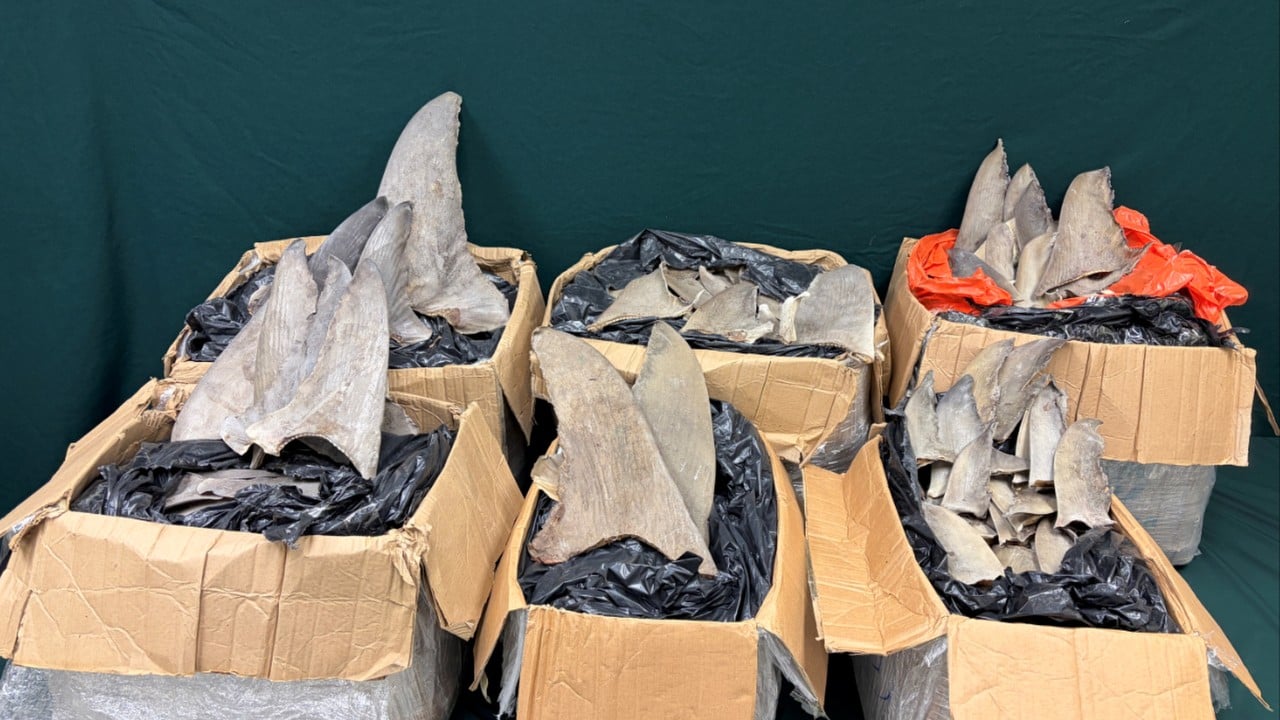
The seizure of HK$280,000 worth of dried shark fins originating from Panama at the Hong Kong International Airport exposes a sophisticated logistical arbitrage that exploits the friction between international conservation treaties and global transshipment hubs. This specific intercept, involving approximately 450 kilograms of scheduled species, indicates a calculated risk-reward ratio favored by wildlife trafficking syndicates. These actors utilize the high-volume throughput of air cargo networks to obfuscate the origin of regulated biomass. The incident serves as a diagnostic marker for the operational vulnerabilities in the CITES (Convention on International Trade in Endangered Species of Wild Fauna and Flora) enforcement framework, particularly regarding the "Laundering through Logistics" model where legal trade routes provide cover for contraband of varying protection statuses.
The Economic Architecture of Shark Fin Trafficking
The illicit trade in shark fins functions on a high-margin, low-overhead economic model driven by the disparity between procurement costs in Latin American coastal regions and retail values in East Asian markets. In this specific case, the seizure of HK$280,000 for 450 kilograms suggests a wholesale valuation of roughly HK$622 per kilogram. This price point indicates a mid-to-high grade product, likely derived from species listed under CITES Appendix II, which requires strict export permits that were absent in this shipment.
The supply chain operates through three distinct functional layers:
- Primary Extraction: Small-scale or industrial fishing operations in the Eastern Pacific (Panama) harvest sharks. While some fishing may be legal under local regulations, the lack of CITES documentation renders the export illegal.
- Logistical Intermediate: Consolidators aggregate smaller catches into bulk shipments. This stage involves the physical processing—drying and packaging—to reduce weight and increase shelf life, essential for air freight efficiency.
- Terminal Distribution: Hong Kong serves as the primary gateway. Its status as a free port and its massive cargo processing capacity (HKIA often ranks as the world's busiest cargo airport) creates a "needle in a haystack" environment for customs officials.
The choice of air cargo over maritime shipping suggests a prioritisation of "Velocity of Capital." While maritime shipping is cheaper, air freight reduces the time between extraction and liquidation, minimizing the window for intelligence-led interdiction and preventing biological degradation of the fins.
The Regulatory Gap and Identification Bottlenecks
The primary challenge in interdicting shark fin shipments is the taxonomic complexity of the product. Once dried and processed, the morphological features used to distinguish a protected species from a non-regulated one are significantly obscured. Customs officers face a technical bottleneck: they must differentiate between hundreds of species under extreme time pressure within a high-throughput environment.
The legal framework relies on the Protection of Endangered Species of Animals and Plants Ordinance (Chapter 586), which carries a maximum penalty of a HK$10 million fine and 10 years’ imprisonment. However, the prosecution rate remains low relative to the volume of seizures because of the difficulty in proving "knowledge or intent" on the part of the consignees, who often use shell companies or third-party logistics providers to distance themselves from the physical contraband.
The Problem of Controlled Species Mimicry
Smugglers frequently use "decoy shipments" or "mixed-bagging" strategies. By mixing fins from CITES-listed species with those from non-listed species, they bank on the probability that a random inspection will only sample the legal portion of the cargo. The Panama-to-Hong Kong route is particularly susceptible to this due to the diverse shark populations in the Eastern Tropical Pacific and the varying levels of maritime enforcement in Panamanian waters.
Logistics as a Vector for Contraband
The transit from Panama to Hong Kong involves a complex chain of custody. The shipment in question was likely manifested as "dried seafood" or a similar generic commodity. This misdeclaration is the first point of failure in the global supply chain security model.
The effectiveness of Hong Kong Customs in this instance highlights the transition from random inspection to Intelligence-Led Risk Profiling. Modern interdiction does not rely on opening every box; instead, it utilizes data analytics to flag shipments based on:
- Origin Anomalies: Shipments from regions with high biodiversity but low regulatory oversight.
- Consignee History: Discrepancies in the trading history of the receiving firm.
- Weight-to-Value Ratios: Dried fins have a specific density and value profile that differs from standard dried fish or abalone.
The reliance on Panama as an origin point is strategic. Panama’s geographic position makes it a natural hub for both Atlantic and Pacific catches. Its logistical infrastructure, designed for high-volume international trade via the Canal and major airports, provides a camouflage of legitimacy for exporters.
Quantifying the Ecological and Financial Cost
The HK$280,000 seizure represents more than just a financial loss to the syndicate; it represents an ecological extraction that the current market price fails to internalize. The 450-kilogram weight implies the death of hundreds of sharks, depending on the species and the size of the fins harvested.
From a strategy perspective, the "Success of Seizure" metric is often misleading. While a seizure is a tactical win for enforcement, it is a lagging indicator of a thriving market. A high frequency of seizures without a corresponding drop in retail price suggests that the supply remains elastic and that traffickers view these losses as a manageable cost of doing business.
The Cost of Enforcement vs. The Value of Contraband
The administrative cost of inspecting, seizing, storing, and eventually destroying or DNA-testing 450 kilograms of fins likely exceeds the nominal value of the seizure itself. This creates an asymmetric warfare scenario where the state must spend significant resources to disrupt a low-cost operation. To shift this balance, enforcement must move beyond physical seizure and toward financial disruption.
Strategic Realignment for Maritime Resource Protection
The current "Border Defense" model of wildlife protection is insufficient. To effectively dismantle the Panama-Hong Kong illicit corridor, a multi-pronged systemic shift is required.
The shift toward DNA-Barcoding at Source: Rather than relying on visual inspection in Hong Kong, CITES enforcement requires a standardized, rapid DNA-testing protocol at the point of export in Panama. If the biological signature of the cargo does not match the manifest, the shipment is flagged before it enters the international air cargo stream.
Carrier Liability and Digital Ledgers: Implementing stricter "Know Your Customer" (KYC) requirements for freight forwarders and airlines is necessary. If a carrier consistently transports misdeclared CITES biomass, they must face tiered licensing penalties. Integrating blockchain-based traceability for legal shark fin exports would create a "White List" of verified shipments, allowing customs to focus exclusively on the unverified "Grey Market" flows.
Financial Intelligence Units (FIUs): The seizure of physical goods is a temporary setback for a syndicate. The permanent disruption occurs when the money trail is targeted. Following the HK$280,000 transaction back to the financing entities in Hong Kong and the procurement agents in Panama allows for the dismantling of the network's capital base.
The persistence of these shipments confirms that as long as the terminal market value in East Asia remains high, the logistical routes will simply adapt to new enforcement pressures. The solution lies not in more inspections, but in the technological and financial de-platforming of the entities that facilitate these flows. Total transparency in the dried seafood supply chain is the only mechanism capable of neutralizing the arbitrage currently enjoyed by illegal actors.