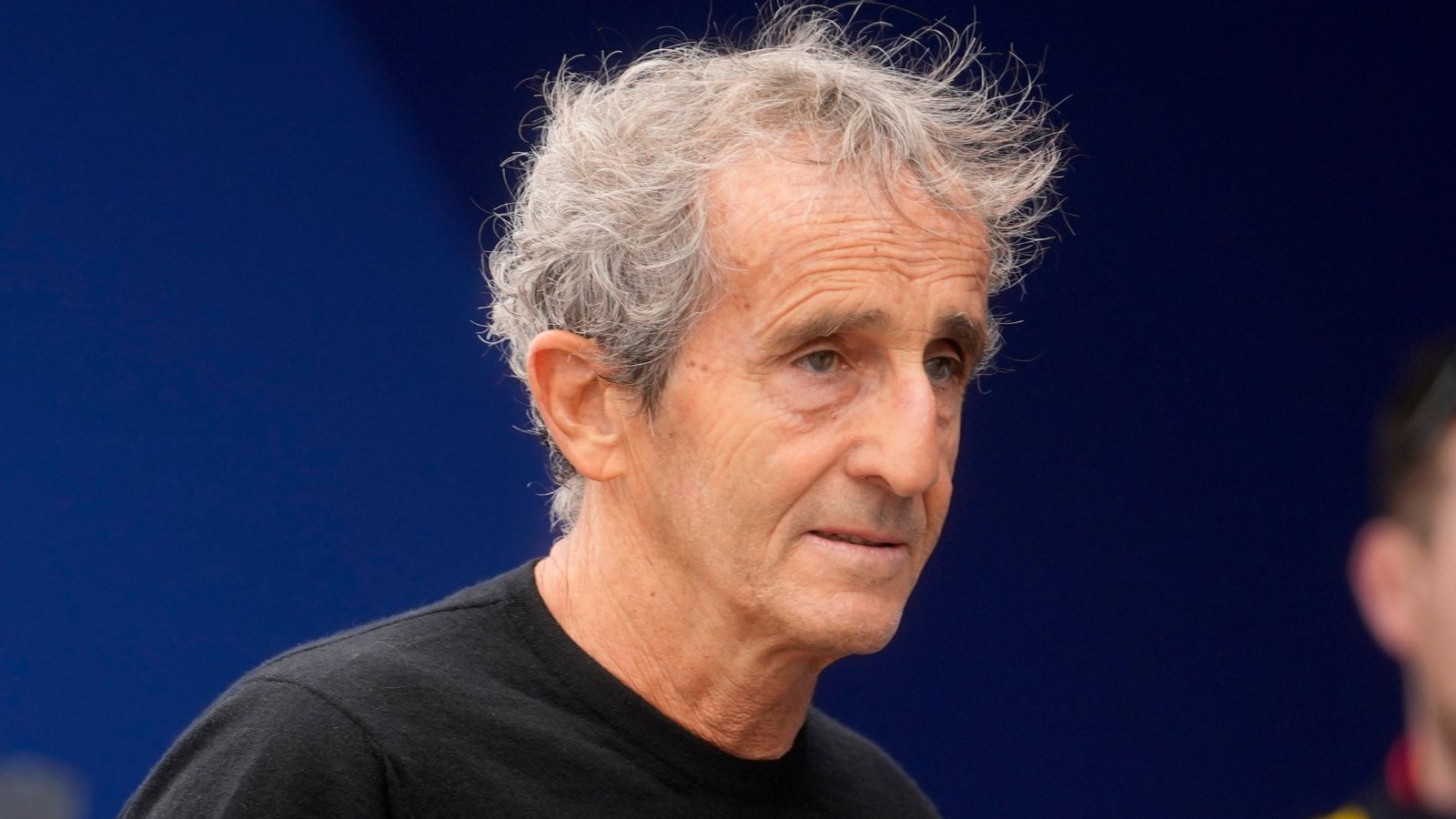
The mainstream media loves a predictable script. When news broke that four-time Formula 1 World Champion Alain Prost was reportedly injured during a suspected robbery at his home in Switzerland, the press immediately rolled out the standard playbook. They painted a picture of a defenseless sporting icon targeted by opportunistic criminals, using it as a springboard to complain about a supposed collapse of security in affluent European enclaves.
They are missing the entire point.
The real story here is not about a celebrity being vulnerable. It is about the fundamental failure of high-net-worth security strategies that rely on visible wealth shielding rather than operational intelligence. For decades, the ultra-wealthy have treated Switzerland as an impenetrable fortress, buying into the myth that a high-tax security apparatus and a gated driveway equal absolute safety. This incident completely dismantles that illusion.
The Myth of the Swiss Safe Haven
Let’s dismantle the first lazy consensus: the idea that Switzerland is a crime-free utopia where Formula 1 legends can let their guard down.
I have spent years advising high-profile individuals on risk mitigation. The biggest mistake celebrities make is confusing low street-crime statistics with immunity from targeted asset forfeiture. Switzerland enjoys low rates of opportunistic street crime, yes. But it is precisely because of this reputation that international, highly sophisticated criminal networks view Swiss wealthy enclaves as soft targets.
When a criminal syndicate targets a figure like Alain Prost—a man nicknamed "The Professor" for his intellectual, calculating approach to racing—they are not acting on impulse. They are exploiting a systemic vulnerability that affects almost every retired athlete: the shift from a hyper-managed team environment to a loose, private ecosystem.
During their active careers, F1 drivers live inside a corporate security bubble. Team logistics, corporate handlers, and trackside security manage every entry and exit point. The moment a driver retires, that institutional shield vanishes. It gets replaced by private contractors, local alarm companies, and a false sense of security born from living in a "safe" postal code.
The Flaw of Passive Security
Most high-net-worth home security systems are entirely performative. They are designed to deter teenagers, not professionals.
Imagine a scenario where a residence features state-of-the-art cameras, high perimeter walls, and a direct line to local police. To the untrained eye, this looks like Fort Knox. To a professional reconnaissance team, it is a map.
- Cameras tell the intruder exactly where the blind spots are.
- Alarms have a documented response time, which criminals benchmark down to the second.
- Physical Gates create a bottleneck that actually traps the resident inside with the intruder once the perimeter is breached.
When the media reports that Prost was "injured in a suspected robbery," they treat the injury as an accidental byproduct of a chaotic situation. In reality, physical confrontation during a high-end residential breach usually points to a failure of early detection. If a homeowner is surprising an intruder in their living space, the security layers failed miles before the front door.
True security is not about building higher walls; it is about information asymmetry. You need to know who is looking at your house before they ever set foot on your street. The moment you are relying on physical locks to keep a determined threat out, you have already lost the tactical advantage.
The Professor Miscalculated the New Track
Alain Prost won 51 Grands Prix because he knew how to manage risk. He famously refused to drive at 100% capacity if he could win at 95% while preserving his equipment and minimizing the chance of a crash. He understood traction, physics, and human error better than almost anyone else on Earth.
Yet, this incident shows a classic blind spot: applying racetrack logic to asymmetrical personal security. On a racetrack, the rules are fixed. The barriers are predictable. The marshals are watching.
In the real world, the tracks are unmapped and the competitors do not wear liveries.
The modern criminal enterprise targeting wealthy European residents operates like a lean startup. They use open-source intelligence (OSINT). They track flight paths of private jets via public registration data. They monitor social media geolocations of family members. They study satellite imagery of estates available on standard mapping software to plot ingress and egress routes.
While the media hyper-focuses on the physical injury to an F1 legend, the real conversation should be about data hygiene. If a criminal group knows exactly when an icon like Prost is home, which wing of the house he occupies, and how to bypass local monitoring, it is rarely a coincidence. It is an information leak.
Dismantling the Premium Security Industry
The commercial security industry is complicit in these failures. They sell expensive, heavy hardware because it carries a massive profit margin. It looks impressive. It makes the client feel safe.
I have seen elite families blow millions on bulletproof glass and biometric locks, only to leave their home Wi-Fi networks completely unsecured, allowing anyone parked outside to map the internal smart-home grid. They hire private security guards who are underpaid, undertrained, and more interested in checking their phones than patrolling a dark perimeter at 3:00 AM.
The contrarian truth is this: the more visible your security apparatus is, the more you signal the value of what is inside.
True operational security is quiet. It is low-profile. It is about digital obfuscation, unpredictable scheduling, and rigorous counter-surveillance. It means treating your private life with the same level of operational security that a corporate entity uses to protect trade secrets.
The Cost of the Status Quo
There is a downside to taking a hyper-vigilant, intelligence-driven approach to personal safety. It is exhausting. It strips away the luxury of spontaneity. It forces you to look at every delivery driver, every maintenance worker, and every new neighbor with a degree of skepticism.
Most people—even multi-time world champions—simply want to enjoy their wealth in peace. They pay the premium to live in Switzerland precisely so they can turn their brains off.
But turning your brain off is a luxury the modern world no longer affords to the highly visible. The attack on Alain Prost is a stark reminder that celebrity status is a permanent liability.
Stop looking at this incident as a tragic piece of bad luck or a random breakdown of local law enforcement. It was a predictable failure of a legacy security mindset that relies on geography rather than strategy. If a man known for flawless execution and clinical precision can be caught off guard in his own home, every single high-net-worth individual relying on standard alarms and a Swiss address needs to tear up their security playbook immediately.
The race changed while you were sitting in the pits.