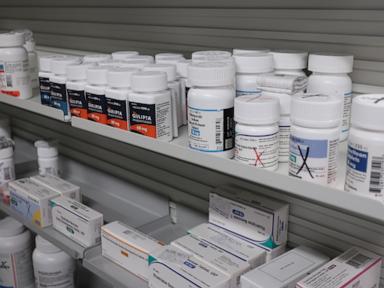
The mainstream media loves a savior narrative. When the administration announced a proposed rule to eliminate the rebates pharmacy benefit managers (PBMs) negotiate with drugmakers, the headlines practically wrote themselves. "Saving Medicare patients $1.1 billion," they cheered. They painted a beautiful picture of seniors walking up to the pharmacy counter and paying radically less for their insulin and blood thinners.
It is a comforting fantasy. It is also completely wrong.
This proposed rule is not a victory for seniors. It is a massive shell game that will drive monthly premiums through the roof, line the pockets of big pharmaceutical companies, and leave the taxpayer holding a multi-billion-dollar bag. The lazy consensus assumes that if you eliminate a "middleman" fee, the consumer automatically wins. In the hyper-complex, heavily distorted world of healthcare economics, the exact opposite happens.
We are about to dismantle the mechanics of drug pricing to show you why this policy is a ticking financial time bomb for the very people it claims to protect.
The Secret Engine of Medicare Part D
To understand why this rule backfires, you have to look under the hood of Medicare Part D. Mainstream journalists treat PBMs like simple ticket scalpers, adding a markup for doing nothing. I have spent years analyzing the back-end contracts of these systems. The reality is that PBMs use a brutal, highly effective leverage point to keep overall costs down: volume.
When a PBM negotiates with a drug manufacturer, they say, "If you want your drug to be the preferred choice on our formulary for millions of seniors, you have to give us a massive discount." Because of archaic anti-kickback laws, these discounts cannot be given as upfront price cuts. Instead, they are structured as retrospective rebates.
What happens to that rebate money? This is where the competitor narrative completely falls apart.
The mainstream press implies that PBMs simply hoard this cash to buy yachts. In reality, the vast majority of these rebates are passed directly back to the Medicare Part D plan sponsors. The plans use this money for one specific purpose: to buy down the monthly premiums for every single senior enrolled in the program.
Rebates act as a massive subsidy that keeps your monthly check to Medicare low. If you legally ban these rebates, that subsidy vanishes overnight.
The Math the Administration Tried to Hide
Let us look at the actual numbers, not the cherry-picked press releases.
While the headline screams "$1.1 billion in savings," the government’s own actuaries at the Centers for Medicare & Medicaid Services (CMS) admitted a terrifying truth buried deep in the economic impact reports. Removing the safe harbor protection for rebates would cause Medicare Part D premiums to spike by an estimated 19% to 25%.
Think about the math. A small percentage of seniors who take incredibly expensive, specialty brand-name drugs might see a reduction in their out-of-pocket costs at the point of sale. But every single one of the roughly 50 million Medicare beneficiaries will see their monthly premiums surge.
You are robbing Peter to pay Paul, except Peter is a senior on a fixed income who can barely afford his current monthly premium, and Paul is a multinational pharmaceutical conglomerate.
Let us run a quick thought experiment. Imagine a neighborhood where 100 people pay $50 a month into a cooperative pool to cover the cost of maintaining their roads. A few residents drive heavy trucks that damage the asphalt more than others. The cooperative uses a discount system from a local supplier to keep that $50 fee stable. Now, the government steps in and bans the discount system. The cost of fixing the road shoots up. The 5" residents with trucks pay slightly less for their specific repairs, but the monthly fee for all 100 residents jumps to $75.
That is not a policy win. That is a structural failure.
Why Pharma is Secretly Popping Champagne
If you want to know who truly wins a policy debate, stop listening to what politicians say and watch how the stock market reacts. Big Pharma has been lobbying to kill PBM rebates for a decade. Why? Because rebates force them to compete on price.
When a drugmaker has to compete for a spot on a Medicare formulary, they have to offer a bigger rebate than their rival. This is the only mechanism in the US healthcare system that forces drug companies to discount their list prices.
Without rebates, drug manufacturers retain absolute pricing power. They can set an arbitrarily high list price, refuse to offer discounts, and blame the lack of insurance coverage for the burden placed on patients. The proposed rule fundamentally shifts the balance of power away from the buyers (Medicare plans) and hands it directly to the sellers (Pharma).
"The elimination of rebates is a direct transfer of wealth from American taxpayers and seniors into the balance sheets of drug manufacturers."
📖 Related: The Rain That Whispers of Ghosts
Even the Congressional Budget Office (CBO) threw cold water on the administration's utopian projections. The CBO estimated that the rule would increase federal spending by approximately $177 billion over a decade. Why? Because when premiums rise, the federal government is legally obligated to subsidize a massive chunk of those premium increases to keep the program stable.
You, the taxpayer, are funding Big Pharma's new profit margins.
Dismantling the Premise of "Point-of-Sale" Savings
A common question asked by defenders of this rule is: Shouldn't patients get the direct benefit of the discount on the specific drug they are buying?
It sounds moral. It sounds fair. It ignores how insurance works.
Insurance is, by definition, the pooling of risk. Healthy people subsidize sick people so that when a healthy person gets sick, they do not go bankrupt. By forcing "point-of-sale" discounts through the destruction of the rebate system, you are effectively dismantling the risk pool. You are converting a collective insurance program into an individualized savings account where the sickest individuals still face massive costs because the baseline list prices of the drugs remain untouched.
If the administration actually wanted to lower costs for seniors, they would not be tinkering with the mechanism of the discount. They would be attacking the root cause: the unchecked, government-sanctioned monopoly pricing power granted by the US patent system.
But attacking patents requires going to war with the most powerful lobby in Washington. It is much easier to create a boogeyman out of the billing process, call a press conference, and pretend you saved the day.
The Cost of Being Right
To be fair, the contrarian view has a downside. Acknowledging that rebates keep premiums low means admitting that our current system relies on a convoluted, opaque web of backroom deals to function. It is an ugly system. It lacks transparency, and it frustrates consumers who see a high list price at the counter and do not realize their monthly premium is low because of that very high list price.
But blowing up an ugly system without a viable replacement is malpractice.
If this rule goes into effect, the shock to the system will be immediate. Medicare Part D plans will have to restructure their entire financial models in a matter of months. They will pass those costs directly to seniors.
Stop celebrating the illusion of a $1.1 billion savings. Start preparing for the premium hike heading straight for your wallet. Banning discounts never made anything cheaper. It just ensures everyone pays the maximum price.