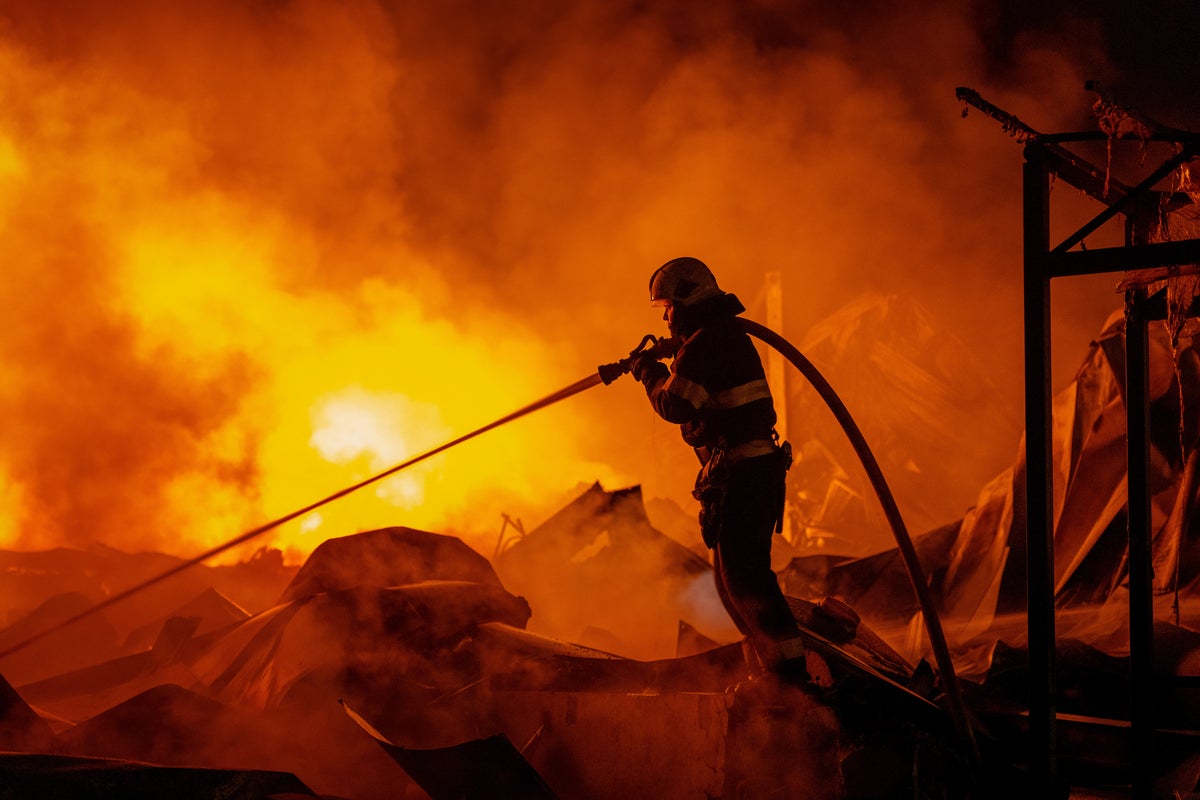
Every single time a tragedy strikes Kyiv, the playbook unspools with depressing predictability. Sirens wail, wreckage smokes, and leadership steps to a microphone to demand more interceptors, more batteries, and more shield coverage. The automatic reaction from the peanut gallery is always the same: ship more hardware, plug the holes, and hope the math holds up.
Stop. The math stopped working months ago. If you liked this piece, you might want to look at: this related article.
Treating a fundamental strategic deficit like a hardware shortage is like handing a bucket to someone standing in a sinking ship with a hull breach. You do not need a bigger bucket. You need to plug the leak or change how you navigate the water. Relying exclusively on air defense attrition against a nation with an industrial base capable of churning out low-cost loitering munitions and ballistic missiles at scale is a slow-motion trap.
Let us look at the cold, unforgiving economics of modern defense. Interceptor missiles cost millions, sometimes tens of millions, of dollars per unit. The incoming threats often cost a fraction of that. When you trade a three-million-dollar interceptor to knock down a fifty-thousand-dollar drone or a cheap rocket, you are winning the tactical engagement and losing the economic war of attrition. For another perspective on this development, refer to the latest coverage from NBC News.
I have watched defense procurement programs bleed capital into high-end vanity projects while ignoring the basic realities of mass production. Western allies suffer from a deep-seated bias toward complex, exquisite technology. We assume that because something is expensive and sophisticated, it solves everything. But war, at its core, is a brutal exercise in math, logistics, and resource allocation.
The lazy consensus in mainstream coverage suggests that air defense is a simple linear equation: more systems equals fewer casualties. Reality is messier. Air defense systems are finite. They require specialized maintenance, complex supply chains, radar operators who take months to train, and constant replenishment. Spreading those assets thin across an entire country leaves critical nodes exposed while creating a false sense of security.
Imagine a scenario where every single city request for advanced shield batteries is met instantly. You flood the country with every available system from Western stockpiles. What happens next? You hit a hard ceiling on personnel and radar coverage capacity. You create high-value targets that demand even more protection. The adversary simply shifts targeting vectors, uses electronic warfare to saturate frequencies, or ramps up volume until saturation defeats the grid.
The uncomfortable truth is that defensive shielding is a reactive posture. It allows the enemy to choose the time, place, and cost of the engagement. You are perpetually dancing to someone else's rhythm.
To break this cycle, strategy must shift from pure interception to disruption at the source and decentralized resilience. You cannot out-shield a dedicated adversary; you can only out-disrupt them. That means taking the fight to the supply chains, striking launch platforms where they sit inside enemy territory, and cutting off the flow of microelectronics and dual-use technology that keeps the missile factories humming.
Diplomacy and sanctions enforcement also suffer from toothless execution. As long as shadow networks can bypass restrictions to acquire guidance chips and propulsion components, no amount of steel in the sky will stop the next wave.
We need to stop praising the endless cycle of reactive appeals and start demanding structural accountability. The next time a commentator insists that a few more batteries will solve the underlying security crisis, remember that hardware is a band-aid on a systemic wound. Real security requires changing the incentives of the aggressor, not just buying a bigger glove to catch the punches.
The next punch is already on the drawing board. Stop waiting for a better shield. Break the arm throwing the stone.