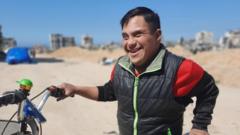
Not knowing whether a child or a parent is alive, detained, or trapped beneath tons of concrete is a unique kind of torture. Thousands of families across the Gaza Strip live in this exact state of permanent suspension, searching through hospitals, makeshift morgues, and piles of rubble for loved ones who vanished during the ongoing conflict.
Official estimates place the number of missing Palestinians anywhere from 7,000 to over 9,500. Behind every digit in those statistics is an empty tent, a smartphone screen glowing with old photographs, and a family refusing to give up. The tragedy isn't just the sheer scale of the destruction; it's the administrative and physical vacuum that prevents grieving relatives from finding any definitive answers.
The Anatomy of a Disappearance
People vanish in Gaza through terrifyingly ordinary mechanisms of war. Nighttime airstrikes flatten entire apartment blocks, burying whole families before anyone can record who was inside. Chaotic mass displacements force parents and children to run in opposite directions through smoke and gunfire, losing each other in seconds.
Then there are the detentions. Hundreds of people have been picked up at military checkpoints or swept up during ground raids without notification sent to their relatives. Israeli authorities often do not release specific identifying details about detainees from Gaza, leaving families to cycle through human rights organizations and international hotlines for months.
International bodies like the International Committee of the Red Cross (ICRC) receive thousands of tracing requests and hotline calls weekly. Yet, operators are overwhelmed. Phones break, cellular networks fail, and families move from camp to camp, making tracking nearly impossible.
The Nightmare Beneath the Rubble
An estimated 50 million tons of debris covers the Gaza Strip. United Nations experts warn that clearing this much wreckage could take over a decade.
Buried deep beneath those collapsed concrete slabs are thousands of bodies. Recovery crews face monumental hurdles. Heavy machinery is scarce, fuel is heavily restricted, and basic safety gear is missing. Local civil defense teams often have to dig through concrete using bare hands and small shovels.
When bodies are finally recovered, identifying them presents an entirely separate obstacle. Decomposition, lack of refrigeration, and restrictions on importing DNA-testing equipment mean that many recovered corpses end up buried anonymously in mass graves. For a parent looking for a son or daughter, an anonymous grave offers no peace.
Navigating Bureaucracy and Dead Ends
Families trying to find missing relatives rely on a grim routine. They visit whatever makeshift medical points remain functional, check social media channels for leaked photographs from detention camps, and file reports with organizations like the Al-Dameer Foundation or the ICRC.
Many wait years for a single clue. Some learn of a relative's death in detention long after the fact, delivered through brief administrative notices or accidental glimpses of prisoners in media footage. Others receive returned bodies that are unrecognizable, forcing them to accept closure based on guesswork rather than certainty.
The psychological toll of this ambiguity is crushing. Without a body or an official record, normal mourning processes cannot begin. Families remain trapped between the agonizing hope that a loved one might walk through their tent flap and the heavy dread that they never will.
Check local updates through humanitarian monitoring groups like the ICRC or the UN Office for the Coordination of Humanitarian Affairs to support tracking initiatives and understand how international forensic teams attempt to restore names to the nameless.