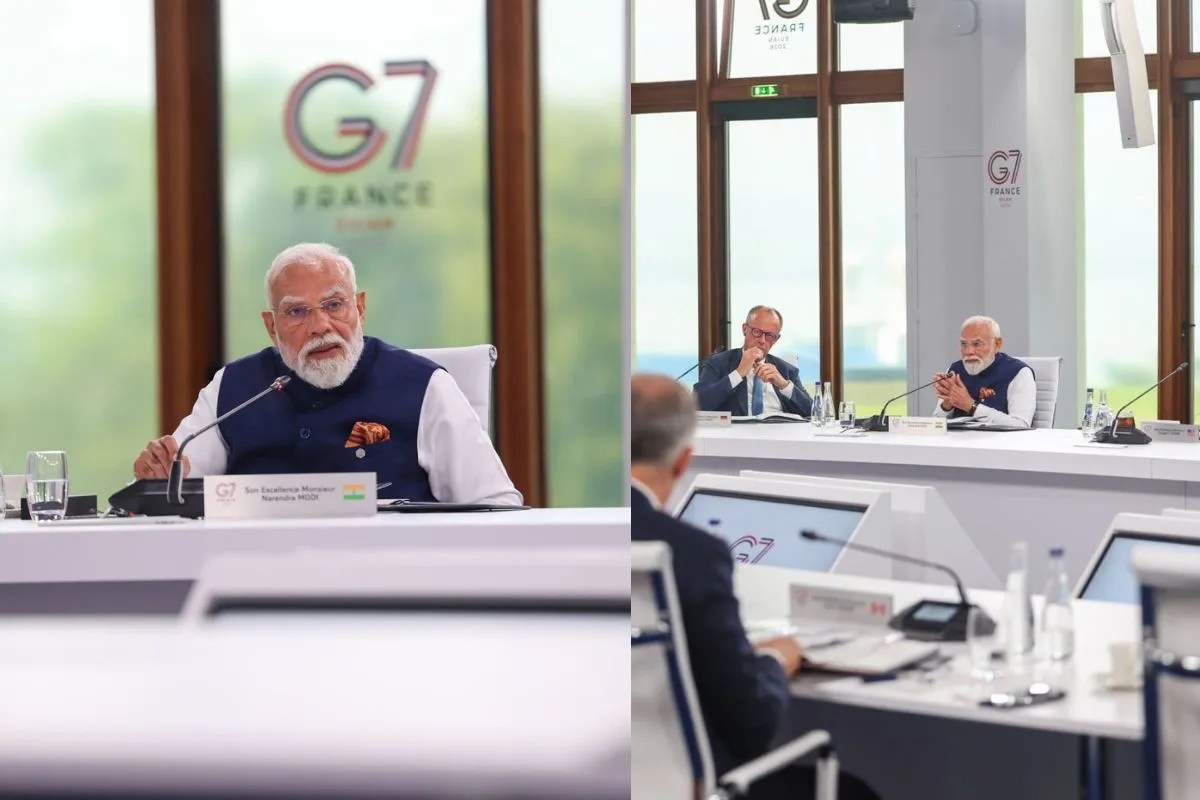
Diplomacy isn't done in sterile conference rooms. It happens during brief, intense moments in the hallways of luxury lakeside resorts. In Évian-les-Bains, France, the 52nd G7 Summit just witnessed one of the most fascinating political resets in recent history.
Prime Minister Narendra Modi and US President Donald Trump sat down for their first face-to-face bilateral talk in over 16 months. If you've been tracking the headlines, you know the relationship between Washington and New Delhi had hit a rough patch. Punitive tariffs, visa friction, and loud public disagreements over border skirmishes had frozen things up.
But the vibe in France shifted quickly. Trump called Modi "beautiful-looking" and "as tough as they come," while explicitly offering an absolute defense guarantee for India—with a heavy catch.
This isn't just about friendly banter. There's a serious structural shift happening in global trade, and it's happening right now.
Fixing the Trust Deficit Instead of Chasing Pacts
Most commentators focus entirely on the text of trade agreements. They're missing the point. India went into the G7 outreach session with a clear agenda: targeting the global trust deficit. Modi explicitly told the gathering of world leaders that the planet's biggest issue isn't a lack of resources, but a systemic failure of mutual trust.
For years, Western nations treated developing economies like aid recipients. India's fresh blueprint changes that entirely. The strategy focuses on actual equal footing.
Look at what happened with the European Union right after the session. European Commission President Ursula von der Leyen confirmed that India and the EU will officially sign their full Free Trade Agreement by the end of 2026. That doesn't happen without a massive foundation of strategic alignment.
The Real Numbers in the West
- Canada: Pushing to wrap up the Comprehensive Economic Partnership Agreement (CEPA) by December to double bilateral trade to $60 billion by 2030.
- United Kingdom: Fast-tracking the CETA under the ambitious Vision 2035 framework.
- United States: Entering the final implementation phase of a massive bilateral trade deal that started with an interim pact earlier this year.
The Trump Factor and the Conditional Defense Guarantee
Let's look closely at what Donald Trump actually said during his press availability with Modi. Trump explicitly stated that Washington would step in to help India if the nation faces military aggression.
"We don't have a contract, but if they are attacked and he is the leader, we are going to be there to help," Trump said.
Think about how wild that statement is. It's a completely personalized foreign policy. He openly admitted that if someone else takes charge in New Delhi, the defense guarantee evaporates. It tells you everything you need to know about how Trump views international relations. He doesn't care about bureaucratic treaties; he cares about personal transactions with people he considers strong leaders.
Trump also made sure to praise India's heavy commercial spending inside the US, noting that Indian companies are investing aggressively in American manufacturing. It's a classic transactional win-win for him. He gets to brag about domestic job creation, while India secures an informal, massive security umbrella against regional adversaries.
Navigating the Volatile Supply Chain Maze
You can't talk about trade without talking about shipping corridors. The Red Sea and the Strait of Hormuz have become absolute nightmare zones for global logistics.
During the bilateral talks, Modi put a highly specific, human issue on the table: the safety of commercial seafarers trapped in geopolitical crossfires. It's a smart tactical move. India provides a massive percentage of the global maritime workforce. By linking seafarer safety directly to emerging energy and security agreements with Iran and the wider West Asia region, India isn't just protecting its citizens—it's positioning itself as the adult in the room keeping global supply lanes functional.
The trade deal currently being finalized between India and the US is heavily anchored in long-term energy security. New Delhi wants steady American energy imports to insulate its factories from Middle Eastern shocks. Washington wants guaranteed market access for its oil and gas.
Moving Past the Handshakes
Forget the optical illusion of international summits. The real work starts when these leaders fly home from France. If you're running a business or tracking global markets, watch the timeline closely.
The immediate next step is the formal signing of the India-EU trade agreement before the calendar turns to 2027. Simultaneously, expects the final-stage text of the US-India commercial agreement to drop within weeks. The geopolitical chessboard has been completely reordered in Évian, and the trade numbers are about to reflect it.