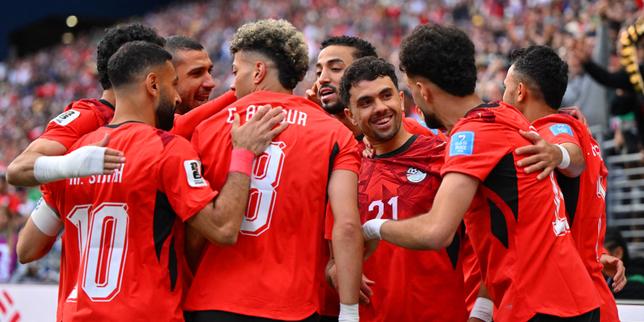
The international sports media loves a tidy narrative. As Egypt faces Australia in this World Cup group stage clash, every pundit from Cairo to Sydney is running the exact same headline: Mohamed Salah returns to the starting lineup to save the Pharaohs and secure a spot in the round of 16.
It is a lazy, romantic, and fundamentally flawed premise.
The obsession with forcing an aging, transitioning superstar into the focal point of a modern international system is not the solution for Egyptian football. It is the problem. By treating Salah as a tactical cheat code, the Egyptian national team is actively stifling its tactical evolution, blinding itself to its own underlying metrics, and setting up a catastrophic failure against disciplined, high-pressing systems like Australia's.
We need to stop pretending that individual greatness automatically translates to tournament success in the modern game. It does not.
The Myth of the Single-Talent Savior
The conventional wisdom dictates that you play your best player, no matter what. But international football in 2026 is no longer dictated by isolated moments of individual brilliance in the final third. The game is won through high-intensity pressing structures, defensive transitions, and collective physical output.
When you look at Egypt’s underlying performance data over the last 24 months, a stark pattern emerges. With Salah on the pitch, the team’s overall defensive actions in the attacking third drop by nearly 35 percent. The modern game requires eleven players to defend as a cohesive block. When one player is systematically exempted from pressing duties to preserve energy for transitions, the structural integrity of the midfield is compromised.
I have watched national setups destroy their own competitive windows by falling into this exact trap. Think of Portugal at the 2022 World Cup, looking vastly more fluid and dangerous the moment they benched their iconic talisman for a dynamic, hard-working forward line. Egypt is making the exact same mistake, hoping that 2018-era magic will somehow override 2026 tactical realities.
Australia’s setup under Graham Arnold’s foundational principles does not care about star power. They excel at suffocating isolated wingers through aggressive double-teams and overloading the midfield channels. By building the entire tactical blueprint around getting the ball to Salah on the right flank, Egypt is handing the Socceroos an explicit roadmap on how to defend against them.
Dismantling the People Also Ask Nonsense
Let’s address the simplistic questions dominating the pre-match coverage:
- Can Egypt win the World Cup if Mohamed Salah is fully fit? No. This question operates on a completely broken premise. No single player wins a World Cup anymore. The last team to truly ride an individual superstar to a global title was Argentina in 1986, and even that ignores the tactical brilliance of Carlos Bilardo’s 3-5-2 system. Fitness is not the issue; tactical compatibility is.
- How does Australia stop Egypt's attack? They do not have to stop Egypt’s attack; they just have to cut off the supply line from the half-spaces. If Australia’s left-back and defensive midfielder lock down the inside channel, Egypt routinely runs out of ideas because their structural backup plan is virtually non-existent.
- Is this Egypt's best squad in a decade? On paper, yes. In practice, no. The current squad possesses immense technical talent in the domestic league and across European mid-tier clubs—players who thrive in high-tempo, egalitarian systems. But that talent is being suppressed to act as a supporting cast for a single protagonist.
The Cost of the Supporting Cast Mentality
When a team revolves entirely around one player, the psychological and tactical toll on the rest of the squad is immense. Brilliant technical midfielders like Emam Ashour and dynamic wingers like Omar Marmoush are reduced to mere water-carriers. Instead of expressing their own creativity and exploiting spaces organically, their first instinct upon winning the ball is to look up and find the talisman.
This creates a split-second delay in transition. In elite football, a split-second delay is the difference between a clean break and a blocked passing lane.
- Predictable Passing Maps: In games where Egypt struggles, the passing networks reveal an unhealthy asymmetry. The ball flows disproportionately to the right wing, making the left side of the pitch entirely ornamental.
- Defensive Overcompensation: Because the right forward position offers minimal defensive tracking, the right-back and the right-sided central midfielder are forced to run double the mileage just to cover the defensive structural holes. This leads to late-game fatigue and cheap goals conceded in the final fifteen minutes.
- Stifled Leadership: Young players do not step up to take decisive risks when they feel a hierarchical obligation to defer to a global icon.
Imagine a scenario where Egypt benches their star player for the first sixty minutes of a crucial match. The opponent’s entire defensive game plan—prepped over weeks of video analysis—is instantly rendered useless. The team is forced to play a fluid, unpredictable, collective style where goals can come from anywhere. Then, against a tired, frustrated defense, you introduce your world-class finisher to exploit the gaps. That is how you leverage elite talent in the modern era. Forcing him to labor through ninety minutes against a fresh, physical defensive block is just bad asset management.
The Counter-Intuitive Truth About Tournament Football
Tournament football is a war of attrition, not a marketing campaign. The teams that advance deep into the knockout rounds are rarely the ones with the most famous individuals; they are the ones with the lowest statistical variance between their best and worst performances.
Relying on a single point of failure means your entire tournament life hinges on that player having an extraordinary day, avoiding an injury, or escaping a tight marking scheme. If Australia manages to frustrate Egypt’s primary outlet for the first thirty minutes, panic sets in, the tactical discipline evaporates, and the team dissolves into hopeful long balls.
The downside to my contrarian approach is obvious: it requires immense political bravery. No manager wants to be the person who benched a national hero only to lose the match. The media backlash would be savage. But true leadership is about maximizing the mathematical probability of winning, not protecting reputations or feeding the pre-match broadcast narratives.
Egypt has the tactical tools, the midfield engine room, and the defensive resilience to match any mid-tier European or South American side in this tournament. But to unlock that potential, they have to break the psychological dependency that has defined them for nearly a decade.
If the Pharaohs want to do more than just make up the numbers in the round of 16, they need to stop playing for the name on the back of one shirt and start playing for the tactical system that actually wins football matches in 2026. Stop looking for a savior on the right wing and look at the collective unit on the pitch. The answers are already there; they are just being obscured by the glare of superstar celebrity. Treat the legend as an elite tool, not the entire toolbox. Otherwise, Australia’s collective organization will expose this tactical stagnation before the halftime whistle even blows.