The coffee machine in the corner of the teachers' staff room had been leaking a slow, dark puddle onto the linoleum since 6:00 AM. Nobody wiped it up. Outside, the autumn mist was clinging to the wrought-iron fences of the lycée, turning the Parisian suburbs into a charcoal sketch.
By 7:30, the heavy oak doors remained bolted. No students poured into the gravel courtyards with their backpacks swinging and muffled laughter echoing off concrete walls. No frantic parents rushed past with half-eaten croissants, shouting last-minute reminders about forgotten notebooks. Instead, the streets belonged to silence. And then, slowly, to the sound of distant drums.
Across France, hundreds of schools were dark. Not because of a holiday, not because of a sudden snowstorm that paralyzed the roads, but because the chalk had been laid down.
When education protests rock the nation, they do not arrive with a quiet whisper. They land with the heavy, unyielding weight of an institutional pause. To understand why hundreds of school gates stayed shut on that Monday morning, you have to look past the breaking news banners and the political posturing in the National Assembly. You have to look at the kitchen tables where teachers sat calculating whether their salaries could survive another winter of inflation, and at the crowded classrooms where thirty-five teenagers shared textbooks printed in the last decade.
Consider a hypothetical teacher named Hélène. She has taught history in a bustling collège in Lyon for fourteen years. She loves the messy, unpredictable magic of teenagers discovering why the French Revolution mattered beyond a set of dates. But last month, Hélène spent forty euros of her own money on printer paper because the school budget ran dry by November. When she looks at the rising class sizes and the vanishing support staff for children with special needs, she does not see abstract budget lines. She sees exhaustion. She sees a system quietly fraying at the edges, held together entirely by the sheer stubborn goodwill of people who care too much to quit quietly.
Until they do.
The decision to strike in France is never made lightly, particularly within the educational sector. It requires a delicate, often painful calculus. Striking means losing a day's pay—no small sacrifice when housing costs in major French cities consume more than half a monthly paycheck. It means facing the ire of frustrated parents who suddenly have to scramble for emergency childcare, rearranging work shifts at hospitals, factories, and offices.
Yet, when the unions called for this nationwide mobilization, the response was deafening.
The immediate trigger was a familiar friction point: government proposals regarding resource allocation, staffing shortages, and working conditions. But the underlying current ran much deeper. For months, classrooms had been buckling under the strain of unfilled vacancies. Teachers were burning out; students were falling through the cracks of overcrowded lecture halls; and the promise of equal opportunity enshrined in the foundational ideals of the Republic felt increasingly like an empty slogan printed on faded posters.
On that Monday, the protest moved from the faculty lounges to the asphalt.
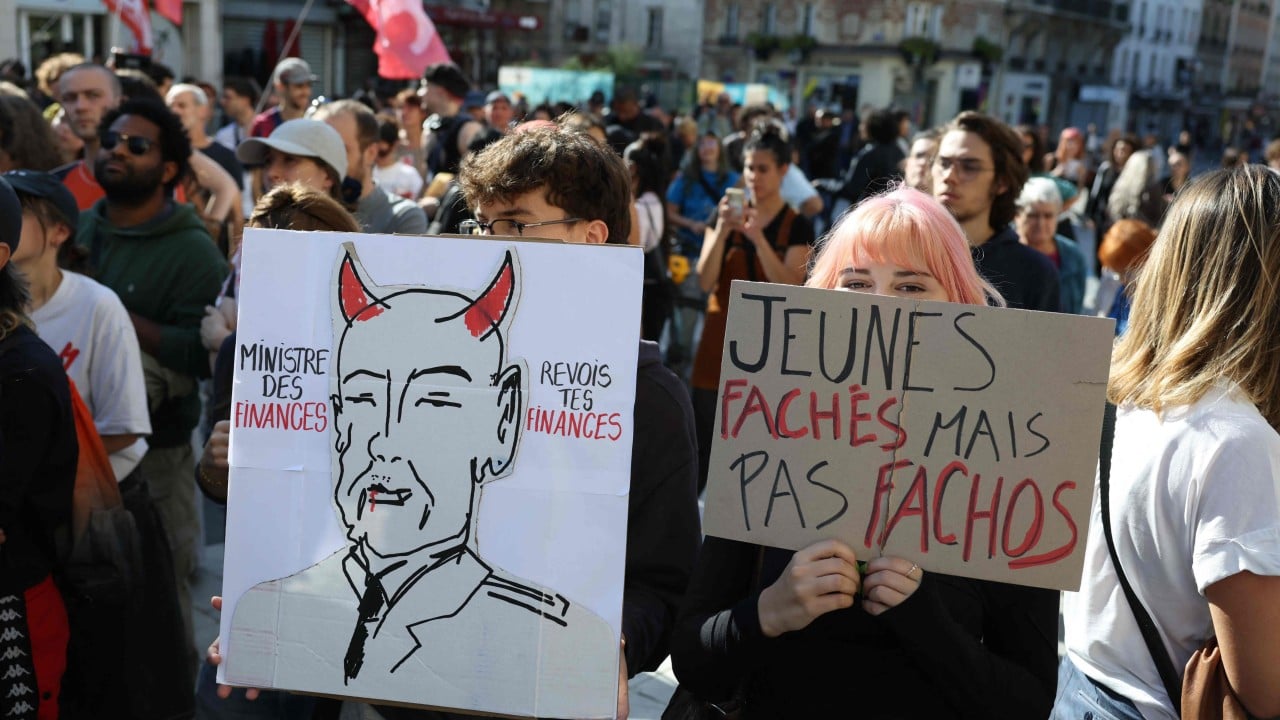
Thousands marched through the Place de la République in Paris, their breath pluming in the crisp air beneath waving union flags and home-made placards. The atmosphere was a strange mix of festive solidarity and grim determination. Accordions played old revolutionary anthems, but the faces beneath the winter caps were tight with worry.
"We are not here because we hate teaching," a young substitute teacher named Marc shouted over the roar of a passing megaphone, his voice hoarse from chanting. "We are here because if we keep pretending everything is fine, there won't be anything left to save."
Marc represents a growing legion of contract workers who form the invisible backbone of modern French education—underpaid, lacking job security, and often shuffled from one troubled school to another with little institutional support. When he speaks of the system breaking, it is not a political talking point. It is his Tuesday reality.
As the afternoon shadows lengthened across the cobblestones, the demonstrations began to disperse, leaving behind a sea of discarded flyers and the faint scent of tear gas lingering in side streets. The politicians in grand stone buildings issued their standard statements, acknowledging the disruptions while defending their fiscal trajectory.
But back in the neighborhoods, the real impact settled in.
Hundreds of metal gates remained locked all day. Thousands of children stayed home, staring out windows at empty playgrounds. The silence of those schools was not an absence of sound; it was a question directed straight at the heart of society.
When the state fails to properly equip the spaces where its children learn to think, argue, and dream, the bill always comes due. Sometimes it arrives in the form of a strike notice pasted across school entrances. Sometimes it arrives as a generation of educators walking away for good.
The morning mist finally burned off, revealing a pale, indifferent sun over Paris. But the iron gates did not open. They stood firm, waiting for an answer that simple policy adjustments could no longer delay.



