Cold.
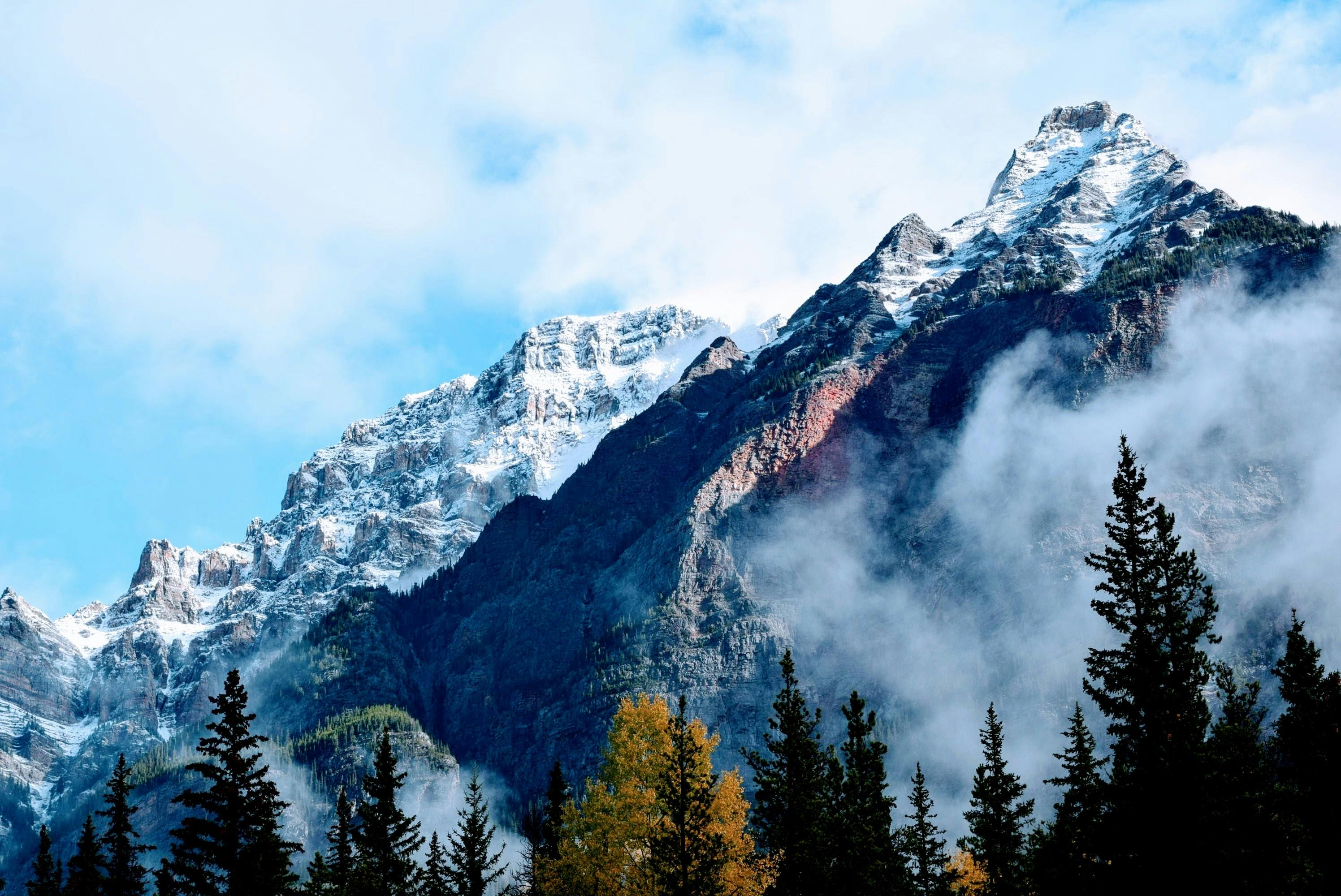
If you have never stood on a jagged ridge at fifteen thousand feet where the wind screams straight off the Tibetan Plateau, you do not actually know what the word means. It is not the brisk chill of a November morning in Ohio, nor the bite of a winter gale off the Atlantic. Up there, along the eastern spine of the Himalayas, cold is an active, predatory thing. It seeps through fleece-lined leather jackets, freezes the moisture in your nostrils before you finish inhaling, and turns aluminum fuselage skin into brittle glass.
For eighty years, that merciless altitude held onto a secret.
Then, on a quiet stretch of tarmac, a series of solemn transfers began to rewrite the ending of one of World War II’s most forgotten chapters. Representatives from China and the United States stood together to repatriate the remains of American servicemen who vanished decades ago along a treacherous aerial supply corridor known simply as "The Hump."
To read the standard wire reports about this diplomatic handover is to feel nothing at all. The dispatches are sterile, packed with bureaucratic phrasing about bilateral cooperation, forensic anthropology, and archival recovery missions. They read like shipping manifests.
They miss the entire point.
Because behind every bone fragment recovered from the scree of Yunnan Province or the glaciers of Arunachal Pradesh is a twenty-two-year-old kid from Kansas or Brooklyn who climbed into an unpressurized cargo plane, looked out at a wall of granite clouds, and never came back down. And behind that kid is a family that spent three generations staring at an empty chair at Thanksgiving, wondering if their son had died instantly in a fireball or shivered to death alone in a bamboo forest.
When two nations that spend most of their modern waking hours locked in geopolitical friction pause to hand over the bones of dead airmen, something profound is happening beneath the surface. To understand why this matters right now, we have to fly back into the storm.
The Aluminum Trail
Picture a young radioman—let’s call him Arthur, a composite drawn from the thousands of real manifests of the Air Transport Command—sitting on a wooden crate inside a C-47 Skytrain in the autumn of 1943.
Arthur is twenty-one. Before the war, the highest elevation he had ever experienced was the third floor of the county courthouse in Terre Haute. Now, he is strapped into a flying tin can over northern Burma, sucking oxygen through a rubber tube that keeps freezing shut because his own breath turns to ice inside the valve.
Outside the vibrating Plexiglas window, there is no horizon. There is only a churning gray soup of monsoon clouds hiding peaks that soar past twenty thousand feet—higher than the ceiling of the aircraft itself.
In 1942, Imperial Japan had severed the Burma Road, choking off the last overland artery supplying Allied forces in China. If China collapsed, over a million Japanese troops would be freed up to fight American Marines across the Pacific. Washington’s solution was audacious to the point of insanity: fly everything over the Himalayas. Bullets, gasoline, jeeps, mules, medical supplies, and rice—all hauled across five hundred miles of the most violent airspace on Earth.
Pilots called it "flying the Hump."
Think of the route like trying to thread a sewing needle while riding a mechanical bull in pitch darkness. There were no reliable weather forecasts, almost no radio beacons, and maps so wildly inaccurate that mountains routinely appeared three thousand feet higher than the ink on the paper claimed. Violent downdrafts could snatch a fully loaded C-46 Commando and slam it downward at three thousand feet per minute, faster than the engines could possibly climb. Icing coated the wings in seconds, turning aerodynamic lift into dead weight.
Between 1942 and 1945, roughly six hundred Allied aircraft crashed along that corridor. Over fifteen hundred airmen vanished.
The wreckage was so dense along the flight path that pilots navigating on clear days did not need compasses. They simply followed the glint of sunlight reflecting off the shattered aluminum fuselages scattered across the ridges below. They called it the Aluminum Trail.
The Weight of Unfinished Grief
When a plane goes down in the ocean, the sea closes over it, leaving a clean, terrible finality. When a plane goes down in the mountains of southwestern China, it enters a state of suspended animation.
I have spent years studying the long tail of wartime trauma, and if there is one truth that cuts across every culture, it is this: ambiguity is a heavier burden than grief. A grave gives sorrow an address. Without one, loss becomes a ghost that haunts a family's bloodstream for decades.
Consider what happens in the living room of a family back home when a telegram arrives reading Missing in Action.
At first, there is frantic hope. Maybe he bailed out. Maybe local villagers carried him to safety. Months stretch into years. The war ends. Parades march down Main Street. Neighbors welcome their boys home, watch them go to college on the GI Bill, watch them marry and buy houses. Meanwhile, Arthur’s mother still sets a place at the table, terrified that removing the plate means signing her son's death warrant with her own hands.
Eventually, the parents die without ever knowing. The burden passes to siblings, then to nieces and nephews who only know Uncle Arthur as a fading black-and-white photograph in a dress uniform on the mantelpiece.
For decades, the Hump kept its dead locked away. The terrain was simply too vertical, too remote, and too politically sealed off during the height of the Cold War to permit systematic recovery. Villagers in the rugged borderlands of Yunnan occasionally stumbled across twisted propellers, rusted .50-caliber machine guns, or scraps of parachute silk while foraging for medicinal herbs. Some kept the relics in wooden chests; others buried what remains they found out of simple human reverence, marking the spots with cairns of river stone.
How You Find a Needle in a Mountain Range
Recovering those men eighty years later requires a strange marriage of nineteenth-century grit and twenty-first-century forensic wizardry.
It begins not with helicopters, but with paper. Historians and researchers—both American teams from the Defense POW/MIA Accounting Agency (DPAA) and dedicated Chinese field researchers and amateur aviation archaeologists—comb through yellowed flight logs, wartime radio intercepts, and translated village oral histories.
Imagine trying to locate a single broken watch dropped somewhere inside the state of Colorado, except the state is covered in triple-canopy jungle and vertical cliffs.
Once a crash site is narrowed down, excavation teams trek on foot for days, hacking through rhododendron thickets and scaling slick rock faces alongside local guides whose grandparents once saw smoke rising from a ridge during the war. They grid off the mountainside in tiny squares, sifting buckets of wet soil through fine wire mesh by hand.
What survives eighty years of freeze-thaw cycles?
Not much. A stainless-steel dog tag, stamped with a serial number and a tetanus shot date. A silver navigator’s ring. A shattered wristwatch stopped at the exact second of impact. And, if the soil chemistry is merciful, fragments of bone no larger than a fingernail.
Those fragments are packed carefully and flown to forensic laboratories, where scientists extract mitochondrial DNA—genetic markers passed unchanged from mother to child—and match them against cheek swabs donated by living relatives who were not even born when the war ended.
When a match hits, the past suddenly collapses into the present. A statistical probability becomes a name, a hometown, a voice.
The Quiet Diplomacy of Bones
We live in an era where headlines between Washington and Beijing are dominated by semiconductor bans, naval standoffs in the South China Sea, and trade tariffs. The language of modern geopolitics is sharp, transactional, and perpetually braced for conflict.
Which is why the quiet transfer of World War II remains along the Hump carries an emotional voltage far beyond its diplomatic footprint.
During the war, Chinese civilians and American airmen shared a raw, desperate solidarity that transcended language. When an American pilot parachuted into the mountains of Yunnan or Sichuan, local farmers risked brutal Japanese reprisals to hide him, feed him scarce bowls of rice, and carry him on bamboo stretchers for weeks to reach the nearest Allied outpost. Thousands of Chinese laborers built the airfields at Kunming and Chengdu by hand, crushing rocks with hammers and pulling ten-ton stone rollers with ropes because there was no heavy machinery to spare.
The blood spilled along the Hump was never strictly American or strictly Chinese. It was mingled in the mud of the same valleys.
When Chinese officials and local researchers help locate a crash site, preserve the artifacts, and participate in the solemn repatriation of American remains, they are honoring a debt of memory that predates modern political rivalries. And when American officials receive those flag-draped transfer cases, they are acknowledging that the rescue of their fallen would be impossible without cooperation on the ground.
It does not solve trade disputes. It does not erase strategic distrust. Anyone pretending otherwise is selling cheap sentimentality.
Yet there is something deeply grounding about watching two global superpowers step back from the brink of abstraction to perform one of the oldest, most sacred rituals of human civilization: bringing the dead home to their mothers' soil.
What Comes Down From the Clouds
Not long ago, a family in the American Midwest received a phone call they had stopped expecting before the moon landing.
A great-niece, someone who had only ever seen her uncle’s face in a sepia-toned portrait hanging beside a folded flag, found herself standing on an airport tarmac watching an honor guard carry a silver transfer case off a military transport. Inside was a fraction of the young man who had vanished into the Himalayan clouds in 1944.
She wept—not out of the sharp, disorienting shock of sudden tragedy, but out of a strange, generational exhale. For eighty years, her family’s story had ended in a question mark. Now, finally, there was a period at the end of the sentence.
High above southwestern China, the monsoon winds still howl across the ridges at fifteen thousand feet. Snow still buries the shattered aluminum wings that remain wedged in crevices too steep for any human foot to reach. Hundreds of airmen are still up there, sleeping beneath the granite and the clouds.
But one by one, slowly, painfully, the mountain is giving them back. And on a quiet tarmac thousands of miles away, white-gloved hands lift a flag-draped box, turn in unison, and walk a twenty-two-year-old boy the last few steps home.


