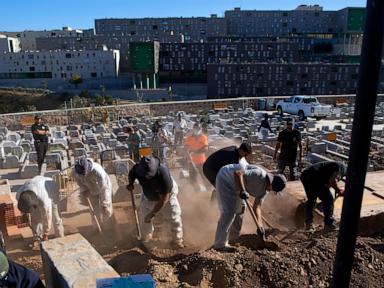
Every time a nameless body goes into the ground at a Spanish border enclave, the cameras roll. Politicians shed scripted tears. Activists march with candles. Editorial boards publish soaring pieces about humanity, dignity, and the tragedy of our shared global conscience. Everyone agrees it is a terrible thing. And everyone is completely missing the point.
Let us stop pretending that standard mourning fixes structural failure.
The standard narrative around migrant deaths at borders like Melilla or Ceuta operates on a comforting, lazy consensus. The story goes that if border authorities just showed more empathy, if processing centers were kinder, or if rescue budgets were slightly larger, these tragedies would stop. That is a comforting fairy tale designed to soothe the conscience of bureaucrats while preserving a broken status quo.
I have spent years watching policy analysts treat symptoms while ignoring the machinery producing the casualties. The grim reality is that solemn burials and tearful vigils have become a release valve for a system built to fail by design.
The Economics of Deterrence Are Broken
Economists and migration researchers love to talk about pull factors. They argue that as long as Europe remains wealthy, people will risk everything to get there. But focusing solely on pull factors ignores the supply chain of desperation.
When you make legal entry nearly impossible for low-skill workers from the Global South, you do not stop movement. You simply privatize it and hand it over to violent cartels and human traffickers. The harder you make the wall, the higher you drive the price of passage, and the more desperate the methods become.
Imagine a scenario where a pharmacy locks its doors, boards up the windows, and claims it has successfully eliminated shoplifting, ignoring the dying crowds breaking down the back wall for insulin. That is current European border policy.
The Spanish territory burials are not anomalies. They are the predictable logistical outcome of a bureaucratic strategy that relies on physical deterrence to do the dirty work of population management.
The Myth of Humanitarian Border Management
Politicians love to coin phrases like humanitarian border management. It sounds progressive. It sounds clean. It implies you can combine razor wire with human rights if you just hire enough social workers in high-visibility vests.
This is dangerous nonsense.
You cannot humanize a barrier whose primary purpose is exclusion. When you fortify a perimeter with barbed wire, watchtowers, and rapid-response units, you are not managing a humanitarian crisis. You are managing a security threat. Treating migrants like security threats while simultaneously offering them pious funerals after they drown or suffocate is the height of hypocrisy.
The experts will tell you that better coordination between agencies is the answer. They want more committees, more cross-border data sharing, and more funding for coastguards. I have watched governments burn millions of euros on high-tech surveillance blimps and thermal cameras that only succeed in pushing desperate people toward more lethal, remote crossing routes.
Every time a route is closed off, the fatality rate spikes. This is not a secret. It is basic math. By celebrating interceptions and mourning the dead, the state avoids asking the only question that matters: Why are we forcing people into the desert and the open sea in the first place?
What Honest Immigration Reform Actually Looks Like
If we want to stop the burials, we have to abandon the illusion of total control.
Borders will never be airtight. Pretending they can be through sheer force of engineering creates a black market for human life that generates billions for smugglers. If European nations actually cared about saving lives, they would dismantle the bottleneck.
That means creating functional, high-volume work visas that allow people to arrive legally, work, pay taxes, and return home without risking their lives in makeshift boats or scaling razor wire fences. It means replacing dangerous maritime crossings with predictable transit corridors.
Does this approach have downsides? Yes. It requires political courage, challenges entrenched xenophobic voting blocs, and forces domestic labor markets to adapt. It is messy, and it upsets voters who want to believe that national borders can remain medieval keeps in a hyper-globalized economy.
But honesty always has a price. Right now, Europe pays that price in unmarked graves while pretending it has clean hands.
Stop funding the grief industry. Stop pretending that mourning the victims substitutes for changing the policies that kill them. Tear down the wall between legal labor and illegal desperation, or accept that every funeral is just another state-sanctioned performance.