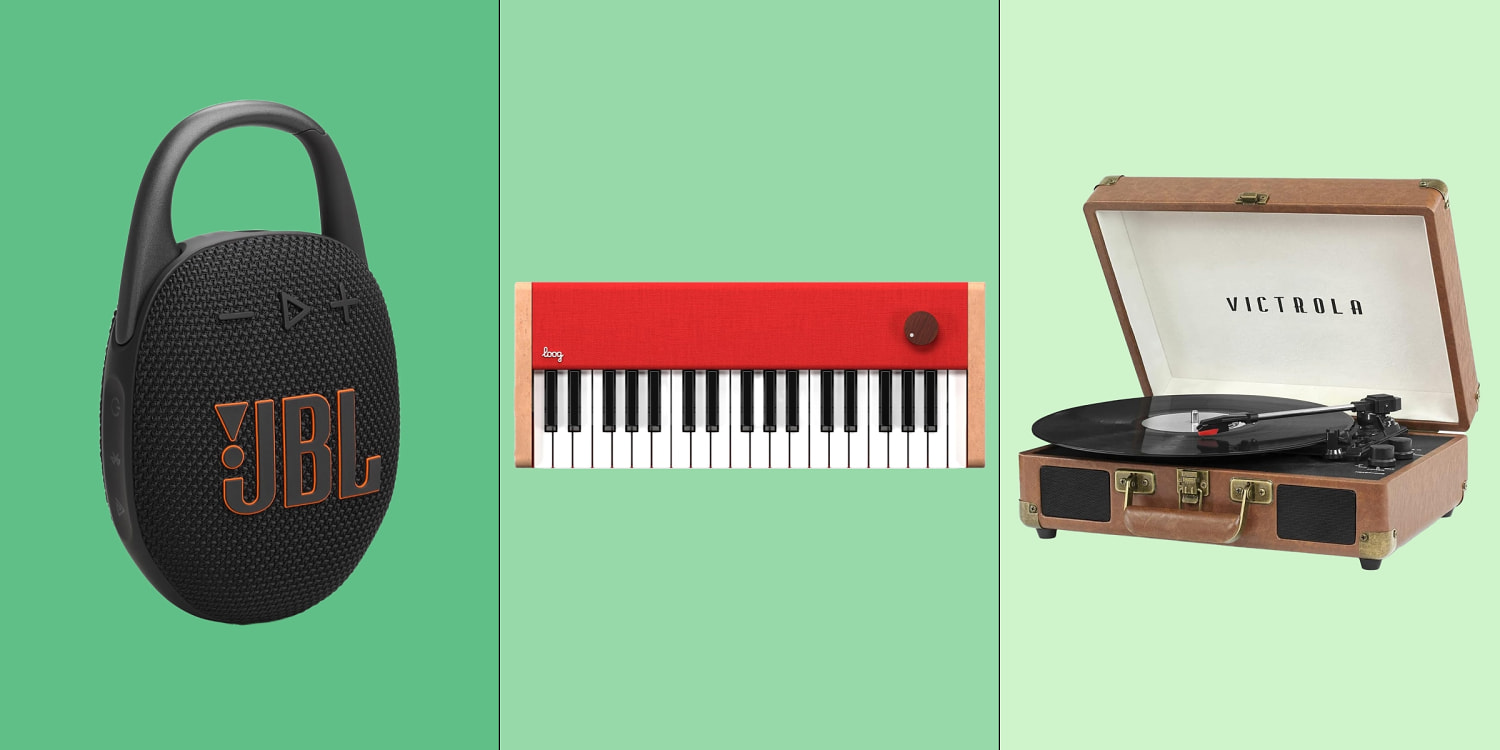
Standard gift guides for music lovers are lazy. Predictable. Built for clicks rather than ears. Every year, the same recycled listicle shows up with its predictable lineup: noise-canceling headphones, a retro turntable, a sleek smart speaker, and a band tee two sizes too big.
It sounds helpful on paper. In practice, it treats serious listeners like walking stereotypes. For a more detailed analysis into this area, we suggest: this related article.
I have spent years inside audio retail, studio gear circles, and consumer hardware launches. I have watched brands blow millions trying to sell "lifestyle audio" to people who actually care about how sound moves through a room or hits a nerve. Most of those products end up in a drawer by February. Why? Because buying for someone who loves music is not about buying more music stuff. It is about respecting how they actually listen.
The Lazy Consensus Around Music Gifts
The usual playbook assumes every music fan wants three things: portability, nostalgia, or a logo. Give them wireless buds for the commute. Buy them a vinyl record because "everyone loves vinyl." Grab a desktop amp with glowing tubes because it looks cool on Instagram. For broader context on the matter, extensive coverage is available on Apartment Therapy.
That consensus misses the actual mechanics of listening.
First, convenience is not the same as fidelity. Bluetooth codecs compress audio data to save bandwidth and battery life. Even high-end wireless headphones make trade-offs between latency, active noise cancellation, and tonal accuracy. There is nothing wrong with wireless earbuds at the gym. Calling them an upgrade for a dedicated listener is a category error.
Second, nostalgia is a trap when it comes to playback gear. Budget all-in-one record players often use heavy tracking force and cheap ceramic cartridges. They look charming on a shelf. Over time, they can wear down records faster than better-engineered turntables while delivering thin, harsh playback. Giving a music nerd a toy turntable because "vinyl is back" is a bit like handing a home cook a plastic toy oven because baking is trending.
Third, merchandise is identity signaling, not audio appreciation. A vintage tour shirt or a limited cassette is fun for a fan of that specific artist. Yet gift guides treat fandom as a single uniform bucket. Someone who spends four hours a week dissecting jazz chord voicings or dub plate mastering does not care about the same things as someone who plays stadium rock at top volume in a car.
Imagine a scenario where you buy a devoted classical listener a bass-heavy party speaker because the review headline called it "punchy." The speaker is well-built. The battery lasts twenty hours. Still, it boosts low frequencies and scoops midrange detail in ways that flatten string sections and make piano transients sound bloated. The gift fails not because the product is bad, but because the tuning fights the music.
Stop Asking What to Buy and Start Asking How They Listen
People searching for gift ideas usually type the wrong question. They ask, "What is the best gift for a music lover?"
That question treats "music lover" as a single personality type. It is not. A producer building beats on a laptop, an audiophile chasing a clean stereo image, a live-show addict who collects setlists, and a casual listener who uses playlists to regulate their mood have completely different needs.
Let us look at a few classic follow-up questions people ask when shopping for music fans—and strip away the polite nonsense.
"Are expensive headphones always a better gift?"
No. Price buys materials, brand cachet, industrial design, and sometimes better acoustic engineering, not automatic compatibility with the listener's head, habits, or taste.
An open-back pair of studio-style headphones—like reference models from Sennheiser or Beyerdynamic—can sound wide, natural, and detailed in a quiet room. Take those same open-back headphones onto a noisy train or an airplane, and external noise pours straight in while your music leaks out to everyone sitting next to you. Meanwhile, closed-back models isolate better and keep sound private, though some sacrifice a bit of spatial openness.
And comfort is non-negotiable. Clamping force, earpad material, weight on the crown of the head, and cable microphonics decide whether someone wears headphones for ten minutes or three hours. A $400 pair that pinches after forty minutes is a worse gift than a $120 pair they forget they are wearing.
"Is vinyl still a safe gift for music lovers?"
Only if you know three things: whether they already own a decent turntable, what music they actually want on physical media, and whether they have space and patience for maintenance.
Vinyl is tactile, ritualistic, and fun. It also costs more per album, takes up real shelf space, requires occasional stylus cleaning and anti-static care, and forces you to flip a disc every twenty minutes. For some listeners, that friction is the whole point. For others, it gets old fast.
If you do buy a record, skip the gimmick pressings unless you know they collect variants. Look for a solid pressing of an album they love—ideally one sequenced thoughtfully for sides A and B. Better yet, buy a gift card to a local independent record shop so they can dig through bins themselves. Half the joy of record shopping is the hunt, not having someone else guess your taste.
"What about smart speakers and wireless gear?"
Wireless gear solves real problems. Multi-room streaming makes background music effortless. Good travel speakers make hotel rooms and backyard hangouts better.
Where people go wrong is pretending wireless convenience equals high-end home hi-fi. Room acoustics matter enormously. Even great speakers placed in a corner or tucked into a tight bookshelf can suffer from bass boom or muddy reflections. In acoustics and studio design—a discipline shaped for decades by engineers and acousticians like Floyd Toole—the interaction between speaker dispersion and room boundaries plays a massive role in what reaches your ears. A sleek wireless box does not magically repeal physics.
Four Gift Directions That Actually Respect Music Lovers
If you want to give something thoughtful without falling back on clichés, look at the friction points around listening rather than chasing hype.
| Gift Direction | Why It Works | Who It Fits Best | Where It Can Go Wrong |
|---|---|---|---|
| Acoustic & Listening Comfort | Improves the physical environment or reduces listening fatigue | Desk listeners, late-night readers, home studio hobbyists | Can look utilitarian or take up floor/wall space |
| Live & Community Access | Creates shared memory and supports real-world music scenes | Concertgoers, local scene regulars, curious explorers | Schedule conflicts, travel logistics, or venue preferences |
| Care, Storage & Organization | Protects collections and removes daily annoyance | Vinyl collectors, gear tinkerers, physical media fans | Can feel practical rather than flashy if overdone |
| Curated Discovery & Craft | Sparks curiosity without forcing specific taste | Broad listeners, songwriters, music theory nerds | Misses the mark if the format clashes with their routine |
1. Fix the Listening Environment, Not Just the Gear
Most people spend money on sources and speakers while ignoring the room or the seat. A decent headphone stand keeps expensive cups from getting crushed or dusty. A pair of isolation pads or desktop speaker stands can decouple nearfield monitors from a hollow desk, tightening up low-end clarity immediately. Even simple acoustic absorption panels—placed thoughtfully at early reflection points—can tame harsh slap echo in a boxy room.
2. Buy Time, Space, or Live Experiences
Music lives in moments. Concert tickets, festival passes, museum sound exhibitions, or a contribution toward studio rehearsal time often outlast any gadget. If you go the ticket route, pick an artist they genuinely love—not a band you want to see—and make sure the date actually works. A surprise ticket to a show they cannot attend is just homework.
3. Upgrade the Small Daily Friction Points
Serious listeners notice tiny annoyances. A durable braided replacement cable for modular headphones. A proper record brush, stylus cleaner, or inner sleeves that do not shed paper dust. High-filtration musician's earplugs (such as attenuating filters from Etymotic or similar acoustic makers) that lower volume evenly without muffling highs like cheap foam plugs do. Anyone who goes to clubs, rehearsals, or loud venues will thank you after their ears stop ringing.
4. Support Real Discovery Without Playing Mind-Reader
Buying an obscure album blind is a gamble. Buying a subscription to a thoughtful music publication, a curated physical music club, or a high-resolution streaming tier they have been eyeing lets them steer. If you want to pick something physical yourself, look at books on how records are made, arranged, or engineered—behind-the-scenes craft fascinates far more music lovers than surface-level celebrity gossip.
Where This Contrarian Approach Can Backfire
Being anti-cliché has its own risks. If you overthink too hard, you can end up buying something hyper-niche that misses the mark completely.
A specific audio cable, a specialized studio accessory, or an esoteric pressing might delight one listener and confuse another. Sometimes a classic gift really is the right call—like replacing a beat-up pair of earbuds the person uses every single day on their walk to work. Practical beats clever when practicality is what is missing.
And there is always the trap of snobbery. Music is supposed to feel good, connect people, and move bodies. Nobody wins when gift-giving turns into a purity test over bitrates, tube warmth, or pressing plants. If your friend loves a bright Bluetooth speaker at a cookout, let them enjoy the cookout.
What to Do Before You Pull Out Your Card
Pay attention for two weeks before you buy anything. Notice what they complain about while listening. Notice whether they wear headphones at a desk, spin records on Sunday mornings, hunt for live sets, or keep music humming quietly while they cook.
Skip the predictable listicle. Match the gift to how they actually live with sound.