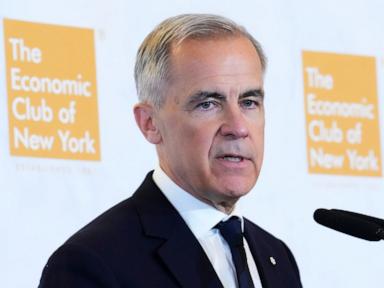
Canadian Prime Minister Mark Carney stood before the Economic Club of New York on Thursday and attempted a high-wire act that few global leaders have survived. Facing a room of Manhattan financiers and industry titans, Carney pitched a reimagined economic alliance designed to help make America great again. The overture arrives at a critical juncture. In July, President Donald Trump faces a mandatory review of the United States-Mexico-Canada Agreement (USMCA). He has openly muddled whether to renew the pact, using the threat of termination as leverage to extract what Washington sources describe as an entry fee from its northern neighbor. Carney’s rhetoric was wrapped in the language of sovereign strength, but the underlying reality points to a deeply fractured relationship that threatens the economic stability of North America.
The core of the dispute lies in a fundamental misunderstanding of economic dependency. Carney argued that Canada is actively diversifying away from its southern neighbor, pursuing trade pacts across the globe to secure strategic autonomy. He noted that a country unable to feed, fuel, or defend itself cannot claim true sovereignty. It is a compelling narrative for a domestic Canadian audience that narrowly elected Carney on a promise to stand up to Washington’s protectionist impulses.
The numbers tell a different story. Nearly 75 percent of Canadian exports are bound for American markets. No amount of diplomatic outreach to Europe or Asia can replace that scale of proximity and integration. For all the talk of autonomy, Ottawa remains bound to the economic gravity of the United States.
The immediate catalyst for this diplomatic friction is a series of sectoral tariffs imposed by the Trump administration. Hit hard by duties on aluminum and steel, Canadian industries are already feeling the chill. Investment has slowed, and supply chains that took decades to build are beginning to fray. Trump’s aggressive trade moves, including a bizarre suggestion that Canada should simply become the 51st U.S. state, have forced Carney into a defensive crouch disguised as an offensive strategy.
Ottawa’s counter-strategy relies on leveraging its vast natural resources. Carney pointed to Canada's position as an energy superpower, rich in critical minerals, oil, natural gas, and clean electricity. The argument is simple. The American tech sector is facing an acute energy shortage driven by the explosive growth of artificial intelligence and massive data centers. Canada can solve that problem. By fast-tracking projects like a major graphite mine in Quebec and securing liquefied natural gas agreements, Ottawa hopes to position itself as an indispensable utility provider for America’s tech-driven future.
This transactional approach overlooks the political reality in Washington. Trump has consistently viewed trade through a zero-sum lens. A win for a trading partner is viewed as a loss for America. The White House has indicated that before formal negotiations on the trade pact can even begin, Canada must offer significant concessions. These demands cover sensitive areas like agricultural protections and industrial subsidies.
Carney’s performance in New York was a calculated gamble. By presenting detailed proposals on autos, energy, and aluminum, Canada is trying to bypass the political theater of the White House and appeal directly to Wall Street. The goal is to convince American business leaders that stability in North American trade is vital for their own bottom lines.
The risk is that Washington holds all the cards. If Trump decides to let the USMCA lapse or insists on terms that decimate Canadian manufacturing, Ottawa’s options are remarkably limited. Doubling non-U.S. exports over the next decade is a fine political talking point, but infrastructure cannot be rebuilt overnight. Ports, rail lines, and shipping lanes take years to develop.
The coming months will determine whether North American economic integration can survive this era of aggressive protectionism. While Carney projects confidence that both sides will work their way through the irritants, the lack of formal trade talks over the past few months suggests otherwise. A stronger, more independent Canada is an appealing vision for Ottawa, but it requires a partner in Washington willing to respect the rules of mutual benefit. Right now, that partner does not exist.


