Mainstream media loves a good apocalypse. Every time a drone crosses a border or a missile lights up the night sky over the Persian Gulf, newsrooms dust off the "Middle East on the Brink" templates. They scream about an uncontrollable regional war. They treat complex local actors like mindless characters controlled by a single joystick in Tehran.
It is lazy. It is wrong.
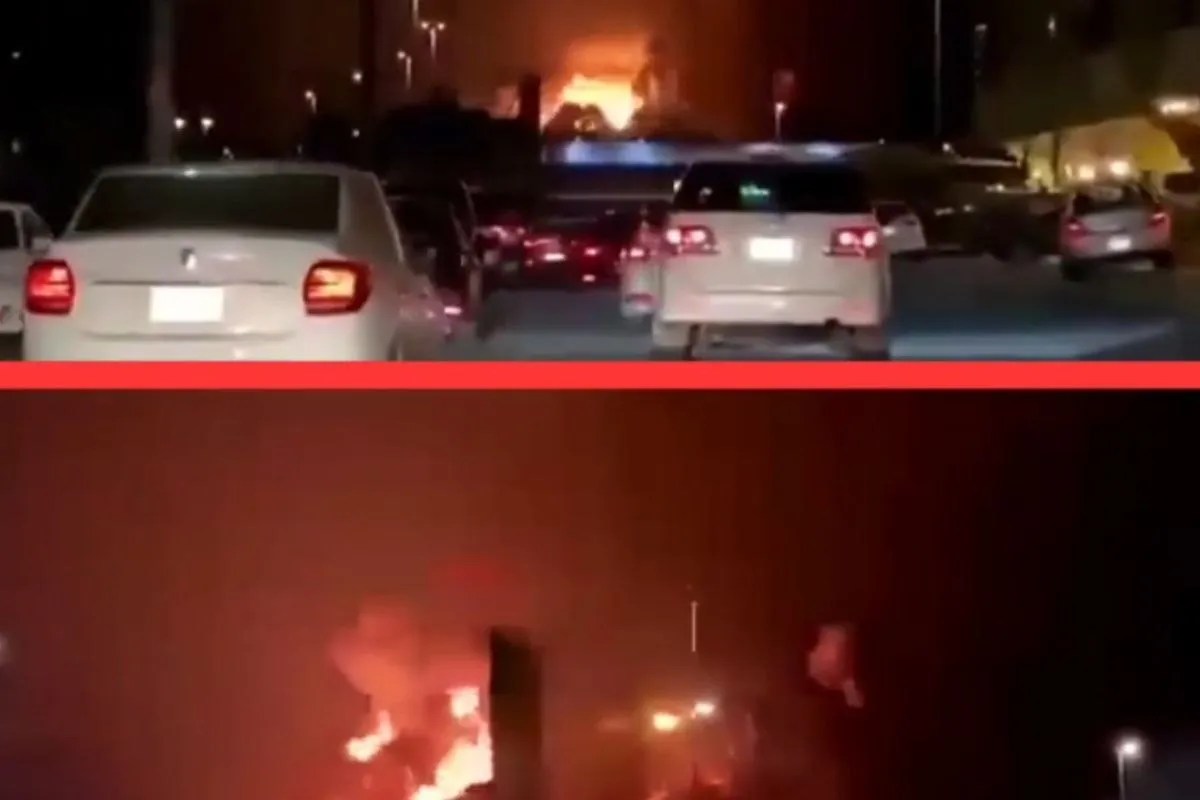
The recent coverage of Houthi drone and missile strikes targeting Saudi infrastructure is a masterclass in this media panic. The narrative tells you that the region is spinning out of control, that an all-out Iran-US war is inevitable, and that every escalation is a random act of chaos.
Step back from the sensational headlines. Look at the actual mechanics of the region. The reality is the exact opposite of what you are being told. The Middle East is not spinning out of control. It is operating under a highly calculated, transactional, and deeply deliberate balance of power. What looks like chaos to an outside observer is actually a brutal, cold-blooded negotiation by other means.
The Puppet Myth and the Reality of Local Agency
The most persistent flaw in Western and global reporting is the insistence on viewing the Houthis—properly known as Ansar Allah—merely as a localized branch office of Iran Inc.
I have spent years analyzing regional security architectures and tracking logistics chains in the Red Sea corridor. If you believe the Houthis press a button only when Tehran gives the order, you do not understand the tribal dynamics of northern Yemen. You fail to comprehend how the movement survived a decade of relentless bombardment by a Western-backed coalition.
Tehran provides the blueprints, the specialized components, and the strategic depth. No serious analyst denies this. The smuggling routes through the Gulf of Oman are well-documented. But the Houthis are not corporate middle managers. They are a fiercely independent, highly ideological domestic force with their own distinct political survival strategy.
When the Houthis target a Saudi airport or disrupt shipping lanes, they are not just doing a favor for Iran. They are executing a domestic survival strategy. They are consolidating power inside Yemen by positioning themselves as the sole defenders of Arab sovereignty. They use regional conflict to distract from a collapsing domestic economy, lack of public services, and unpaid civil servant salaries in the territories they control.
By framing every strike as a direct directive from Iran to ignite a global war, mainstream analysis completely misses the point. It prevents policymakers from addressing the local grievances and internal incentives that actually drive the conflict. You cannot deter an adversary if you refuse to understand what they actually want.
The Broken Math of Modern Air Defense
Let us talk about the military reality of these attacks, stripped of the media theater. The headline screams that missiles were fired at a Saudi airport, implying a massive failure of defense or a sudden shift in vulnerability.
The real story is not that the attacks happen. The real story is the staggering, unsustainable asymmetric math of modern air defense.
Consider the economic equation of a typical intercept scenario:
| Attack Vector | Defense Vector | Cost Mismatch |
|---|---|---|
| Houthi Qasef-2K or Samad Drone Cost: $15,000 - $30,000 |
MIM-104 Patriot Interceptor Cost: $3,000,000 - $4,000,000 |
~130x to 200x cost asymmetry against the defender |
| Loitering Munition Swarm Cost: $200,000 total |
Multi-Layered Missile Defense Battery Cost: Millions per engagement + sensor fatigue |
Systemic depletion of interceptor stockpiles |
This is the true crisis, but it has nothing to do with the region being "out of control." It is a cold, technical calculation. The Houthis and their backers understand that they do not need to destroy a target to win. They just need to force the defender to spend millions of dollars defending it. They want to deplete interceptor stockpiles that take years to manufacture.
Saudi Arabia has spent billions building one of the most sophisticated air defense networks in the world. Their interception rates are remarkably high. But no economy, no matter how rich in oil reserves, can indefinitely spend $3 million to shoot down a $20,000 lawnmower with wings.
The threat is not a sudden military conquest. It is a slow, grinding fiscal attrition. When you look at the strikes through this lens, the behavior becomes entirely logical, highly predictable, and completely controlled. It is a war of ledger books, not an emotional spiral into madness.
The Illusion of a Spiraling Escalation
Why do we insist on calling the situation uncontrollable? Because it serves the interests of multiple players to maintain the illusion of an imminent explosion.
For the media, panic brings eyeballs. For defense contractors, it secures long-term procurement contracts. For regional governments, it justifies emergency measures and locks in security guarantees from Washington.
Look at the actual behavior of the primary states involved: Iran, Saudi Arabia, and the United States. Despite the fierce rhetoric, their actions reveal a profound desire to avoid a total systemic collapse.
- Riyadh’s Calculated Calm: Notice what Saudi Arabia did not do after the recent strikes. They did not launch a massive, scorched-earth bombing campaign over Sana'a. They did not tear up their diplomatic agreements with Iran. Why? Because Saudi leadership is hyper-focused on Vision 2030. They know that massive tourism projects, economic diversification, and foreign direct investment require stability. They are willing to absorb controlled friction to protect their broader economic transformation.
- Tehran’s Strategic Threshold: Iran understands the limits of its leverage. A total, unconstrained war would bring a direct confrontation with the United States, risking the survival of the clerical regime. Tehran uses its partners across the region as a shield, keeping conflicts externalized and limited. They turn the pressure valve up or down depending on sanctions negotiations, nuclear leverage, and internal political dynamics.
- Washington’s Deterrence Dilemma: The United States deploys carrier strike groups and conducts limited retaliatory strikes, but deliberately avoids targets that would trigger a wider war. The goal is management, not victory.
This is not a region out of control. This is a highly choreographed dance of deterrence, signaling, and managed instability. Every player knows exactly where the red lines are. They step right up to the edge, look over, and then take a step back.
Dismantling Flawed Premises
We need to challenge the flawed premises that dominate public discourse on this conflict.
People frequently ask: How do we stop Iran from destabilizing the region?
The question itself is broken. It assumes that stability is the natural default state of the region and that one bad actor is disrupting it. The Middle East is a multipolar system with competing regional powers—Saudi Arabia, Iran, Turkey, Israel, and the UAE—all vying for influence. In a multipolar system, friction is not an anomaly; it is the default state. You do not "fix" it. You manage the shifts in the balance of power.
Another common question is: Why doesn't the US military simply destroy the Houthi launch capabilities?
Anyone who asks this does not understand the geography of Yemen or the nature of asymmetric warfare. The Houthis do not rely on massive, easily targeted military bases. They use highly mobile, truck-mounted launchers hidden in rugged, mountainous terrain or deep within civilian infrastructure. You cannot eliminate this capability through airstrikes alone without a massive, multi-year ground invasion that no Western nation has the political will or strategic reason to execute.
The conventional playbook of military deterrence is obsolete when applied to decentralized, highly motivated non-state actors who view martyrdom as a victory and economic destruction as a legitimate tool of statecraft.
The Strategy Shift Nobody Wants to Admit
If the current approach of panic, interception, and occasional retaliatory bombing is failing to stop the strikes, what is the alternative?
The alternative requires a cold, unsentimental shift in strategy that many policymakers find politically unpalatable.
First, we must accept that absolute security is an illusion. Saudi Arabia and its allies cannot achieve zero-risk airspace. Trying to intercept every single low-cost projectile with exquisite, multi-million-dollar defense systems is a fast track to strategic exhaustion. Security architectures must transition to resilience rather than total interception. This means hardening critical infrastructure, creating redundant supply chains, and allowing non-critical, low-impact targets to take hits rather than wasting invaluable interceptors on empty desert sand or minor administrative buildings.
Second, diplomatic engagement cannot be treated as a reward for good behavior. It must be used as a tool to manage conflict with adversaries. The diplomatic channel between Riyadh and Tehran is not a sign of weakness; it is the most effective crisis-management tool currently available in the region. By keeping lines of communication open, both sides can communicate their red lines directly, preventing a miscalculation from turning a localized drone strike into a broader systemic shock.
The downside to this contrarian approach is obvious: it looks weak on a television screen. It requires political leaders to stand before the public and admit that they cannot completely stop every attack. It forces them to acknowledge that the enemy has real leverage that must be negotiated around, rather than simply crushed.
But the alternative is continuing to participate in an asymmetric war of economic attrition that the West and its regional partners are fundamentally structured to lose. Stop falling for the media panic. The region isn't breaking apart. It is simply showing you the true, unvarnished cost of modern geopolitical competition.