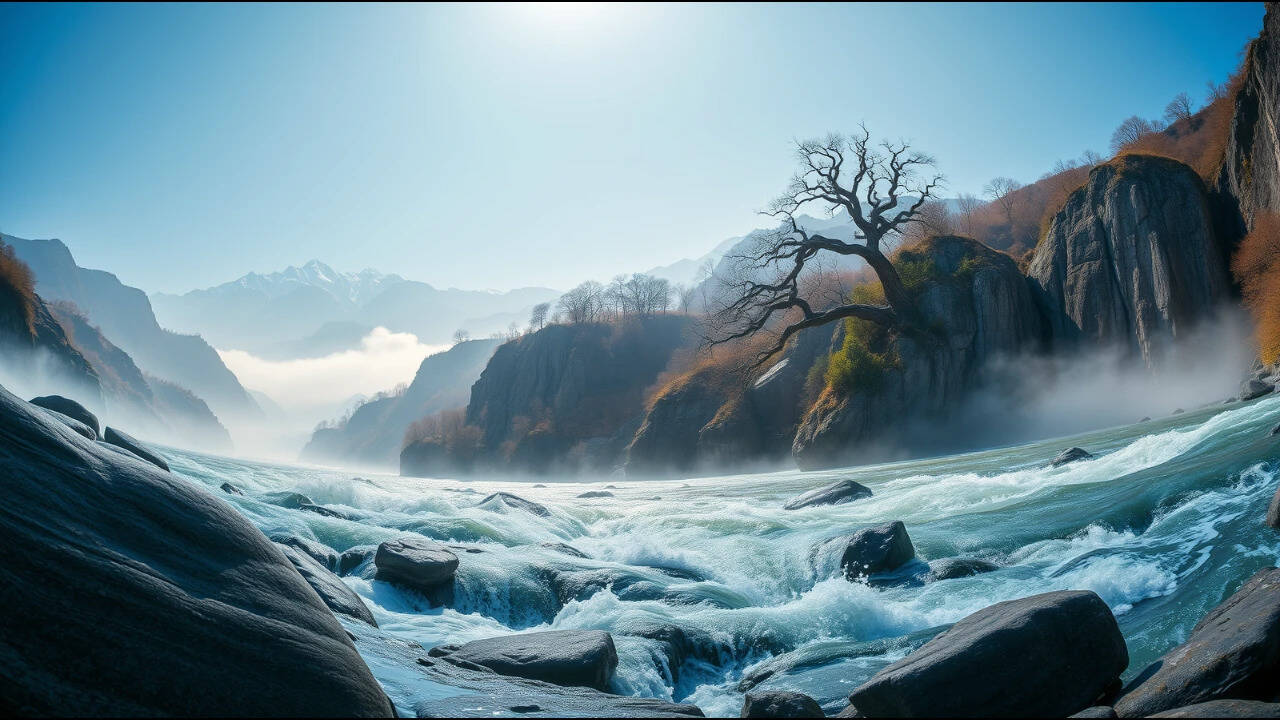
Commercial satellites photograph every square meter of landmass twice daily. High-altitude drones map elevation down to the centimeter. Algorithms stitch together infrared, radar, and optical imagery to render a digital twin of our planet. Yet the travel industry still sells the fantasy of the untouched frontier. Glossy magazines and corporate tourism boards push a singular narrative. They claim that the map is empty at the edges, waiting for the intrepid wanderer to claim it.
This is a commercial lie.
There are no blank spaces left on the globe. Every valley has a coordinate. Every peak has a summit record. Every remote indigenous community has been cataloged, photographed, and often geotagged by algorithms designed to monetize curiosity. The obsession with being the first to discover a place ignores a fundamental truth. Discovery is no longer a geographical achievement. It is a logistical luxury.
When travelers speak of hunting hidden gems, they usually mean places where other tourists from their specific social stratum do not congregate. They do not want genuine isolation. True isolation involves unpalatable realities like bureaucratic indifference, lack of medical infrastructure, and severe discomfort. What tourists actually seek is curated obscurity. They want the aesthetic of hardship backed by the safety net of satellite communication.
The mechanics of modern scouting rely on proprietary data. Travel curators and adventure outfitters monitor permit applications, national park registry logs, and flight tracking data to identify emerging destinations long before they hit mainstream feeds. Once a region crosses a specific threshold of accessibility, the marketing machinery activates. A remote valley in Central Asia transforms from an agrarian community into an experiential adventure destination within eighteen months of a paved road reaching its perimeter.
Local populations experience this cycle as an extractive economy. Tourism introduces capital, but it rarely builds sustainable infrastructure. Instead, it inflates land values, alters traditional economies, and commodifies daily life. When outsiders arrive looking for authenticity, they often freeze a living culture in amber. They demand that locals perform an idealized version of their heritage while denying them the economic mobility enjoyed by the visitors themselves.
Consider the shift in how we document travel. Decades ago, exploration yielded field notes, botanical sketches, and physical specimens. Today, scouting yields metadata. The value of a newly visited location is measured by its algorithmic potential. Can it generate engagement? Does it offer a distinct visual backdrop that separates the creator from the saturation of standard vacation content? The geography matters less than the digital footprint it leaves behind.
This dynamic creates a treadmill of perpetual novelty. Because information moves instantly across global networks, the half-life of a secret destination has collapsed. A valley featured on a popular video platform goes from undiscovered to over-touristed in a single season. The infrastructure cannot cope with the sudden influx of foot traffic. Trails erode, waste management systems fail, and local wildlife retreats from the noise.
The industry responds by pushing the boundary further outward into extreme environments. Operators now market expeditions to high-altitude deserts, polar fringes, and deep oceanic trenches. These ventures are marketed as raw exploration. In reality, they are high-end extreme sports packaged for affluent consumers who view risk as a consumable product. The danger is managed by teams of logistics experts, guides, and safety personnel who ensure the client returns home with a dramatic story and zero actual peril.
We must stop romanticizing the hunt for the unmapped. The world is fully known, heavily documented, and increasingly fragile. The responsibility of modern travel is not finding somewhere new to consume. It is learning how to inhabit known places without breaking them. The real frontier is not geographic. It is behavioral.
Constraint is the only sustainable strategy left. Accepting that some places should remain difficult to visit protects both the environment and the communities that call those regions home. When a destination becomes too easy to reach, its value diminishes for everyone, especially those who live there year-round. Preserving what remains requires a deliberate choice to look away from the screen, step off the grid of constant optimization, and leave the remaining quiet corners alone.