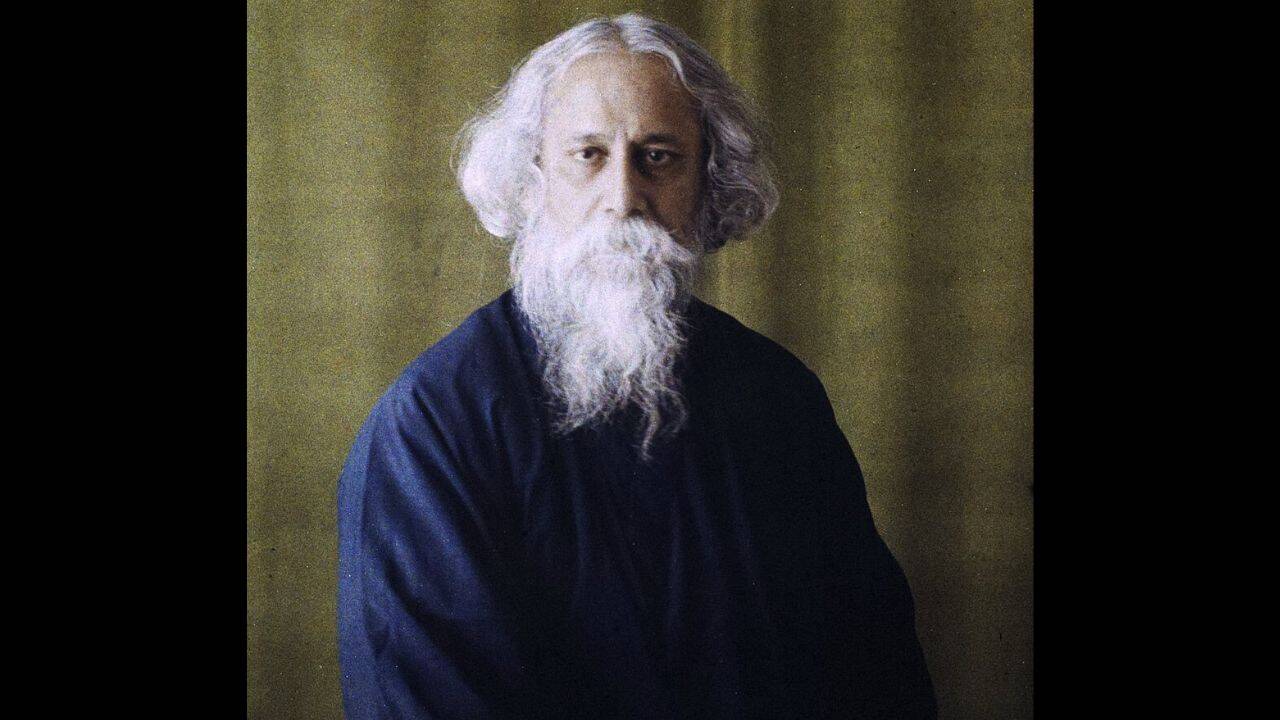
Every few weeks, the internet rediscovers a fragment of Rabindranath Tagore. A quote surfaces on LinkedIn feeds and Instagram graphics, promising that everything meant for you will eventually find its way to your doorstep. It is a comforting thought. It removes the sting of rejection, softens the blow of a missed opportunity, and wraps professional and personal failure in a cozy blanket of cosmic destiny. But waiting for what belongs to you is a passive strategy that guarantees failure in a competitive world.
The phrase usually trails off with an ellipsis, leaving the reader to fill in the blanks with their own romantic notions of patience and timing. We want to believe that the universe keeps a ledger, balancing the books of our unrequited efforts while we stand still. Professional experience tells a different story. Markets do not reward patience alone. Opportunities do not drift aimlessly across oceans until they crash against the shore of your passivity. They are seized, built, or stolen by people who stopped waiting for permission.
The Seduction of Cosmic Timing
Fatalism is an easy drug to take. When a promotion goes to someone else, or a business venture collapses before the ink on the incorporation papers dries, telling yourself that it simply was not yours to have keeps the ego intact. It protects you from the uncomfortable work of a post-mortem. It saves you from asking whether your product was flawed, your pitch was weak, or your network was non-existent.
History is entirely devoid of examples where someone achieved dominance by sitting quietly and trusting the timeline. The architects of major industries did not wait for their market share to wander into their offices. They aggressively hunted down capital, engineered demand, and battered down doors until the people holding the keys had no choice of response. Tagore himself was a relentless producer of art, writing thousands of poems, essays, and songs, managing an estate, and actively founding institutions. He did not wait for inspiration to knock; he spent decades at a desk.
When we misinterpret literary musings as strategic business advice, we commit a category error. Philosophy exists to help humans endure the chaos of existence. Strategy exists to carve a path through it. Mixing the two creates a dangerous paralysis.
Anatomy of a Missed Opportunity
Consider a hypothetical scenario in the tech sector. Two software developers build competing project management tools. Developer A believes deeply in organic growth and the philosophy that a great product will naturally attract the right users if given enough time. Developer B hits the pavement, cold-emails five hundred prospective enterprise clients a week, refines the value proposition based on brutal rejections, and iterates the codebase twice a month based on actual customer complaints.
Six months later, Developer A is wondering why user acquisition is flat, consoling themselves with quotes about how what is meant for them will not pass them by. Developer B has secured two rounds of seed funding and a solid enterprise contract.
Nothing belongs to you by default. Ownership in the modern economy is established through execution, contracts, intellectual property, and relentless persistence. If you do not claim territory, someone else will claim it for you. The market is indifferent to your intentions. It cares only about output and value delivery.
Reengineering the Mindset for Active Pursuit
Moving away from passive fatalism requires a fundamental restructuring of how you approach professional setbacks. Instead of viewing a lost deal as evidence of cosmic misalignment, treat it as a data point. What went wrong in the negotiation? Where did the communication break down? What skills are you lacking that the winning candidate possessed in abundance?
- Audit your pipeline: Look at every project or career move stalled right now. Are you waiting for someone to reply, or are you creating a compelling reason for them to act?
- Redefine luck: What people call luck is almost always preparation colliding with aggressive visibility. Put yourself in rooms where decisions are made.
- Kill the excuses: Eradicate phrases like "it wasn't meant to be" from your professional vocabulary. Replace them with "what do I need to change for the next attempt."
The comfort of passive patience is a trap. It feels virtuous, but it is ultimately a form of self-sabotage wrapped in poetic language.
The Brutal Reality of Competition
In any high-stakes arena, resources are finite. There is only one first place. There is a limited pool of venture capital, a restricted number of prime real estate locations, and a finite amount of human attention span. In a zero-sum or highly competitive environment, waiting for your share means watching others consume the pie while you sit empty-handed at the table.
Tagore wrote from a specific historical and cultural context, grappling with profound spiritual questions during a time of immense political upheaval in Bengal. He understood struggle. He understood that creation requires immense labor. To reduce his complex worldview to a bumper-sticker mantra for corporate passivity does a disservice to his legacy and your career.
Stop waiting for the universe to hand you your due. The universe has no ledger, no delivery service, and no special interest in your comfort. Go build what you want, take the rejections on the chin, and force the world to acknowledge your presence