Ink on paper can carry the weight of an empire or the petty malice of a schoolyard prank. In the vast, unforgiving expanse of Alaska, where the horizon stretches farther than human memory can track, a political brawl has boiled down to a singular, agonizingly confusing asset: a name.
Imagine walking into a voting booth under the pale midnight sun. You lean over the paper, searching for familiarity. You want the man you know. Instead, you find a hall of mirrors.
Two men. Exactly the same name.
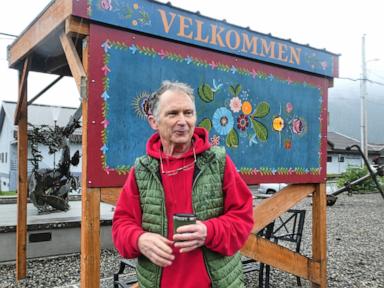
Incumbent U.S. Senator Dan Sullivan, a Republican backed by national heavyweights and millions in war chest funds, suddenly found himself sharing marquee space with another Dan Sullivan—a retired elementary school teacher from the small fishing community of Petersburg. To the senator, this was not a curious coincidence of nomenclature. It was a calculated, subterranean weapon.
Accusations flew south to Washington and back north to Juneau like buckshot. The senator didn't mince words, publicly accusing political adversaries and the camp of his chief Democratic rival, former U.S. Representative Mary Peltola, of engineering a dirty trick. The strategy, according to the incumbent's allies at the National Republican Senatorial Committee, was transparently malicious: siphon low-attention votes, induce maximum cognitive dissonance among the electorate, and pry open a path for the opposition in a fiercely contested Senate race.
The accused camps denied everything. The state Democratic Party shrugged off the chaos. But the machinery of state elections ground forward, trapped in a bizarre legal wrestling match over what constitutes voter deception and who owns a string of English syllables.
Elections are supposed to be arenas of clarity. They are supposed to measure the public will through transparent choices. Yet, modern political combat has evolved past mere policy debates or television ad blitzes. It has breached the fundamental architecture of identity. When a voter enters the booth, exhausted from the grinding economic pressures of remote living and the ceaseless drumbeat of national polarization, do they have the time to parse middle initials and bureaucratic fine print?
Consider what happens next in a system defined by ranked-choice voting. In Alaska’s unique primary ecosystem, margins are razor-thin, and every single ballot cast in error acts like a slow leak in a boat hull. A misplaced vote isn't just a statistical anomaly; it is an unvoiced desire misdirected into the void.
The legal ping-pong match that followed the filing deadline was dizzying. State election officials initially tried to bar the challenger, citing rules against confusing or misleading ballots. The challenger fought back, insisting he was a legal citizen exercising a constitutional right to run under his own birth name. Eventually, the Alaska Supreme Court stepped in, ruling that the challenger could stay on the primary ballot, albeit with structural tweaks to help distinguish the two men. One would carry the official mantle of the incumbent Republican; the other would stand stripped of party labels on the sample sheet, a ghost in the electoral machine.
This is the hidden cost of modern hyper-competition. Politics has become a space where every loophole is pressurized, where legal teams scrutinize voter registries the way bush pilots check fuel lines before a storm. The human element—the actual citizen trying to figure out who is going to fight for their healthcare, their fisheries, and their future—gets lost in the legal crossfire.
When identity itself becomes a tactical advantage, trust takes the hit. Voters are left cynical, squinting at sample ballots as if looking for forged signatures on a rare painting.
The ballots are printed now. The ink is dry. In the quiet backcountry towns and coastal inlets, Alaskans will soon pick up their pens. They will have to look past the noise, past the lawsuits, and past the shared syllables to find the reality beneath the paper.
Dan Sullivan vs. Dan Sullivan? Challenger with same name as Senator enters Alaska race
This video provides an overview of the unusual primary contest in Alaska where two candidates sharing the same name complicate the electoral landscape.
http://googleusercontent.com/youtube_content/1