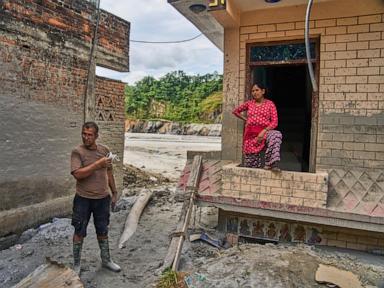
The water did not leave quietly. It dragged things away in the dark, carving new channels through living rooms and turning quiet mountain roads into grey scars of silt. When the rain finally stopped over Nepal, the sun came out with a harsh, indifferent brightness, beating down on a landscape that had fundamentally rearranged itself overnight.
Thirty days have passed since the flash floods tore through valleys and swept away entire neighborhoods. In the capital, life has resumed a frantic, honking rhythm. But in the places where the rivers broke their banks, time stopped on that night.
Thousands are still missing.
Not just numbers on a spreadsheet compiled by disaster management agencies, but people who were drinking tea, doing homework, or locking up shops when the ground liquefied beneath them. To understand what that means, you have to look past the statistics and think about a pair of shoes left by a doorway. You have to think about a mother who still sets an extra plate at dinner, even though the room that held the table is now filled with four feet of compacted mud.
Consider the physics of grief after a disaster. When a building collapses or a fire burns, there is usually a body, a grave, a site to mourn. But when a raging torrent sweeps people away, the earth swallows them whole. They are carried downstream, tangled in debris, deposited silently in distant riverbeds or buried beneath tons of landslide material. This leaves families in a state of suspended animation. Without a body, closure is an impossible luxury. Without a death certificate, insurance claims cannot be filed, loans cannot be paused, and legal lives cannot be untangled.
The bureaucratic weight presses down on shoulders already bearing the crushing fatigue of survival.
Walk through a displaced persons camp on the outskirts of the valley. The air smells of woodsmoke, damp wool, and unwashed rice. Tarps snap in the afternoon wind, secured with heavy stones and rusted iron sheets scavenged from the wreckage. Inside one makeshift tent, a man named Ramesh sits on a plastic mat, staring at the screen of a cracked smartphone. He is scrolling through blurry photographs sent by rescue volunteers hours away. A shoe. A fragment of blue cloth. A silver ring.
Every notification makes him flinch. Every ring of the phone is a small, sharp shock to his nervous system.
"If I find her, I can finally start rebuilding," he says, his voice flat, drained of all inflection. He isn't talking about his house. The house is gone—washed down the Karnali river basin alongside thirty others. He is talking about his younger sister. Until her name is officially entered into a register of the deceased, she remains legally alive, which means Ramesh remains legally trapped in the waiting room of tragedy.
This is the hidden cost of catastrophic flooding. The initial drama—the helicopter rescues, the dramatic footage of people clinging to rooftops—lasts for forty-eight hours on the evening news. Then the cameras leave. The anchors move on to the next political crisis or global summit. But the water recedes only to expose a long, grinding marathon of endurance.
Aid agencies report critical shortages of clean drinking water, leaving communities vulnerable to outbreaks of waterborne diseases like cholera and dysentery. Temporary shelters grow crowded as winter approaches in the high-altitude regions, where the air turns bitterly cold once the sun drops behind the peaks. Children wear oversized sweaters donated from Kathmandu, coughing in the damp night air. Schools are either flattened or serving as camps for the displaced, robbing the younger generation of the one steady routine that could anchor them through the trauma.
Yet, amid the ruin, human resilience asserts itself in stubborn, quiet ways.
Neighbors who lost everything share a single pot of lentils cooked over damp twigs. Youth volunteers from unaffected neighborhoods hike for hours through blocked trails, carrying sacks of rice and medicine on their backs because the bridges are gone. They do not talk about geopolitical climate resilience or infrastructure funding. They talk about clearing the drainage ditches before the next rain comes. Because there will be a next rain. Everyone knows the mountains are shifting, loosened by deforestation, erratic monsoons, and unmitigated road construction that cuts recklessly into fragile slopes.
The climate crisis is not an abstract debate here. It is measured in centimeters of rising water and the roar of boulders tumbling down a hillside in the middle of the night.
Recovery is not a straight line. It is a series of stumbles forward and painful slides backward. It is the sound of shovels scraping against concrete day after day, trying to unearth a doorway that no longer leads anywhere. It is the courage required to wake up in a tent, look out at a grey, ruined valley, and decide to plant a seed in the silt anyway.
The river has settled back into its banks now, flowing clear and cold over the rocks. But the names of the missing remain written in the mud, waiting for an answer that the valley is taking its time to give.