Weather standard operating procedures are broken.
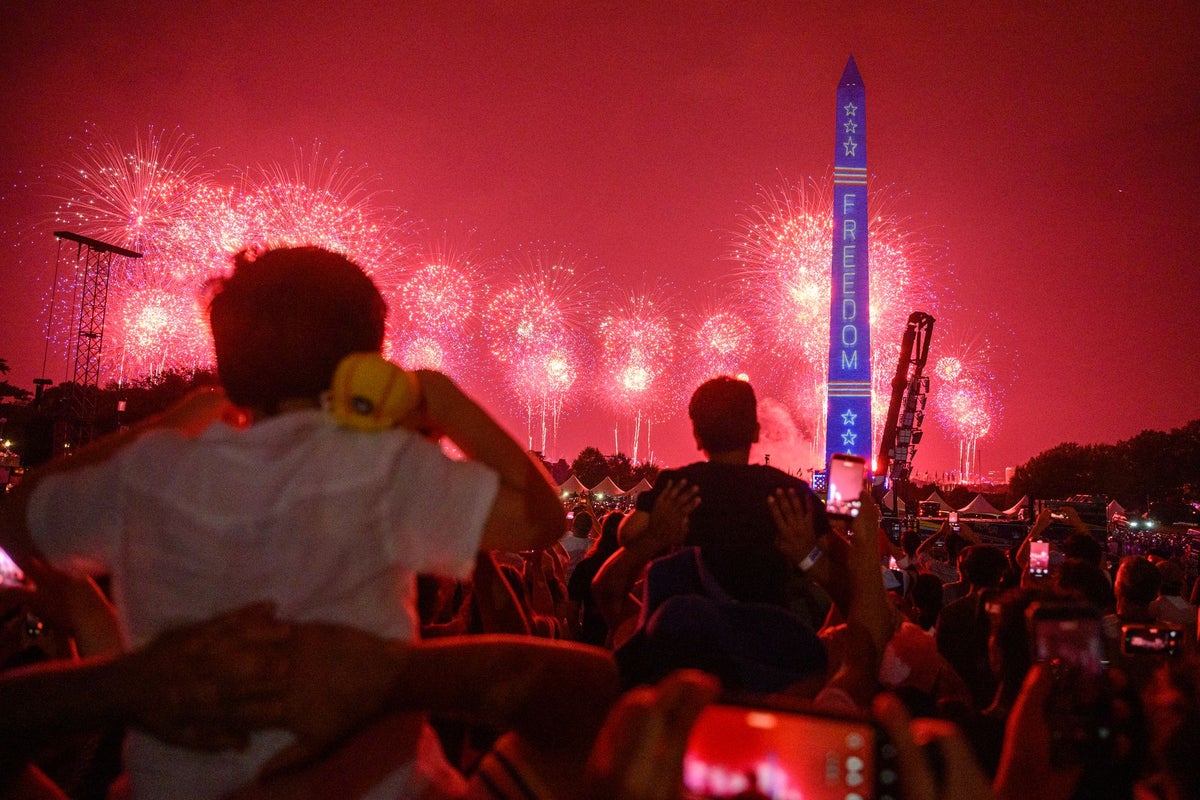
Every summer, a familiar drama plays out in Washington, D.C. The humidity spikes, the skies darken, and a group of anxious bureaucrats gathers around a radar screen. In 2019, this culminated in a high-stakes standoff: federal officials wanted to cancel or severely curtail the July 4 celebrations on the National Mall due to forecasted thunderstorms. Then, political pressure forced the show to go on.
The media immediately spun this as a dangerous instance of political interference overriding expert scientific consensus. They got it completely wrong.
The lazy consensus surrounding event cancellation is rooted in a fundamental misunderstanding of risk management. We have conditioned public safety officials to default to a zero-risk posture. When meteorologists predict a 60% chance of thunderstorms, the institutional reflex is to pull the plug. It protects the decision-makers from liability, but it completely ignores the hidden costs of cancellation and the realities of localized weather mechanics.
The intervention to keep the gates open on the National Mall wasn't a failure of protocol. It was a necessary correction to a systemic flaw in how public spaces are managed during volatile weather.
The Flawed Logic of the Zero-Risk Default
Institutional risk aversion operates on a asymmetric plane. If an official cancels an event and it doesn't rain, the public grumbles about a missed party, but the bureaucrat’s career remains perfectly safe. If they proceed and a lightning strike occurs, their career is over. Under this incentive structure, cancellation becomes the path of least resistance.
But true risk management requires balancing probability against consequence, not just fleeing from the worst-case scenario.
When you cancel a massive gathering on the National Mall, you do not magically transport hundreds of thousands of tourists back to their hotel rooms safely. You force an immediate, chaotic mass exodus.
- Metro stations choke with sudden crowds, creating crush hazards.
- Pedestrians flood the streets, increasing traffic accident risks.
- Tens of thousands of people are left exposed in transit anyway, often far from solid shelter.
I have spent years analyzing operational logistics and crisis management frameworks. The hardest lesson for institutions to swallow is that a controlled event with active mitigation strategies is frequently safer than a forced, chaotic evacuation triggered by a premature cancellation.
Weather Models Are Not Absolutes
The core justification for the attempted shutdown was the weather forecast. But relying on regional convective outlooks to cancel a localized, timed event is a misuse of meteorological data.
Summer storms in the Mid-Atlantic are notoriously cellular. A severe thunderstorm warning for Washington, D.C., might mean torrential downpours in Arlington while the National Mall experiences nothing more than a brisk breeze and overcast skies.
[Regional Forecast: 70% Storm Probability]
       /                           \
[Cell A: Heavy Rain]       [Cell B: High Wind]      [National Mall: Overcast]
(Hits 3 miles West)         (Hits 5 miles North)     (Safe for Fireworks)
Modern event management shouldn't rely on binary go/no-go decisions made twelve hours in advance based on macro forecasts. It requires real-time, micro-level tracking. The National Mall features some of the most sophisticated radar monitoring capabilities on earth. To throw up your hands and cancel the nation’s birthday celebration because of a colored blob on a radar screen fifty miles away is an abdication of operational duty.
The Cost of Corporate and Civic Coardice
Let’s talk about the downside of the contrarian approach. If you push forward and a microburst strikes the venue, the fallout is catastrophic. Tents collapse, equipment turns into projectiles, and people get hurt. That is a real, terrifying risk.
But the solution to that risk is aggressive, active mitigation—not total capitulation.
- Hardened Infrastructure: Temporary structures must be engineered to withstand 60 mph gusts, not just clear-sky conditions.
- Dynamic Sheltering Plans: Utilizing nearby federal buildings as designated, rapid-access lightning shelters rather than forcing people to flee the geographic area.
- Phased Delays: Splitting the event into modular components that can be paused and restarted instantly based on live lightning-to-surface telemetry.
During the 2019 event, despite the hand-wringing from the National Park Service and local emergency managers, the window of clear weather held. The fireworks happened. The crowd stayed safe. The critics claimed it was a lucky gamble. It wasn’t luck; it was the statistical reality of convective weather windows playing out exactly as a sophisticated reading of the live data suggested it could.
Stop Asking "Is It Safe?"
When planning massive civic gatherings, the public always asks the wrong question: Is it completely safe?
Nothing is completely safe. Gathering half a million people on a grassy strip in July carries inherent risk, from heat stroke to security threats. The real question we should be asking our public officials is: Do you have the operational competence to manage the volatility, or are you going to cancel the event to cover your own liabilities?
We have allowed a culture of hyper-precaution to dictate public life. When the default response to any environmental variable is to shut down, we degrade our civic resilience. We signal that our infrastructure and our leadership are incapable of handling anything outside of a sterile laboratory setting.
The next time a major public event faces a weather threat, look closely at the officials pushing for immediate cancellation. They aren't doing it to protect you. They are doing it to protect their resumes.
The National Mall celebration didn't need saving from the weather; it needed saving from the bureaucrats. Push past the institutional panic, read the live data, harden the infrastructure, and let the show go on.