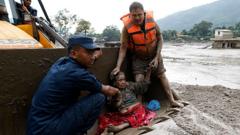
Water does not knock. It arrives with a deafening roar, tearing through stone, mud, and lives in a matter of seconds. When the devastating floods hit Nepal, the headlines blared for a few days. Then the news cycle shifted. The cameras packed up and left. But the people left behind are still digging through the wreckage, trying to piece together a reality that was washed away overnight.
If you want to understand the true cost of these disasters, you have to listen to the survivors of the Nepal flood. Their stories cut right through the sanitized statistics reported by international agencies. They speak of roofs ripped away, livestock swept into churning brown torrents, and the agonizing wait for rescue teams that often took too days to arrive because roads had vanished.
The Reality of Immediate Aftermath
Survival is just the opening act of a long tragedy. You crawl out of the debris. You look around and realize your home, your crops, and your savings are gone. Then what?
Waterborne diseases usually follow close behind swollen rivers. Cholera outbreaks and dysentery wait in the stagnant puddles left by receding floods. Medical infrastructure in rural Nepal is fragile on a good day. After a major flood, it collapses entirely.
People sleep on damp concrete or out in the open under plastic tarpaulins. Nights are freezing in the Himalayan foothills. Monsoon rains don't just stop because villages are destroyed; they keep falling, turning relief camps into mud pits.
I’ve spoken with aid workers who describe the logistical nightmare of reaching isolated pockets in districts like Sindhupalchok or Rautahat. Bridges are gone. Landslides block narrow mountain tracks. Helicopters can only carry so much weight, and fuel is always running low.
Why Early Warning Systems Fail
Technology exists to predict heavy rainfall. Satellites track atmospheric rivers and monsoon surges with terrifying accuracy. Yet, villagers often get little to no warning before a wall of water hits their homes.
Why? Because the last mile of communication is broken.
You can have the most advanced radar system in Kathmandu, but if a siren battery is dead in a remote riverside community, people die in their sleep. Sirens need maintenance. Local officials need training. Communities need evacuation drills that happen more than once a decade.
Too many government reports treat these floods as unpreventable acts of God. They aren't. Climate change is supercharging the monsoon season, making extreme precipitation events more frequent and intense. Glacial lakes burst upstream, sending catastrophic flash floods roaring down narrow valleys.
The Trap of Relief Politics
Recovery money moves slowly through bureaucratic channels. When funds finally trickle down from national capitals, corruption often skims the top. Temporary shelters turn into permanent squalor because reconstruction grants get lost in paperwork.
Families receive bags of rice that last a week, but no seeds to plant next season. They get cash transfers that barely cover the cost of replacing destroyed identity documents, let alone building a flood-resistant home.
You see the same pattern repeat across South Asia. Disaster capitalism steps in while community resilience gets ignored. Local farmers know which riverbanks need reinforcement with bio-engineering techniques, like planting deep-rooted bamboo and indigenous grasses. They know which slopes are prone to sliding. Yet, top-down disaster management rarely listens to local wisdom.
What Actually Helps Right Now
If you want to support flood-affected communities in Nepal without wasting your money on bloated charities, look at grassroots organizations. Local NGOs that source food and medical supplies within the country bypass import bottlenecks. They stay long after international teams leave.
Investing in decentralized solar power grids also changes everything. When the main grid fails—which it always does during a flood—local micro-grids keep water pumps and communication lines running.
Support organizations focusing on resilient agriculture, too. Farmers need flood-tolerant crop varieties and raised grain storage silos to prevent total food loss when the next monsoon strikes.
Stop treating natural disasters as isolated anomalies. They are the new normal in the Himalayas. The survivors of the Nepal flood are not asking for your pity. They are demanding structural change, reliable early warnings, and the resources to rebuild smarter before the next river overflows its banks.