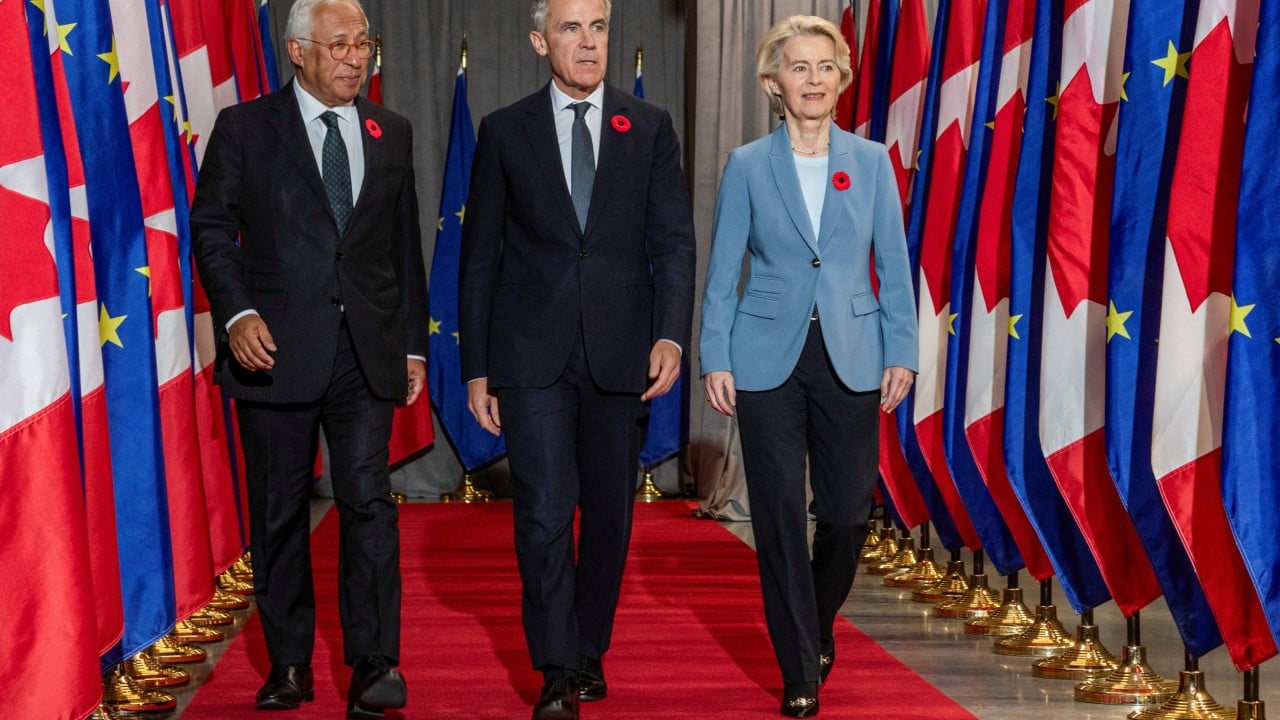
Everyone promised a total reinvention in Ottawa, yet if you look closely at the policy sheets and the political math, the new Canada is remarkably similar to the old one.
You've heard the speeches. Leaders across the political spectrum love talking about turning the page, resetting the economy, and building a bold new chapter for the country. It sounds great on a campaign stage in Toronto or Calgary. When the dust settles and the actual legislation hits the floor, though, the structural realities of governing Canada haven't budged an inch.
The core tension remains the exact same tug-of-war that has defined Canadian politics for decades. Ottawa wants centralized solutions and ambitious national programs, while provinces guard their constitutional turf like hawks. Whether it's healthcare transfers, energy corridors, or housing targets, the federal government still relies on provincial premiers to actually execute the plan. Nothing changes overnight in a federation built on compromise.
The Economic Reality Check
Let's talk about money, because that's where the illusion of a "new" Canada breaks down fastest. For years, policymakers have warned that Canada suffers from a chronic productivity problem. Even the Bank of Canada has repeatedly flagged lagging business investment as an emergency.
You'd think a brand-new era of leadership would overhaul how capital flows into the country. Instead, the economy remains heavily tethered to the exact same pillars it leaned on twenty years ago. Real estate still swallows a massive share of domestic investment, while natural resources—oil, gas, critical minerals, and timber—continue to do the heavy lifting for the trade balance.
Switching away from that model isn't just hard. It's politically radioactive.
When governments try to accelerate green transitions or impose stricter regulatory frameworks, resource-producing provinces push back immediately. When they try to cool down the housing market to help younger buyers, millions of existing homeowners worry about their retirement nest eggs evaporating. So what happens? Leaders tweak the margins. They introduce a new tax credit here, adjust an amortization rule there, and rebrand old funding buckets under fresh slogans. The underlying engine stays untouched.
Ottawa's Habit of Rebranding the Status Quo
If you spend enough time reading federal budgets and policy announcements, you start noticing a pattern. Governments rarely scrap failed or sluggish frameworks entirely. They just give them a new coat of paint.
Take immigration and population growth. Canada built its modern identity on high immigration targets to offset an aging workforce and fuel economic expansion. When rapid population growth collided with a severe shortage of housing and strained healthcare systems, public sentiment shifted fast. Ottawa responded by tightening temporary resident caps and recalibrating permanent targets.
Does that mean Canada abandoned its reliance on newcomers to drive GDP growth? Not at all. The demographic math hasn't changed. Without steady immigration, Canada's labor force shrinks and the tax base supporting public pensions erodes. The "new" approach is really just a slight dialing back of the throttle on the exact same vehicle.
The same goes for fiscal policy. Every new administration pledges discipline, efficiency, and smarter spending. Yet program spending ratchets upward, driven by demographic pressures like Old Age Security and healthcare demands that no politician dares to cut. Balancing the budget remains an aspirational talking point rather than an immediate operational reality.
Regional Fault Lines Haven't Disappeared
Anyone claiming we're living in a fundamentally transformed country hasn't paid attention to regional politics lately. The geographic and cultural divides across Canada are as stubborn as ever.
Western alienation isn't a relic of the 1980s. Alberta and Saskatchewan still chafe under federal environmental rules and equalization formulas, arguing that wealth generated in the West subsidizes programs elsewhere while Ottawa restricts their primary industries. Meanwhile, Quebec continues to operate with a high degree of autonomy, prioritizing linguistic protection, distinct immigration rules, and provincial jurisdiction over federal uniformity.
Atlantic Canada faces its own set of structural hurdles, balancing an older demographic profile with higher per-capita healthcare costs and reliance on federal transfers. And Ontario—specifically the Greater Toronto Area—still dictates the electoral math for any party hoping to form a majority government in Parliament.
You can change the faces in the House of Commons. You can swap out cabinet ministers and launch slick digital communications campaigns. None of that alters the geography of the Canadian Shield or the constitutional division of powers written in 1867.
Foreign Policy and the American Gravity Well
Look beyond domestic borders and the continuity becomes even more obvious. Canada's global posture is still dictated almost entirely by one relationship: the United States.
Every few years, a Canadian government announces a grand strategy to diversify trade. We hear about pivots to the Indo-Pacific, deeper ties with European partners, and expanding trade corridors across the Pacific and Atlantic. These agreements—like CETA with Europe or CPTPP in the Asia-Pacific—are real and valuable.
Yet roughly three-quarters of Canadian exports still cross a single border heading south. When Washington sneezes, Ottawa still catches a cold. Whether it's renegotiating trade deals, aligning on industrial subsidies, or scrambling to meet NATO defense spending benchmarks under American pressure, Canada's room to maneuver independently remains tightly constrained.
Foreign policy rhetoric loves to emphasize middle-power leadership and multilateralism. In practice, Canadian diplomacy spends 80 percent of its energy managing friction with its closest neighbor and biggest customer. That was true under Pierre Trudeau, true under Brian Mulroney, true under Stephen Harper, and remains just as true today.
Why Voters Keep Falling for the Reset Pitch
If the structural reality is so consistent, why does every election cycle feel like an existential battle over a "new" Canada?
Because incrementalism doesn't win campaigns. Nobody rallies thousands of supporters in a hockey arena by promising to make modest, technocratic adjustments to interprovincial trade barriers or municipal zoning bylaws. Politicians sell transformation because voters want relief from immediate pain—high grocery bills, unaffordable rent, long emergency room wait times.
Once elected, however, leaders slam straight into the guardrails of the Canadian system:
- Constitutional limits: Ottawa cannot simply command provinces to fix hospitals or build schools, as both fall squarely under provincial jurisdiction.
- Regulatory inertia: Major infrastructure and resource projects still take years of environmental assessments, Indigenous consultations, and legal challenges before a single shovel hits the ground.
- Monetary constraints: The Bank of Canada sets interest rates independently based on inflation data, meaning fiscal announcements in Ottawa can easily be offset by rate decisions down the street.
Recognizing these guardrails doesn't mean giving up on progress. It just means separating political theater from actual structural reform.
How to Read Canadian Politics Without Getting Played
If you're an investor, a business owner, or simply a citizen trying to make sense of where the country is heading, stop listening to the grand slogans about a "new" era. Watch the boring stuff instead.
Pay attention to interprovincial trade negotiations, because removing internal barriers between provinces would do more for Canadian productivity than almost any federal subsidy program. Watch municipal zoning reforms in major cities, since local councils control what actually gets built on the ground far more than federal housing ministers do. Track capital expenditure data from Statistics Canada rather than press releases about innovation funds, because private business investment tells you whether companies actually believe the environment has improved.
Canada isn't broken, and it isn't magically reborn every four years. It's a wealthy, stable, deeply federalized country that moves slowly by design. Treat every promise of a total reinvention with healthy skepticism, follow the constitutional jurisdictions, and judge leaders strictly by what clears the regulatory bottleneck rather than what sounds good on the evening news.