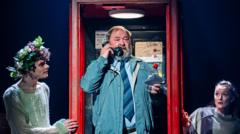
Downtown Los Angeles isn't exactly where you’d expect to find a quiet, wood-paneled sanctuary for acoustic guitars and hushed vocals. It’s loud. It’s chaotic. It’s a place where the concrete usually wins. But Robin Pecknold, the frontman of Fleet Foxes, decided to change that narrative. He didn't just play another show at a generic theater; he helped breathe life into a specific kind of "jewel-box" concert hall that feels like a defiant act against the digital noise of 2026.
People are tired of stadium tours where you watch a screen instead of a human. We're over the $200 tickets for nosebleed seats and the $18 beers. This new space represents a shift toward intimacy. It's about acoustics you can feel in your chest and a room designed for listening, not just "content" creation.
The Architecture of a Listening Room
Most modern venues are built for versatility. They want to host a DJ on Friday, a corporate seminar on Saturday, and a wedding on Sunday. That versatility usually kills the sound. When you build for everything, you build for nothing. This new hall is different because it was built with a singular focus on the way sound travels through wood and air.
Pecknold’s involvement wasn't just a celebrity endorsement. He’s someone who obsesses over the "golden hour" feel of a recording. He understands that a room is an instrument. The walls aren't just there to hold up the roof. They’re angled to prevent the "flutter echo" that plagues most square rooms. They use materials that soak up the harsh highs and leave the warm mids intact. It’s the kind of place where a fingerstyle guitarist doesn't have to fight the room to be heard.
If you’ve ever been to a show where the person behind you is screaming their life story over a ballad, you know why this matters. The design of a space dictates the behavior of the crowd. When a room looks like a cathedral of sound, people tend to shut up. It’s psychological. It’s effective. Honestly, it’s about time someone prioritized the art over the bar sales.
Why Downtown LA Needs This Now
Downtown LA has had a rough few years. The "revitalization" we all heard about a decade ago hit some major speed bumps. High-end lofts are great, but a neighborhood needs a soul to survive. It needs culture that isn't just a pop-up museum or a trendy brunch spot.
Music has always been the heartbeat of this city. From the jazz clubs on Central Avenue to the punk scene in the 70s, LA thrives when there are spaces for people to gather. This jewel-box hall acts as an anchor. It brings people into the historic core for something meaningful.
Small Venues are the Lifeblood of the Industry
The music industry is currently top-heavy. You have the Taylor Swifts and the Harry Styles of the world selling out stadiums, and then you have everyone else struggling to find a middle ground. The "middle class" of musicians is disappearing because the venues that supported them are being priced out.
- Intimacy creates fans. You don't become a lifelong devotee of a band by seeing them from a mile away. You do it by seeing the sweat on their forehead.
- Acoustic integrity. Folk, jazz, and classical music need specific environments. A dive bar with a sticky floor and a buzzing PA system doesn't cut it.
- Community impact. Small venues support local businesses. People grab dinner nearby, they park, they walk the streets. It’s a ripple effect.
The Pecknold Influence and the Folk Revival
Robin Pecknold isn't a typical rock star. He’s more like a musical architect. When Fleet Foxes first arrived, they brought a sense of choral, pastoral beauty back to the mainstream. It was a reaction to the overly polished, electronic sound of the late 2000s.
His involvement in this project tells us something about where music is heading. We’re seeing a renewed interest in "analog" experiences. In a world of AI-generated tracks and TikTok-ready snippets, there’s a massive craving for something authentic. Something that can't be faked.
I’ve seen dozens of venues open and close in this city. Most of them feel like they were designed by a committee looking at a spreadsheet. You can tell this one was designed by someone who actually likes music. That’s a rare thing. It’s not about maximizing the "footprint" or adding "VIP activations." It’s about the relationship between the performer and the audience.
Breaking the Mold of Modern Venues
Forget the "black box" aesthetic. We've seen enough of that. The industrial look—exposed pipes, Edison bulbs, cold concrete—has become its own cliché. It’s boring. It’s also acoustically terrible.
This new hall leans into a different era. Think of the great European concert halls or the legendary studios of the 1970s. It uses natural textures. It feels warm. It looks like it’s been there for fifty years, even though the paint is still fresh. That’s how you build a legacy. You don't do it by following trends; you do it by ignoring them in favor of timeless quality.
What Makes a Space a Jewel Box
The term "jewel box" gets thrown around a lot in real estate, but here it actually fits. It implies something small, precious, and meticulously crafted.
- Capacity. It’s not about cramming 2,000 people in. It’s about 300 to 500 people. That’s the sweet spot for folk and indie music.
- Sightlines. There isn't a bad seat. You don't have to crane your neck around a pillar or hope the tall guy in front of you moves.
- The Soundboard. The tech isn't hidden away. It’s part of the room. The gear is top-tier because the people running the place know that a bad mic pre can ruin a great performance.
The Reality of Running a Venue in 2026
Let’s be real for a second. Building a beautiful room is the easy part. Keeping it open is the hard part. The overhead in DTLA is astronomical. Insurance, staffing, taxes—it’s a nightmare.
Many venues survive by charging insane "service fees" or making the experience miserable for the fans. For this hall to work, it has to find a balance. It needs to be a place where artists want to play and where fans don't feel like they're being squeezed for every penny.
Pecknold’s name brings prestige, which helps with booking. But the day-to-day operations will determine if this is a flash in the pan or a permanent fixture of the LA scene. We’ve seen plenty of "artist-led" projects fail because the business side was a mess. Hopefully, the team behind this has their books in order as much as their acoustics.
How to Support Local Music Today
If you actually care about the culture of your city, you have to show up. It’s that simple. Watching a livestream isn't the same. Buying a shirt online helps, but it doesn't fill the room.
The next time a show is announced at a place like this, buy the ticket early. Don't wait for the secondary market. Get there for the opening act. Buy a drink. Tell the staff they’re doing a good job. These spaces are fragile. They exist because someone took a massive financial risk to build something they believe in.
Go check the schedule for the new downtown hall. Look for a name you don't recognize. Buy a ticket anyway. Sit in the back and just listen to the way the room carries the sound. You’ll realize pretty quickly that we’ve been settling for "good enough" sound for way too long. It's time to demand better. Take a walk through the historic core, grab a coffee at a nearby shop, and experience what it's like when a city actually invests in its own soul.