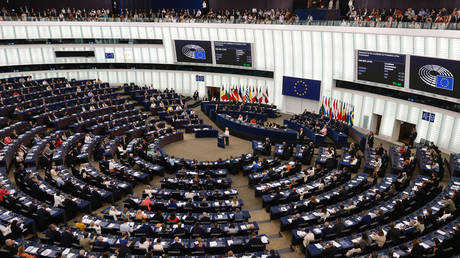
The European Parliament just passed a massive legislative overhaul designed to reshape the continent's border policies. On paper, the 418 to 218 vote in Strasbourg signals a historic shift toward unified action. It promises to tighten rules, expand detention powers, and pave the way for offshore deportation centers. In reality, the vote didn't solve Europe's deep divisions. It just exposed how fragile the entire project actually is.
If you think this vote means the 27 member states are finally singing from the same hymn sheet, you're mistaken. The cheers from right-wing benches were immediately met with shouts of "shame on you" from the left. Human rights groups are furious. Member states are already picking and choosing which rules they feel like following. The new system attempts to force a one-size-fits-all mechanism onto nations with radically different political realities. It's a gamble that might break the bloc's internal cohesion entirely. For an alternative look, read: this related article.
The Reality of the EU Migration Vote and Return Hubs
The core of this fresh legislative push centers on an aggressive strategy to fix Europe's abysmal repatriation rate. Right now, less than 30% of people ordered to leave the EU actually get deported. The political pressure on Brussels to change that number has been immense. The solution? A newly approved Return Regulation designed to create "return hubs" outside the European Union's physical borders.
Under these rules, national authorities can transfer irregular migrants to third-party countries while their final deportation is processed. It sounds like a smooth, corporate logistics operation. It isn't. The policy mirrors controversial offshore enforcement tactics used elsewhere, expanding maximum detention limits up to 24 months and granting sweeping powers to search personal property and electronic devices. Similar coverage on this matter has been shared by Al Jazeera.
The political math behind the vote reveals a changing Europe. The traditional center-right European People’s Party (EPP) joined forces with far-right factions to push the text over the finish line. This structural alliance highlights the exact divisions the legislation claims to resolve. By adopting the rhetoric and policy proposals of hardline nationalists, central Brussels lawmakers have alienated progressive states and human rights advocates, setting up a brutal implementation battle.
A System Divided Against Itself
The biggest flaw in the current EU migration vote strategy is the assumption that passing a law in Strasbourg forces compliance on the ground. It doesn't. The fundamental divide between frontline Mediterranean states, wealthy destination nations, and defiant Eastern European governments remains completely untouched.
Look at the immediate reactions from around the bloc. Countries like Greece, Austria, Denmark, and the Netherlands are raring to go. Greek Prime Minister Kyriakos Mitsotakis has already announced targets to get the first offshore agreements signed in 2026, aiming for operational hubs by 2027. They want externalization because they bear the direct brunt of arrivals or public backlash.
On the flip side, France and Spain have openly opposed using collective EU funds to finance these external centers. Meanwhile, Poland and Hungary have historically rejected mandatory solidarity mechanisms, such as the 20,000 Euro penalty fee for every migrant a nation refuses to relocate. Polish Prime Minister Donald Tusk previously made it clear that Poland would not implement forced quota elements, pointing to the massive numbers of Ukrainian refugees his country already absorbed. You have a legal framework, but you don't have actual political consensus.
Why the Tech and Databases Won't Save the Policy
Brussels loves relying on databases to fix political problems. A massive pillar of the broader border architecture is Eurodac, an upgraded centralized database designed to store biometric facial scans and fingerprints of every irregular arrival within seven days. The goal is to stop "secondary movements"—migrants entering Greece or Italy and simply walking across open borders to apply for asylum in Germany or France.
But databases require human beings to run them. Frontline border guards in Italy, Greece, and Spain are already overwhelmed. Forcing them to conduct intensive seven-day mandatory screenings, health checks, and vulnerability assessments on thousands of arrivals is a logistical nightmare.
If a frontline country feels abandoned by the rest of the bloc, its incentive to rigorously log data and detain people drops to zero. It's far easier to let people slip through the net and become another country's problem. No amount of biometric technology can fix a lack of trust between capital cities.
What Happens Next on the Ground
The law still needs formal adoption by the European Council before it's published in the Official Journal, though certain provisions regarding external hubs apply almost immediately. If you operate an international business, advise on regional policy, or manage compliance across European borders, you need to prepare for radical fragmentation over the next 12 to 24 months.
Don't expect a unified European system. Instead, prepare for a messy, multi-tiered border reality.
- Expect targeted border closures: Legal experts are already warning that the new system will buckle under any sudden mass displacement event. When that happens, individual nations will immediately resort to temporary internal border checks, ignoring Schengen ideals to protect their domestic politics.
- Watch the bilateral legal battles: Since a unified EU approach faces fierce pushback from countries like France and Spain, hawkish nations will build their own coalition of the willing. Watch for individual countries or small groups to cut independent deals with third-party nations to host return hubs, creating a legal patchwork across the continent.
- Prepare for extreme litigation: Human rights organizations are already preparing massive legal challenges against the 24-month detention rules and offshore transfers. Any attempt to use these new powers will be tied up in national and European courts for years, rendering the "fast-track" rules sluggish in practice.
The legislative battle in Strasbourg is over, but the actual execution risk is just beginning. Brussels thinks it bought security by passing a tougher law. In reality, it just handed its member states a brand new set of rules to fight over.


