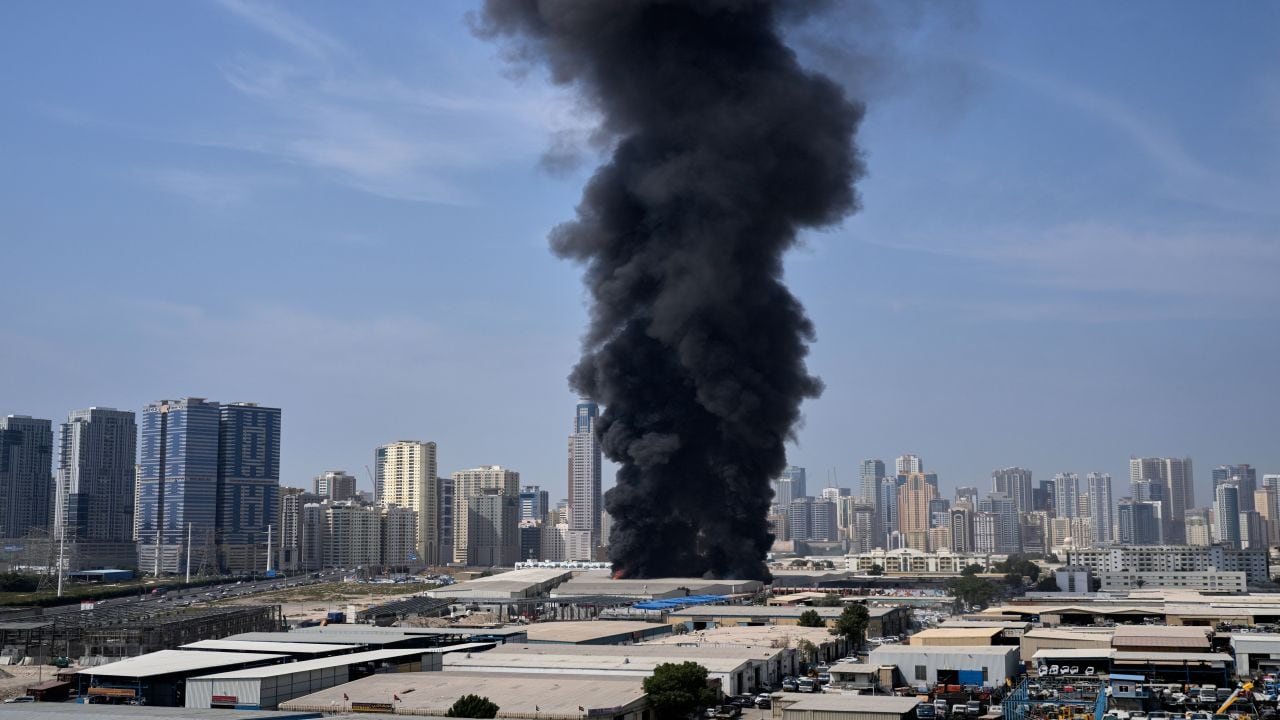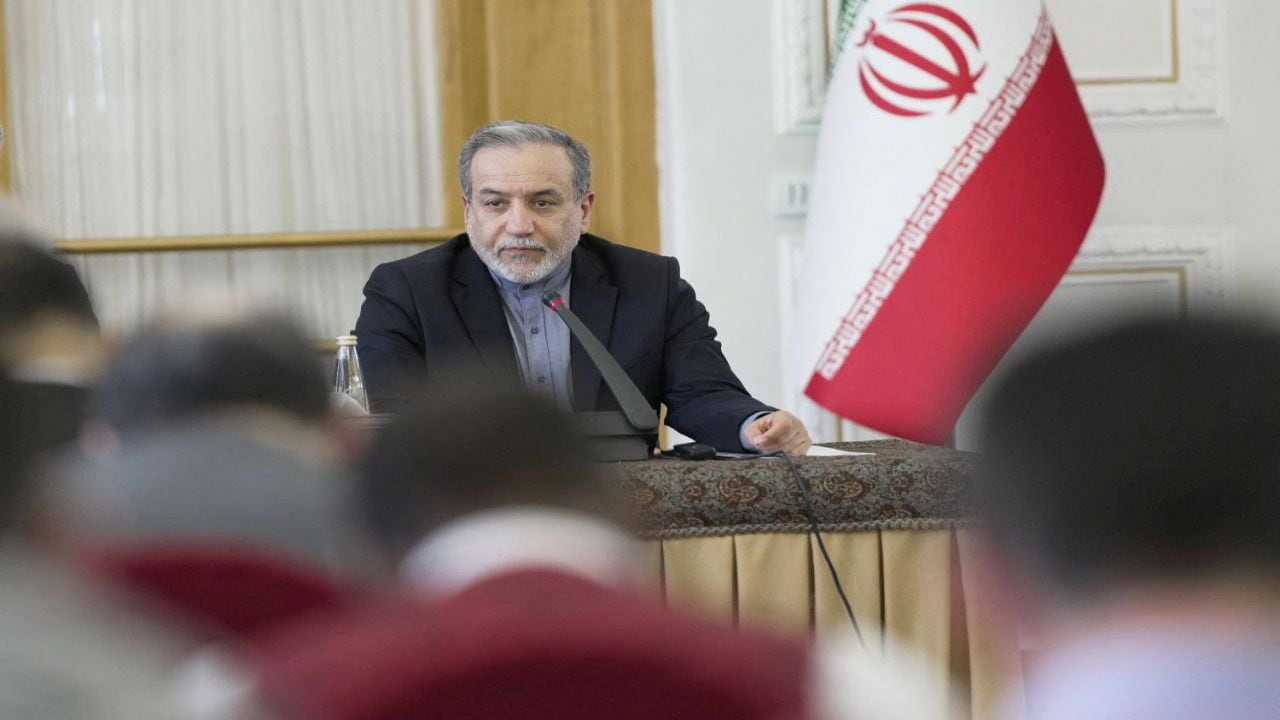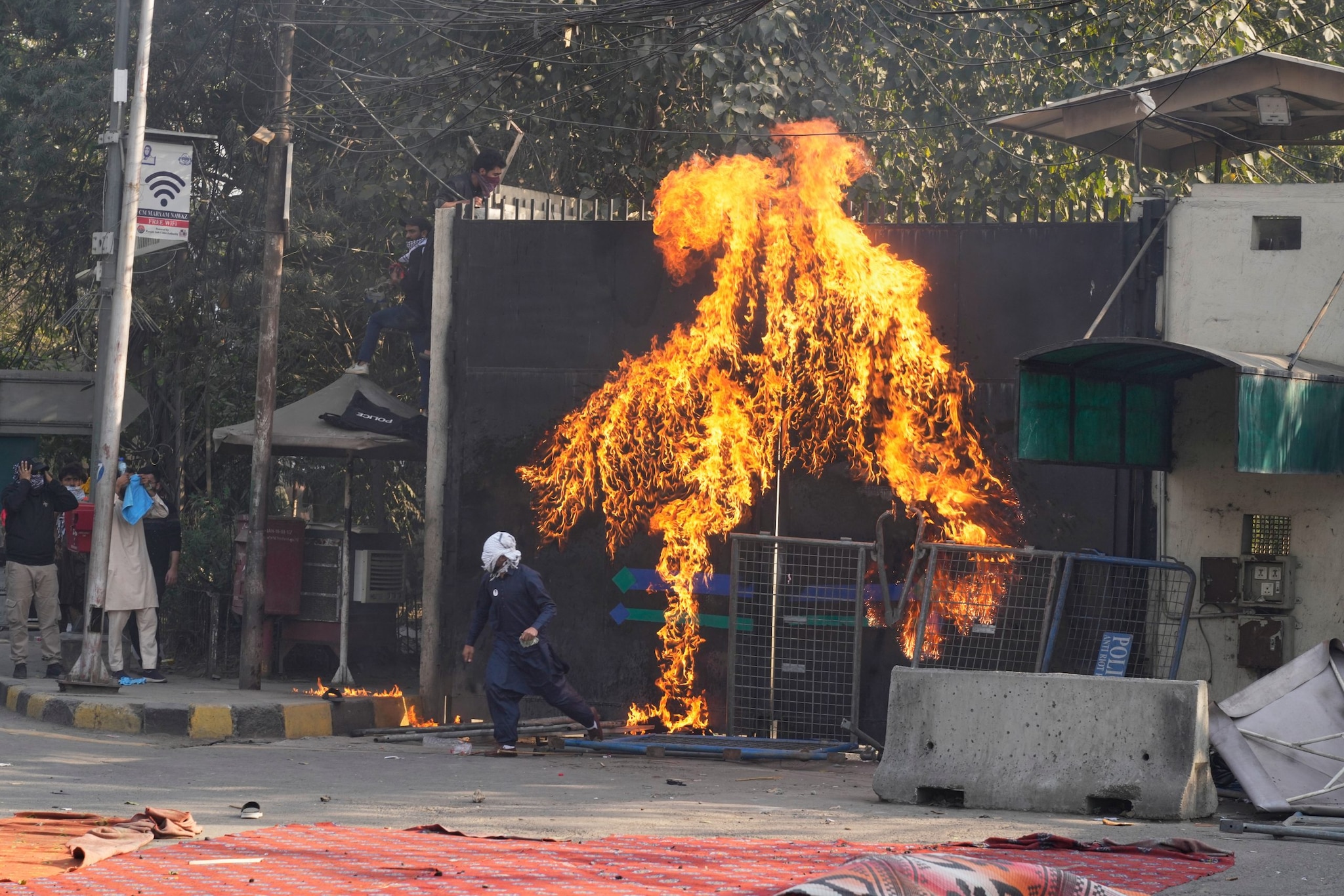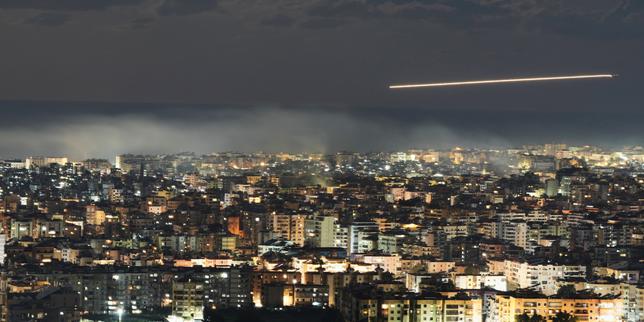
In the teahouses of Baghdad and the high-rise apartments of Dubai, people have stopped looking at their phones to check the weather. They check the horizon instead. For three days, the sky has carried a weight that doesn't belong to the clouds. It is a tension that vibrates in the soles of your feet before it ever reaches your ears.
When the first flashes erupted over the outskirts of Isfahan and the dusty plains of western Iraq, it wasn't just a military strike. It was the sound of a decade of fragile stability snapping like a dry twig. We often talk about "geopolitics" as if it were a game of chess played on a mahogany table. It isn't. It is the smell of ozone after an explosion. It is the sound of a shopkeeper in Beirut lowering his metal shutters three hours early because the news anchor’s voice climbed an octave.
The current escalation between Israel, the United States, and the Iranian axis has moved past the stage of "shadow signaling." We are now in the territory of open fire.
The Geography of Fear
To understand the stakes, you have to look at a map not as a collection of borders, but as a series of dominoes leaning against one another. When a missile leaves a launchpad in the Mediterranean or a drone hums over the Persian Gulf, the kinetic energy doesn't stop at the impact site. It ripples.
In southern Lebanon, the hills are alive with a terrifying silence. Families who have spent twenty years rebuilding their lives now keep a "go-bag" by the front door. This isn't theoretical for them. They know that if the northern border of Israel ignites fully, the entirety of Lebanon becomes a casualty of a war they didn't vote for. The "regionalization" the diplomats warn about in press releases is, for a mother in Tyre, the simple question of whether the bridge to Beirut will still exist by tomorrow morning.
Consider the Strait of Hormuz. It is a narrow strip of water, a literal throat through which the world’s energy flows. If that throat constricts, the price of a gallon of gas in a suburb in Ohio or a liter of petrol in a village in France spikes within hours. We are linked by invisible threads of carbon and commerce. A spark in the Gulf doesn't just burn there; it reaches into the pockets of people thousands of miles away who couldn't find Isfahan on a map if their lives depended on it.
The Ghost in the Machine
The sophistication of these strikes reveals a shift in how modern tragedy is authored. This isn't the carpet bombing of the 20th century. This is "surgical," or so the briefing rooms tell us. But there is nothing surgical about the psychological trauma of a population living under the constant, invisible presence of drones.
The sound is a persistent, metallic lawnmower in the sky. It never stops. It tells you that you are being watched, that your sovereignty is a fiction, and that a decision made in a basement in Washington or a bunker in Tel Aviv can end your world in a heartbeat.
Iraq finds itself caught in the most agonizing position of all. It is a country that has spent the last few years trying to scrub the blood off its sidewalks and invite the world back in. Now, it is once again a playground for external powers. When American jets strike militia outposts on Iraqi soil in response to attacks on their own bases, the Iraqi government trembles. They are the host of a dinner party where the guests have started a knife fight in the kitchen.
The Mathematics of Miscalculation
The greatest danger right now isn't a planned invasion. It is a mistake.
In the heat of a three-day exchange, the margin for error evaporates. A radar operator misidentifies a civilian airliner as a hostile threat. A stray missile hits a crowded apartment complex instead of a munitions depot. A local commander, cut off from central communications, decides to take the initiative.
These are the "black swan" events that turn a controlled escalation into a wildfire. History is littered with wars that nobody actually wanted but everyone felt compelled to start. We are currently watching the actors on the stage move toward the footlights, blinded by the glare, unable to see how close they are to the edge of the platform.
The Gulf states—Saudi Arabia, the UAE, Qatar—are playing a desperate game of balance. For years, they have poured billions into transforming their desert landscapes into gleaming hubs of tourism and tech. They want to be the New York and Singapore of the Middle East. But a "regionalized" conflict turns those glass towers into targets. They are terrified that the old animosities will burn down the new dreams.
The Human Cost of Grand Strategy
We must look at the faces.
In Tehran, there is a generation of young people who are tired. They are tired of sanctions, tired of the morality police, and now, they are tired of the looming shadow of a war they feel is being fought over their heads. They want high-speed internet and global travel, not martyrdom and air-raid sirens. When the strikes hit, they don't see "strategic degradation of enemy assets." They see the crumbling of their hope for a normal life.
Then there are the soldiers. Not the generals with the stars on their shoulders, but the twenty-somethings sitting in the cockpits and behind the missile consoles. They are the ones who have to live with the reality of what happens when they press a button. The distance provided by technology makes the killing cleaner for the viewer, but no less heavy for the participant.
The narrative we are told is often one of "deterrence." The idea is that if you hit hard enough, the other side will back down. But deterrence assumes the other side is rational and that they can afford to lose face. In the Middle East, "face" is often more valuable than fuel. To back down is to admit weakness, and in a neighborhood this tough, weakness is an invitation to more violence.
The Echo Chamber of the Deep
As the third day of strikes draws to a close, the rhetoric is sharpening. The language of "proportionality" has been replaced by the language of "consequences."
This is where the invisible stakes reside. It’s not just about who has the better missile defense system. It’s about the collapse of the very idea of international order. If the UN and the global community can do nothing but watch as three major powers exchange fire across four different countries, then the rules we thought governed the world are officially dead. We are returning to a state of nature where the strong do what they can and the weak suffer what they must.
There is a specific kind of exhaustion that sets in when you live through "historic times." The people of the Levant and the Gulf are exhausted. They have seen this movie before, but the special effects are getting more expensive and the ending is getting darker.
The sun sets over the Mediterranean, casting long, bloody shadows across the ruins of empires. In the silence between the reports of explosions, you can hear the world holding its breath. We are waiting to see if the fourth day brings a cooling rain or the start of a permanent fire.
The tragedy of the modern world is that we have mastered the art of reaching across the globe to kill, but we still haven't learned how to walk across the street to talk.
A child in a basement in Erbil clutches a battery-powered radio, listening to the same static we all are. The static isn't just interference. It is the sound of a thousand lives being rewritten by people who will never know their names. This is the reality of the regionalized conflict: it is never just a map. It is a heartbeat, skipping. It is a door, locking. It is a light, flickering out.