The humidity in New Orleans doesn’t just sit on you; it breathes with you. It carries the scent of fried dough, river water, and the brassy, metallic tang of a saxophone solo echoing off French Quarter brick. On a weekend meant for the French Quarter Festival, that air is usually thick with a specific kind of joy—the kind that only exists when thousands of strangers decide, simultaneously, to let the rhythm dictate their heartbeat.
But beneath the surface of the 2024 festivities, a different kind of tension was coiling. Learn more on a related issue: this related article.
While families hunted for the best crawfish bread and tourists stumbled over the uneven pavement of Royal Street, a shadow was moving through the digital and physical periphery of the city. We often think of safety as a static state, a shield that stays in place until it’s shattered. In reality, safety is a series of quiet wins. It is the absence of a headline. It is the bullet that stays in the chamber because someone, somewhere, noticed a flicker of darkness before it caught fire.
The Anatomy of a Whisper
Violence of a certain scale rarely arrives without a preamble. It begins in the corners of the internet where isolation curdles into resentment. On April 12, the New Orleans Police Department received a tip that shifted the stakes of the festival from logistical management to a race against a potential catastrophe. More analysis by NPR explores comparable views on this issue.
A 23-year-old man was not just thinking about the crowds; he was allegedly planning to pierce them.
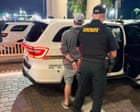
The report didn't come from a high-tech surveillance satellite or a complex algorithm. It came from the most reliable tool in the arsenal of public safety: human intuition and the courage to speak up. Federal and local authorities began tracking a trail of threats that pointed directly at the heart of the festival. When the police finally moved in, they didn't just find a person. They found a manifesto. They found a map. They found the heavy, cold weight of intent.
Consider the physics of a crowded street. In the narrow corridors of the French Quarter, a single person with a high-capacity weapon isn't just a threat; they are a nightmare of geometry. There is nowhere to run. The music is too loud to hear the first shot. The joy is too bright to see the danger until it is standing in front of you.
The Hidden Watchers
We walk past them every day. The officers in the neon vests, the plainclothes detectives leaning against a lamp post, the federal agents monitoring data streams in windowless rooms. We often view them as an inconvenience or a background texture of modern life. Yet, in the case of the French Quarter Festival plot, these individuals were the thin membrane between a celebration and a memorial.
When the suspect was apprehended, the relief in the briefing rooms was likely palpable, though quiet. There are no medals for the disaster that never happened. The public often remains unaware of how close the blade came to the skin.
Statistics tell us that mass casualty events are often preceded by "leakage"—a behavioral term for when a perpetrator broadcasts their intentions. In this instance, the suspect had allegedly shared his dark vision of a "mass casualty event" online. He wasn't a ghost; he was a man screaming into the void, hoping the void would scream back.
But this time, the void reported him to the authorities.
The Weight of a Manifesto
What drives a young man to look at a stage full of musicians and a street full of dancing children and see targets?
Psychologists suggest it is a cocktail of perceived grievance and a desperate need for significance. In the digital age, infamy is a currency that looks a lot like fame. By planning a strike on a cultural landmark like a New Orleans festival, an individual attempts to hijack the narrative of a city. They want to replace the sound of the trumpet with the sound of the siren.
The manifesto recovered by the NOPD wasn't just a list of grievances; it was a blueprint for a stolen legacy. It contained specific mentions of the festival, documenting a premeditated desire to transform a communal space into a site of trauma. The arrest stopped the clock, but it didn't erase the reality that these thoughts are fermenting in the quiet suburbs and city apartments of our country every single day.
The Fragility of the Crowd
There is a specific vulnerability in being part of a crowd. You surrender your individual agency to the collective flow. You trust that the person standing next to you is there for the same reason you are: to feel alive, to hear the music, to taste the salt on the air.
That trust is a fragile thing.
If the plot had been successful, the French Quarter Festival wouldn't just have lost lives; it would have lost its soul. New Orleans is a city built on the defiance of tragedy. It has survived floods, plagues, and corruption. But the psychological toll of a mass shooting in its most sacred social spaces would have left a scar that no amount of jazz or bourbon could soothe.
The arrest of the suspect, a man who had traveled from out of state with a trunk full of potential grief, highlights a terrifying modern reality. Distance is no longer a barrier. Someone can fixate on a target from hundreds of miles away, fueled by a digital echo chamber, and arrive at your doorstep before you even know they exist.
The Silent Victory
The festival went on.
The brass bands played. The sun beat down on the cobblestones. People ate their weight in alligator sausage and danced until their calves ached. Most of them had no idea that a few miles away, a man was being processed into a jail cell for dreaming of their demise.
That is the true nature of modern security. It is the gift of ignorance. It is the ability for a mother to hold her child’s hand and look at a stage, rather than looking for the nearest exit. It is the work of officers who spent their weekend staring at monitors and scanning waistlines so that everyone else could stare at the performers.
We live in an era where we are forced to balance our love for open, vibrant spaces with the grim necessity of vigilance. It is a exhausting way to exist. We want to believe that the world is inherently safe, but the reality is that safety is a managed outcome. It is a harvest reaped from the seeds of intervention.
As the sun set over the Mississippi River on that Sunday, the music finally faded. The vendors packed their carts. The streets were littered with napkins and the lingering echoes of a thousand conversations. The festival was a success, not just because the weather held or the food was good, but because the only thing that ended that night was the weekend.
Nobody died.
In a world obsessed with the spectacle of tragedy, we must learn to value the profound beauty of the mundane. A quiet night in New Orleans is not a given. It is a miracle of cooperation, a triumph of the "see something, say something" era, and a reminder that while one person can plan a massacre, it takes an entire community of watchful eyes to ensure the music never has to stop.
The suspect remains in custody, facing charges that will likely keep him away from crowds for a very long time. The manifesto is now evidence in a box, its power neutralized by the simple act of a timely arrest. The city moves on, as New Orleans always does, swaying to a rhythm that remains unbroken, protected by the invisible hands that caught the strike before it could land.