The humidity in South Florida during the late summer doesn't just hang in the air; it sticks to your skin like glue. On a particular Saturday night at the South Florida Fairgrounds, thousands of people had willingly submerged themselves in that thick, heavy heat. They were wearing neon fanny packs, oversized sunglasses indoors, and baseball caps turned sideways. They had paid good money to step backward in time, chasing the high-energy, bass-heavy nostalgia of 1990.
Instead, they got a lesson in modern political logistics.
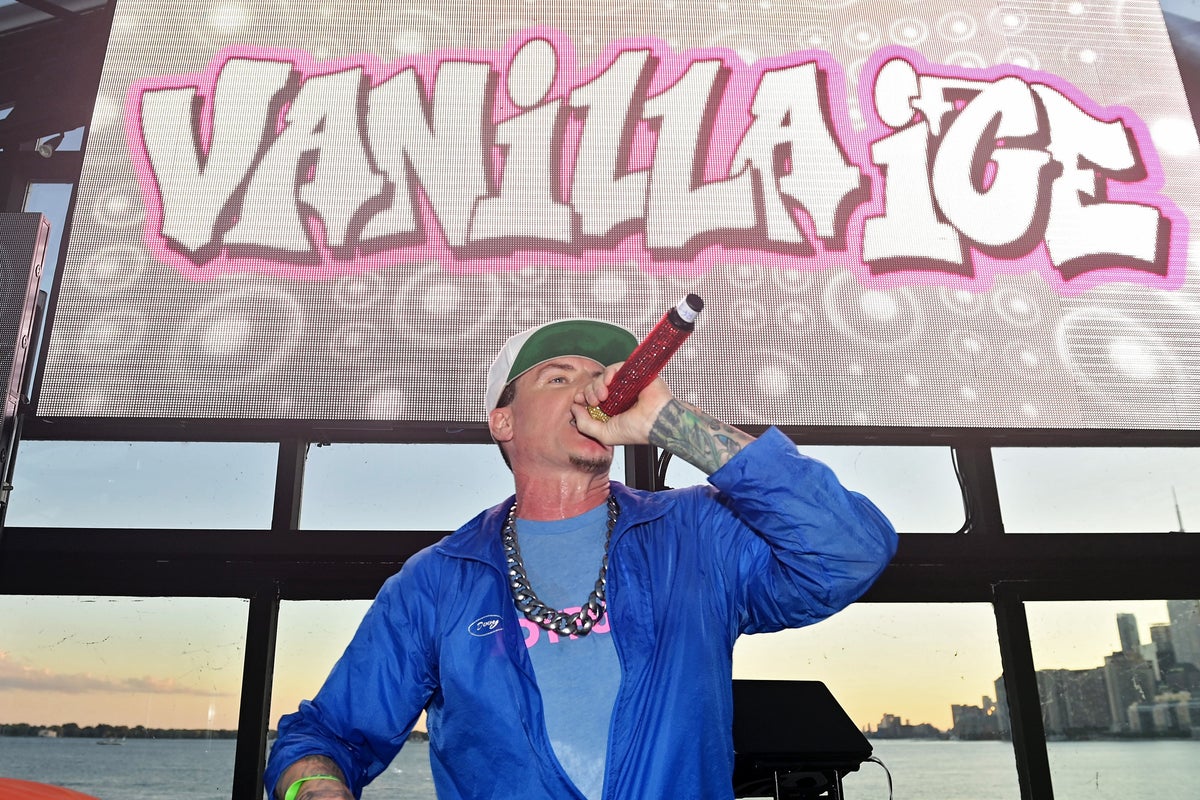
Two hours. That was all the time left on the countdown clock when the music stopped before it even started. The stage was set, the soundcheck was wrapped, and the scent of fried fair food filled the concourse. Then came the announcement that cut through the bassline like a screeching microphone: Vanilla Ice would not be taking the stage. The Trump Freedom 250 super-concert was, effectively, over before the headliner could hit his first cue.
To understand why a nineties rap icon was suddenly grounded in West Palm Beach, you have to look past the marquee. It wasn’t a case of diva behavior or a sudden loss of voice. The breakdown happened in the invisible machinery that moves public figures across the country, where politics, entertainment, and rigid schedules collide.
The Anatomy of a Sudden Silence
Concert tours are delicate ecosystems. They rely on a chain of custody where every link—from the local promoter to the private aviation charter—must hold under immense pressure. When an event is tied to a political operation like the Freedom 250, those pressures multiply.
Imagine the backstage area of a major fairgrounds venue. It is a labyrinth of black road cases, tangled XLR cables, and local stagehands rushing to fulfill rider requests. Up until 5:00 PM, everything was moving according to the standard rock-and-roll script. The opening acts had warmed up the crowd. The bass was vibrating through the concrete floor.
Then came the logistical pivot.
According to sources close to the production, the cancellation stemmed from an administrative and travel conflict that made it physically impossible for the artist to reach the venue in time for the designated performance window. In the world of high-profile events, a delay of sixty minutes at a private terminal isn't just a minor inconvenience; it is a domino that knocks down the entire evening. Venues have strict curfews. Local police departments have specific hours allocated for traffic control. When the window closes, it closes hard.
The crowd didn't know about the logistical gridlock. They just knew their drinks were warm and the stage was empty.
The Currency of Nostalgia
For the audience, the disappointment wasn't merely about a ticket price. Nostalgia is a powerful emotional currency. When people buy a ticket to see an artist who dominated the airwaves three decades ago, they aren't just buying musical notes. They are purchasing a temporary escape velocity from their current lives—their mortgages, their corporate jobs, their daily anxieties.
Consider a fan who had driven three hours from Orlando, trading a precious weekend night for a chance to scream the lyrics to "Ice Ice Baby" alongside five thousand strangers. That collective experience is a rare commodity in a fractured culture. When a show is canceled at the eleven,th hour, that emotional investment turns to immediate frustration.
The contrast on the fairgrounds floor was stark. On one side, the corporate branding of a political movement aiming for high-voltage energy; on the other, thousands of fans staring at an empty microphone stand under white work lights that had brutally replaced the moody blue stage illumination.
When the Stage Goes Dark
The aftermath of a sudden cancellation is a quiet, chaotic dance. While the crowd slowly shuffles toward the exits, muttering into their phones and demanding refunds on social media, the crew goes to work.
Load-out usually happens after a triumphant final encore. It is fueled by adrenaline and the satisfaction of a job well done. But a load-out after a canceled show feels like a funeral procession. Roadies roll up cables that were never used. Microphones are placed back into foam-lined cases without having caught a single note. The neon stage lights are powered down, cooling off in the dark.
The promoter issued the standard statements, citing unforeseen circumstances and logistical complications. The words were sterile, designed to manage liability rather than soothe disappointed fans. They spoke of scheduling conflicts and transport failures, the kind of dry explanations that make sense in a boardroom but fall flat in an arena.
The parking lot became the final act of the night. Thousands of cars idled in the Florida heat, headlights cutting through the exhaust fumes as the crowd crept toward the highway. The music blaring from the car windows wasn't live; it was streaming from Spotify playlists, a digital substitute for the shared experience that had vanished just two hours before it was supposed to begin.
The stage at the South Florida Fairgrounds sat empty beneath the stars, a steel skeleton stripped of its magic, proving that in the high-stakes world where entertainment meets political ambition, the most difficult thing to control is the clock.