The sirens in Kyiv do not sound like music. They sound like teeth grinding together in the dark.
For the people waking up on that jagged dawn, the air smelled of ozone, burnt rubber, and the heavy, metallic tang of unspent propellant. You learn to read the night by its vibrations. A low rumble in your chest means the interceptors are reaching out, clawing at the dark to tear down the screaming metal falling from the stars. But when the ground itself jumps—when the windows bow inward and the coffee cups dance across the kitchen table—you know something has broken.
On that night, the sky over the capital fractured once again. Air defense batteries tracked incoming streaks, throwing up white chrysanthemums of smoke and shrapnel against the purple belly of the dawn. Buildings shuddered. Glass rained down onto quiet residential streets where children had been sleeping just moments before. It is a terrifying, practiced choreography of survival that has repeated itself over and over, grinding away the edges of normal life until only the raw instinct to endure remains.
Yet, hundreds of miles away across the border, a different kind of fire was blooming.
While the apartment blocks of Kyiv absorbed the shockwave of incoming cruise missiles, the massive refining towers of a key Russian industrial facility detonated into pillars of orange and black. This was not a random strike. It was a calculated, surgical blow aimed at the beating heart of an economic engine.
To understand what happened that night, you have to look past the dry map coordinates and the geopolitical posturing. You have to look at the math of modern survival.
War is often imagined as a clash of infantry lines, of mud and boots and iron helmets. But modern conflict is an industrial harvest. It runs on thousands of miles of pressurized steel pipe, on cracking towers that boil crude oil into high-octane aviation fuel, on diesel generators humming in the snow. If you starve an army of its fuel, the tanks become expensive paperweights. The jets remain grounded, blind and deaf on the tarmac.
The strike on the Russian oil refinery was designed to alter that arithmetic.
Imagine standing on the perimeter of that industrial complex before the impact. The air hums with the steady, bass-note roar of millions of liters of hydrocarbons moving through fractionators. It smells like a gas station after a summer storm, heavy and sharp. Then, the streak descends from the night sky—silent until the moment of impact.
A flash of white-hot light that turns midnight into noon.
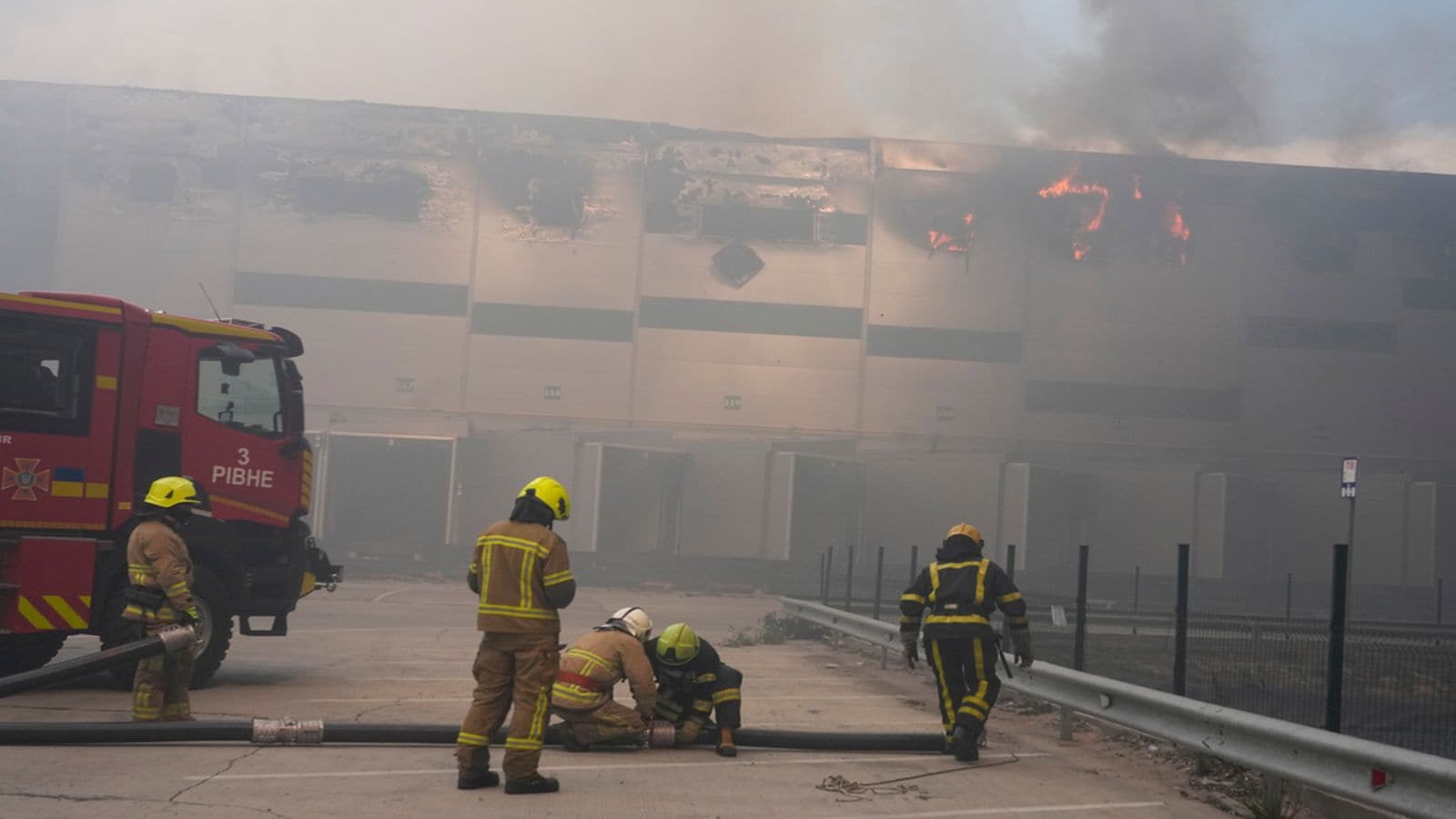
The sound arrives a heartbeat later, a physical blow that rattles ribcages. The metal skin of a storage tank tears open like paper, and the contents ignite in a blinding geyser of fire. Within seconds, a plume of greasy black smoke eclipses the stars, visible for miles across the flat plains. Firefighters scramble, knowing the futility of fighting a fuel fire with water alone, while control room operators frantically hit emergency shut-off valves, trying to isolate sections of the grid before the entire complex goes up in a chain reaction.
This is the hidden theater of the conflict. It is a war fought not just with bullets, but with spreadsheets, supply chains, and industrial vulnerability.
When a refinery burns, the shockwaves do not just register on infrared satellite imagery. They register at gas stations hundreds of miles away. They register in the ledgers of ministries trying to balance domestic supply against military consumption. They force hard choices onto commanders who thought their rear lines were safe.
For months, the pattern had seemed one-sided. One side absorbed the blows, rebuilding transformers in the freezing dark, patching roofs with plastic sheeting, burying their dead with quiet, exhausted dignity. But the strike on the refinery proved that the perimeter is porous. No nation is large enough, and no industrial sector is isolated enough, to remain untouched when the ledger of violence has to be balanced.
Back in Kyiv, the smoke from the morning strikes slowly drifted away on a cold wind. Residents swept up the glass from their doorsteps, checked on their neighbors, and plugged their phones into backup batteries. Life resumed its bruised, defiant rhythm. Buses ran. Markets opened. People walked dogs past blast walls stacked high with sandbags.
The resilience of a city under siege is a strange and heavy thing. It is built on small, stubborn acts of normalcy.
And miles away, beneath a darkening sky stained with the soot of burning petroleum, the men and women tasked with keeping the machinery of war supplied stared at twisted steel and roaring flames, realizing that the distance between the front lines and the homeland had just shrunk to zero.
The fire on the horizon cast long, flickering shadows across the earth, a silent reminder that every action has an equal and terrible echo, and that the night is rarely as quiet as it seems.


