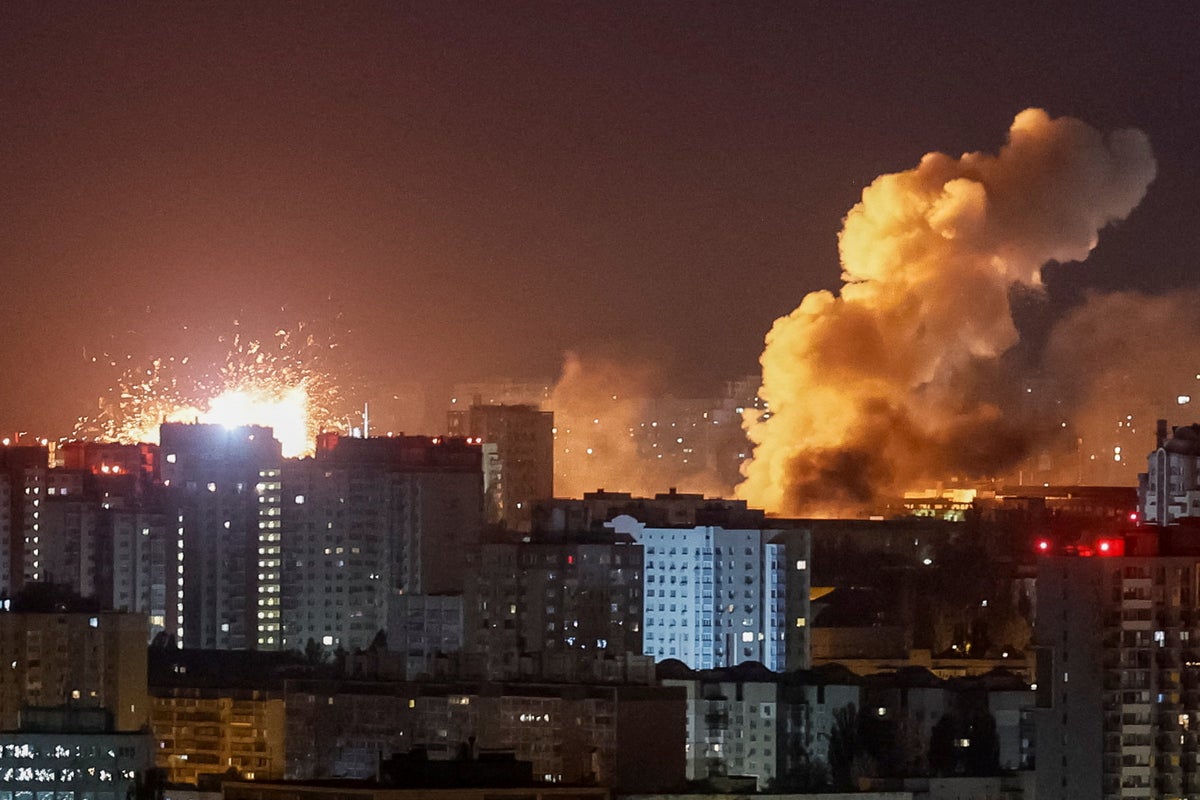
The sirens in Kyiv do not merely sound. They scrape. It is a mechanical, guttural wail that claws its way through concrete, through double-paned glass, and directly into the marrow of your bones. For those living under the Ukrainian sky, that sound is no longer an alarm. It is a tax paid in adrenaline and stolen sleep.
Imagine a Tuesday morning, just before dawn, when the air is at its coldest. A father—let’s call him Andriy—is staring at the ceiling of a damp basement. He is counting the seconds between the first distant thump and the rattling of the water pipes. In the dark, numbers are the only things that make sense.
Then comes the ballistic missile.
Unlike cruise missiles, which drone like angry lawnmowers as they hug the terrain, a ballistic missile is a silent, hypersonic executioner. It climbs into the upper atmosphere before screaming downward at vertical angles, giving air defense systems mere minutes to react. When it hits, it does not just destroy a building. It alters the air pressure of an entire neighborhood. Windows do not shatter outward; they implode, turning glass into a million tiny, flying needles.
This is the reality of the latest escalation. A barrage of Russian ballistic missiles aimed squarely at the heart of Ukraine’s capital, followed by a retaliatory roar that echoed hundreds of miles away in the smoke-choked air of Russian oil depots.
The Physics of Terror
To understand why this specific attack matters, we have to look past the sterile military briefings. The strategic objective of a ballistic strike on a civilian center is rarely purely tactical. It is psychological.
When the Kremlin unleashes these weapons, they are trading high-value, expensive technology for a specific currency: exhaustion. They want the civilian population to break. They want Andriy to look at his shivering daughter and decide that peace at any cost is better than another night of waiting for the ceiling to collapse.
But the strategy contains a fatal flaw. It underestimates the hardening effect of prolonged trauma.
Instead of fracturing, the collective resolve tends to calcify. Within hours of the dust settling in Kyiv, as rescue workers dig through the masonry, the gears of retaliation are already turning. The war is not a series of isolated events. It is a closed loop of action and consequence, a brutal physics experiment where every strike generates an equal and opposite reaction.
The Burning Answer
Hundreds of miles away, across the border, the night air turned from black to an unnatural, pulsing orange.
Ukrainian drones, long-range and humming with a lawnmower drone of their own, found their targets. Russian oil depots, vital organs in the logistical body of the Kremlin's war machine, erupted. These are not just fuel tanks; they are the literal lifeblood of the offensive. A tank without fuel is a multi-ton paperweight. A jet without kerosene is a lawn ornament.
The strategy behind targeting these depots is elegant in its simplicity and devastating in its execution. Ukraine cannot match Russia missile for missile in sheer numbers. The industrial asymmetry is too vast. Therefore, Kyiv must asymmetricize the conflict. They must strike the vulnerability that hurts the most: the supply chain.
Consider the ripple effect of a single burning oil depot:
- Frontline units are forced to ration fuel, stalling localized offensives.
- Railway logistics, heavily reliant on diesel transport in war zones, face immediate bottlenecks.
- The Russian domestic economy feels the pinch, driving up local fuel prices and piercing the illusion of normalcy that Moscow tries so desperately to maintain for its citizens.
The smoke rising from those facilities carries a message written in soot. It tells the Kremlin that the sanctuary of distance no longer exists. If Kyiv cannot sleep, neither will the hubs that power its destruction.
The Logistics of Hope and Fear
The question that always follows these massive exchanges is simple: how long can either side keep this up?
It is a math problem written in blood. Western air defense systems, like the Patriot and NASAMS, have turned Kyiv into one of the most heavily defended cities on earth. They intercept an astonishing percentage of incoming threats. But the math is cruel. A single interceptor missile can cost millions of dollars. A Russian ballistic missile, while expensive, is often offset by cheaper Iranian-designed drones meant to saturate the radar, forcing Ukraine to waste its premium ammunition on decoys.
It is a game of attrition where the stakes are human lives.
The vulnerability is real. The anxiety is palpable. Walking through the streets of Kyiv during the day, you see a surface-level defiance. Cafes are open. People drink espresso. They walk dogs. But look closer at their eyes. The exhaustion is etched deep. It is the exhaustion of knowing that the sky above you can turn into a furnace at any moment, without warning.
The Shift in the Wind
We are witnessing a profound transformation in the nature of this conflict. The lines on the map in the Donbas may move by mere inches, but the strategic depth of the war has expanded exponentially.
Ukraine is no longer content to merely catch the punches. By striking deep into Russian energy infrastructure, they are rewriting the rules of engagement that many Western allies initially tried to impose. It is a declaration of independence born of necessity. When your home is being systematically dismantled, diplomatic anxieties about "escalation" begin to sound hollow, if not entirely offensive.
The narrative of Ukraine as a passive victim waiting for rescue is dead. It has been replaced by a grim, hyper-efficient war effort that understands one fundamental truth: the only way to stop the missiles from falling on Kyiv is to make the cost of launching them unbearable for Moscow.
The fires at the oil depots will eventually be extinguished, and the debris in Kyiv will be cleared away by volunteers working in the morning light. The broken glass will be swept into piles. The sirens will fall silent, if only for a few hours. Andriy will take his daughter out of the basement, wash the dust from her face, and send her to school.
The war goes on, not just in the mud of the trenches, but in the quiet, stubborn refusal of ordinary people to let the terror win. The sky remains dangerous, but the ground beneath their feet is unyielding.