The Sound Before the Storm
Salt sticks to the windowpanes long before the first heavy drops begin to strike. It is a peculiar kind of dust, born of high velocity surf and churning deep-water swells, whipped miles inland by an atmosphere beginning to violently rearrange itself.
On the islands, everyone knows the cadence of the air. The tradewinds are an invisible metronome. They cool the humid afternoons, rustle the heavy fronds of the coconut palms, and carry the scent of hibiscus and red dirt out to sea. When that rhythm stutters, when the air turns heavy, flat, and smelling faintly of ozone and old electricity, the islanders look up.
They do not look at weather apps first. They look at the horizon.
Elena Hernandez has lived in Kaneohe for forty-two years. Her kitchen window frames the jagged, velvet-green folds of the Koʻolau mountain range, a sheer wall of ancient volcanic basalt that usually catches the moisture rolling off the Pacific and wrings it out into gentle, restorative afternoon squalls. But tropical storms do not respect the gentle habits of local topography. They arrive with a different arithmetic.
"You can hear it in the dogs," Elena says, setting down a heavy cast-iron skillet. "Hours before the wind picks up, the strays stop barking. The domestic dogs crawl under the beds. The pressure drops in your ears, like you are descending too fast in a small aircraft. Your head aches. You just know."
That pressure drop was the harbinger for a system that caught emergency planners and meteorologists tracking erratic steering currents. Tropical storm force winds, sustained at upwards of fifty miles per hour with higher, unpredictable gusts, do not announce themselves with polite warnings. They strike with a sudden, localized fury, turning familiar streets into wind tunnels and coastal highways into churning extensions of the ocean.
When Paradise Becomes an Island Again
Isolation is a double-edged sword. When you live on the most isolated archipelago on the planet, nestled in the vast blue expanse of the North Pacific, you learn self-reliance as a survival trait. You stock the pantry. You check the batteries in the NOAA weather radio. You secure the loose corrugated metal on the shed roof.
Yet, modern convenience breeds a quiet complacency. We grow accustomed to jet fuel arriving daily, cargo ships docking precisely on schedule, and power grids that hum with invisible efficiency.
When a tropical storm slams into the Hawaiian chain, that thin veneer of modern infrastructure frays.
Consider what happens when the power grid fails in a tropical ravine. Trees, shallow-rooted in the saturated volcanic soil, give way under lateral wind loads. They pull down primary distribution lines with the casual strength of a child snapping dry twigs. In an instant, neighborhoods carved into lush valleys are plunged into darkness.
Darkness in the islands is absolute. Without streetlights bouncing off the low cloud cover, the jungle reclaims its territory. The familiar canopy overhead turns into a chorus of thrashing branches and tearing wood.
For tourists staying in high-rise concrete resorts in Waikiki, the experience is mediated by hotel generators and emergency broadcasts piped through lobby televisions. But for residents living in wooden plantation-style homes in windward Oahu, or remote properties along the Hamakua Coast of the Big Island, the storm is a deeply intimate, visceral encounter.
David Akana, a lineman with twenty years on the poles, remembers the aftermath of the 2018 storm systems that brushed the islands.
"People forget how fast flash flooding follows wind," David explains, his hands calloused and scarred from decades of wrestling with copper and aluminum. "The rain does not fall; it is driven horizontally. It bypasses roofs, squeezes through window frames, and hits the red clay hillsides all at once. Within two hours, a dry gulch is a raging torrent carrying appliances, cars, and uprooted hau trees straight toward the ocean."
The Economics of Vulnerability
We romanticize the tropics as a permanent vacation from human suffering. The travel brochures show golden hour light striking pristine sands, framing smiling surfers walking past turquoise lagoons.
The reality is far more fragile.
Geographically isolated communities face unique supply chain vulnerabilities during extreme weather events. When inter-island ferries are tied up and commercial flights are grounded due to crosswinds and zero-visibility squalls, local grocery store shelves empty within twenty-four hours. Fresh milk, bread, and produce disappear first.
This vulnerability is not merely physical; it is psychological. Tourism is the economic lifeblood of the islands, employing hundreds of thousands of residents who live paycheck to paycheck in one of the most expensive housing markets in the nation. A severe storm warning that halts flights, shuts down beaches, and disrupts hotel operations sends immediate shockwaves through the local workforce. Cancellations ripple outward. Shifts are cut. Hours evaporate.
Behind every dramatic news headline about a tropical storm warning lies a worker wondering how the next month's rent will be paid if the island economy freezes for even a few days.
Elena Hernandez knows this rhythm too well. Her daughter works at a resort in Kaneohe Bay. When the storm warnings sounded, the resort immediately went into emergency lockdown. Shifts were canceled for non-essential staff.
"The storm takes your power, but it also takes your certainty," Elena says, watching a coconut palm whip violently against the gray sky. "We are resilient because we have to be. Our ancestors crossed the Pacific in double-hulled canoes navigating by swell and stars. We carry that memory in our bones. But surviving isn't the same as not hurting."
The Science of the Shift
Why are these storms behaving with such erratic intensity?
Meteorologists point to warming ocean surface temperatures around the Hawaiian archipelago. Historically, storms approaching Hawaii from the east or southeast would encounter cooler waters and hostile upper-level wind shear, causing them to weaken into harmless tropical depressions long before making landfall.
The ocean has a long memory, and it is running a fever.
As sea surface temperatures climb incrementally higher year after year, storms retain their energy further north and west than historical averages suggest they should. They pack heavier moisture loads because warmer air holds more water vapor. When these systems finally encounter the dramatic topography of islands like Maui, Kauai, and the Big Island—where towering volcanic peaks force moist air rapidly upward—the result is catastrophic orographic rainfall.
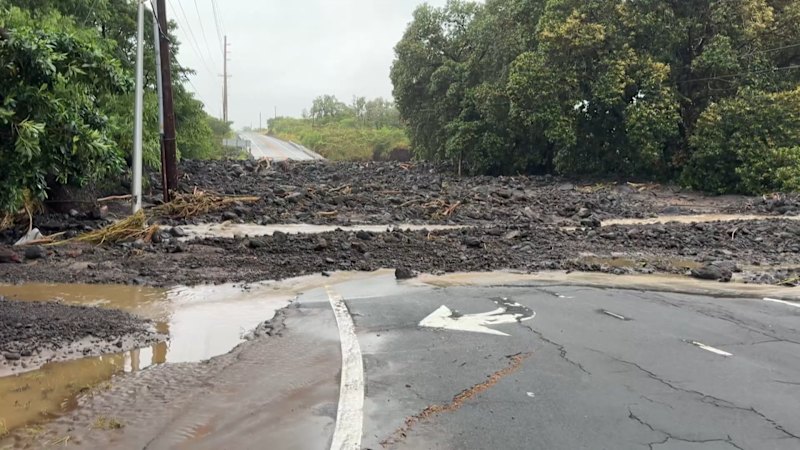
Rainfall rates can exceed three to four inches per hour in localized cloudbursts. The soil simply cannot absorb water at that velocity. It liquefies. Landslides block the Pali Highway and the Hana Highway, effectively severing communities from emergency medical services.
This is the hidden cost of changing weather patterns in paradise. It is not just about wind speeds or storm surge markers on a map. It is about the systemic strain placed on infrastructure designed for an era of climate stability that no longer exists.
The Morning After the Wind
Dawn arrives without fanfare after a night of howling gales.
The sun rises behind a thick, bruised blanket of stratocumulus clouds, casting a strange, silvery light across the landscape. The air is remarkably still, humid, and heavy with the smell of crushed vegetation and wet earth.
Step outside, and the transformation is startling.
Silver oak branches litter the asphalt like discarded bones. Power lines drape across chain-link fences like tangled fishing nets. Downed banana trees lie flat in coastal gardens, their broad green leaves shredded into ribbons.
Yet, life resumes with a fierce, quiet grace.
Neighbors emerge from their homes, stepping carefully over downed utility lines, armed with chainsaws, machetes, and rakes. There are no grand speeches. Someone fires up a gas-powered generator to share with an elderly neighbor whose medical equipment requires continuous power. Someone else sets up a charcoal grill in a driveway to cook thawing meat before it spoils, feeding anyone who walks down the street.
David Akana is already three poles up a splintered timber on Kamehameha Highway, splicing lines with steady, practiced movements while traffic inches past in a single alternating lane.
Elena Hernandez is sweeping debris off her front lanai, tossing crushed fronds into a tall green bin. The Koʻolau mountains are weeping waterfalls now, dozens of temporary white ribbons cascading down the dark green cliffs where no water flowed yesterday.
The storm has passed out to sea, dissolving into the vast, indifferent blue of the Pacific. But the island has changed, if only slightly. The sand has shifted. The coastline has been reshaped. And everyone who lived through the night is acutely aware of how thin the margin is between the paradise we imagine and the wild, unpredictable earth we inhabit.