Paper is fragile. We spend our entire lives treating it like clutter—stuffing receipts into coat pockets, shredding old utility bills, tossing junk mail into recycling bins without a second glance. We assume that our existence is anchored in something far heavier than ink on pulp. We have bones, memories, tax records, photographs, neighbors who know our voices, and graves waiting for our names.
Until the day a clerk behind a reinforced glass window slides a form back across the counter and tells you that, legally speaking, you were never born.
Wait. Think about that for a second.
Imagine standing at a municipal desk in Houston, Texas, your joints aching from ninety-five winters, your hands weathered by nearly a century of honest labor, only to be told that the country you built, the state you paid taxes to, and the city you called home have no official record of your arrival on this earth. For nearly a hundred years, you have been a ghost walking in broad daylight.
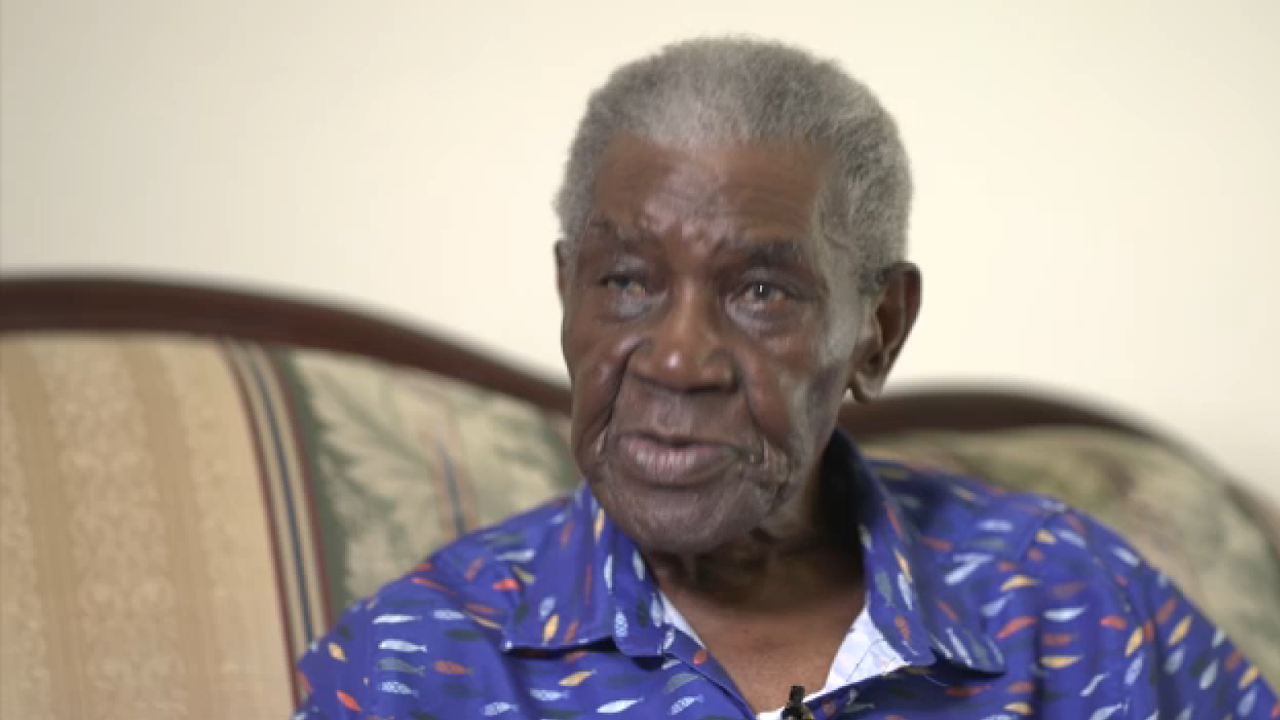
That is the quiet, staggering reality behind the story of a 95-year-old Houston man who finally held his birth certificate in his trembling hands after a search spanning decades. On the surface, a local news brief treats it like a heartwarming human-interest filler piece—a charming anecdote to sandwich between traffic reports and weather forecasts. Look closer, though, and the story stops being cute. It becomes an indictment of how modern bureaucracy treats the people who lived before the age of barcodes, digital databases, and hospital wristbands.
The Architecture of an Invisible Life
To understand how a human being reaches ninety-five without a birth certificate, you have to step out of the twenty-first century and walk backward into the dust of the 1920s and 1930s.
Back then, especially in rural pockets of the American South and Southwest, birth was not a clinical transaction logged into a state server before the umbilical cord was even cut. Birth was a domestic event. It happened in wooden farmhouses with linoleum floors, in back bedrooms lit by kerosene lamps, attended by local midwives whose primary tools were boiled water, clean cotton, and steady hands. Doctors were expensive, hospitals were miles away—and for Black, brown, and working-class families in the Jim Crow era, hospitals were often explicitly closed to them anyway.
If a midwife recorded a birth at all, she might jot the date into a family Bible, scribble it in a personal ledger that later burned in a house fire, or walk down to the county courthouse weeks later to file a slip of paper that a careless clerk misfiled under the wrong spelling. Sometimes the midwife died before making the trip. Sometimes the courthouse itself flooded, burned, or simply lost boxes of loose records during a routine office move.
For decades, none of that mattered.
You did not need a birth certificate to pick cotton, lay railroad tracks, weld steel in the Houston ship channel, or raise a family. You shook a foreman’s hand, showed up at dawn, and did the work. You got married in a church where the pastor knew your mother. You opened a bank account because the teller went to school with your brother. Your identity was woven into the social fabric of your neighborhood, verified by living, breathing witnesses who knew exactly who you were.
Then the world changed its mind about what counts as proof.
When the Rules Shift Under Your Feet
Slowly at first, and then all at once, American life became gated behind a single piece of certified paper.
The Social Security Act of 1935 planted
Ninety-Five Years Without a Paper Name
news
He had calluses on his hands from sixty years of honest labor, a stack of faded photographs in a shoebox, and a heartbeat you could hear through a stethoscope. Yet, according to the clerks behind the bulletproof glass in downtown Houston, he did not exist.
Imagine standing at a counter at ninety-five years old. Your knees ache from the linoleum floor. The fluorescent lights hum overhead like trapped wasps. You slide a lifetime of memories across the counter, and the person on the other side slides them back, shaking their head. No birth certificate. No proof. No entry.
For nearly a century, that was the quiet reality for a Houston man born in the rural American South during the late 1920s, an era when Black families were routinely barred from white hospitals and county record-keepers treated the births of sharecroppers' children as optional footnotes. He worked. He paid taxes. He raised a family and buried loved ones. He watched rockets launch from down the road at NASA and saw dirt paths turn into twelve-lane freeways. Through it all, he lived as an administrative ghost.
Then, after decades of dead ends, the paper finally arrived.
Most news reports treat a story like this as a heartwarming oddity. They give you three paragraphs, a smiling photo of an elderly man holding a piece of cardstock, and move on to traffic and weather. That misses the point entirely. A late birth certificate at ninety-five is not just a feel-good quirk of bureaucracy. It is a window into a silent crisis affecting thousands of older Americans, a structural trap where the people who built this country are systematically locked out of it because the ink dried wrong ninety years ago.
The Architecture of Eradication
To understand how someone reaches ninety-five without a birth certificate, you have to strip away your modern assumptions about paperwork. Today, a baby leaves the hospital with a footprint on a card, a Social Security number in the mail, and three digital backups in a state database before their umbilical cord stump even falls off.
1930 was another planet.
Across the rural South—particularly in Texas, Louisiana, Mississippi, and Alabama—home births attended by local midwives were the standard, especially for Black and Brown families living under Jim Crow. Hospitals were segregated, distant, and often hostile. When a midwife delivered a baby in a wooden farmhouse ten miles outside of town, registering that birth required a trip to the county courthouse. Sometimes the midwife was illiterate and could not fill out the ledger. Sometimes the county clerk simply refused to file paperwork for Black newborns. Sometimes a courthouse fire or a flood wiped out an entire decade of handwritten books, and nobody bothered to reconstruct them.
Let us step into a hypothetical scenario to see how this trap springs shut decades later. Picture a man named Arthur, born in 1929 in a pine-woods cabin in East Texas. His mother keeps a family Bible on the parlor table, writing his name and birth date in brown ink on the flyleaf between Genesis and Exodus. That Bible is his only record. In 1950, Arthur moves to Houston for construction work. He gets a Social Security card back when the government handed them out based on a sworn statement and a boss's signature. He works forty years pouring concrete, never misses a shift, and gets his pension. He doesn't need a passport. He doesn't fly on airplanes. The missing birth certificate doesn't hurt him—until the rules of the world suddenly change.
That shift happened quietly over the last twenty years. After 9/11, the REAL ID Act tightened every screw in American bureaucracy. Suddenly, a decades-old driver's license wasn't enough to renew itself. Banks demanded primary identification to keep accounts open. Medicare, veterans' benefits, housing assistance, and voting booths erected new walls of paper.
If you are eighty-five and your driver's license expires, you walk into the Texas Department of Public Safety expecting a new photo. Instead, you are asked for a certified birth certificate. When you explain you were born at home in 1931, the clerk hands you a checklist that feels like a riddle written by someone who hates old people.
The Catch-22 of Proving You Were Born
Have you ever tried to prove you exist using rules designed for people who already have proof? It is a dizzying, exhausting spiral. I have sat at kitchen tables with elderly relatives and legal aid advocates, spreading yellow legal pads across the wood, trying to assemble what the state calls a "delayed birth certificate." The emotional toll is heavy. You watch proud, fiercely independent elders shrink into themselves, feeling like criminals because they cannot produce a piece of paper from a year when Herbert Hoover was president.
To get a delayed birth certificate in Texas, you cannot just bring your neighbors to vouch for you. The state demands primary documentary evidence created close to the time of your birth. Think about what survives ninety-five years in a humid climate. Houses burn down. Attics flood. Relatives die and throw away old boxes.
Consider what happens next when an applicant tries to gather the required pieces:
- The 1930 or 1940 Federal Census: If the census taker spelled your name phonetically—turning "Ezekiel" into "Zeke" or mangling a surname—the vital statistics office rejects it as a mismatch.
- Early School Records: Segregated rural schools often kept loose attendance sheets that vanished when the schools consolidated or closed in the 1960s.
- Baptismal Certificates: Rural churches split, merged, or burned down, taking their ledger books into smoke.
- Family Bibles: Even if the Bible survives, state examiners scrutinize the ink and printing date of the book itself; if the Bible was printed in 1945, an entry for a 1930 birth is thrown out as "non-contemporaneous."
It is like trying to unlock a safe when the combination was buried with your parents. Every rejection letter costs money—thirty dollars here, fifty dollars there—and takes months of waiting. When you are ninety-five, months are not abstract units on a calendar. They are huge percentages of whatever time you have left on earth.
The Houston man at the center of this milestone spent decades pushing against that locked door. His search stretched across years of shifting regulations, lost archives, and bureaucratic shrugs. Each time he hit a wall, the invisible stakes grew higher. Without that primary document, a senior citizen in modern America becomes remarkably vulnerable. They cannot easily transfer property to their children. They struggle to qualify for specialized senior housing or home health aides. Even in death, a missing birth certificate creates chaos for grieving families trying to file a death certificate and settle an estate.
Why It Takes a Village to Outsmart a Filing Cabinet
Nobody breaks out of this bureaucratic purgatory alone at ninety-five. You need advocates who know how to speak the cold, rigid language of state agencies and translate a human life into acceptable data points.
In Houston and across Texas, legal aid attorneys, genealogists, and social workers have increasingly stepped into this gap. Their work looks less like dramatic courtroom speeches and more like detective work in dusty basements. They hunt through microfilmed newspapers from 1930 looking for a two-line mention of a visitor from out of town. They track down the military draft registration cards from World War II or the Korean War, where a young man wrote down his own birth date before shipping out. They pull marriage licenses from the 1950s, insurance policies from defunct companies, and hospital intake forms from decades ago.
Think of a birth certificate not as a single photograph, but as a mosaic. When the original stone is missing, advocates have to gather fifty tiny pebbles of circumstantial proof and arrange them so tightly that even the strictest state bureaucrat has to admit the picture is unmistakable.
For the Houston nonagenarian, persistence—and the steady, methodical assembly of those surviving breadcrumbs of history—finally tipped the scale. When the state of Texas at last issued the document, it wasn't creating his life. It was merely catching up to it.
The Weight of Ink on Security Paper
We live in a culture obsessed with frictionless technology. We unlock our phones with our faces and wire money across oceans in three seconds. Because the digital world moves so effortlessly for most of us, we assume the system works for everyone. We forget that beneath the sleek apps and automated databases lies a foundation built on old paper, uneven history, and human prejudice.
Historians and civil rights researchers—including organizations like the Brennan Center for Justice—have documented for years how lack of foundational identification disproportionately affects elderly Black and Hispanic Americans, rural residents, and low-income seniors. Estimates suggest millions of older Americans lack current, government-issued photo ID, and a staggering fraction of them cannot easily get one because their birth records are either flawed or nonexistent.
When we talk about "paperwork," the word sounds boring. Dry. Unimportant.
Tell that to a ninety-five-year-old man holding his first birth certificate.
To him, that sheet of security paper—with its raised seal, watermark, and freshly printed black ink—is not a piece of administrative clutter. It is an apology delivered ninety-five years late. It is the official, indisputable admission by the state that his mother's labor mattered, that his century of hard work was real, and that he belongs here just as much as anyone born in a marble-floored hospital yesterday morning.
He finally has his name on the ledger. Outside the courthouse, the Houston traffic roars on, indifferent and fast, while an old man walks down the steps carrying the proof that he was always here.