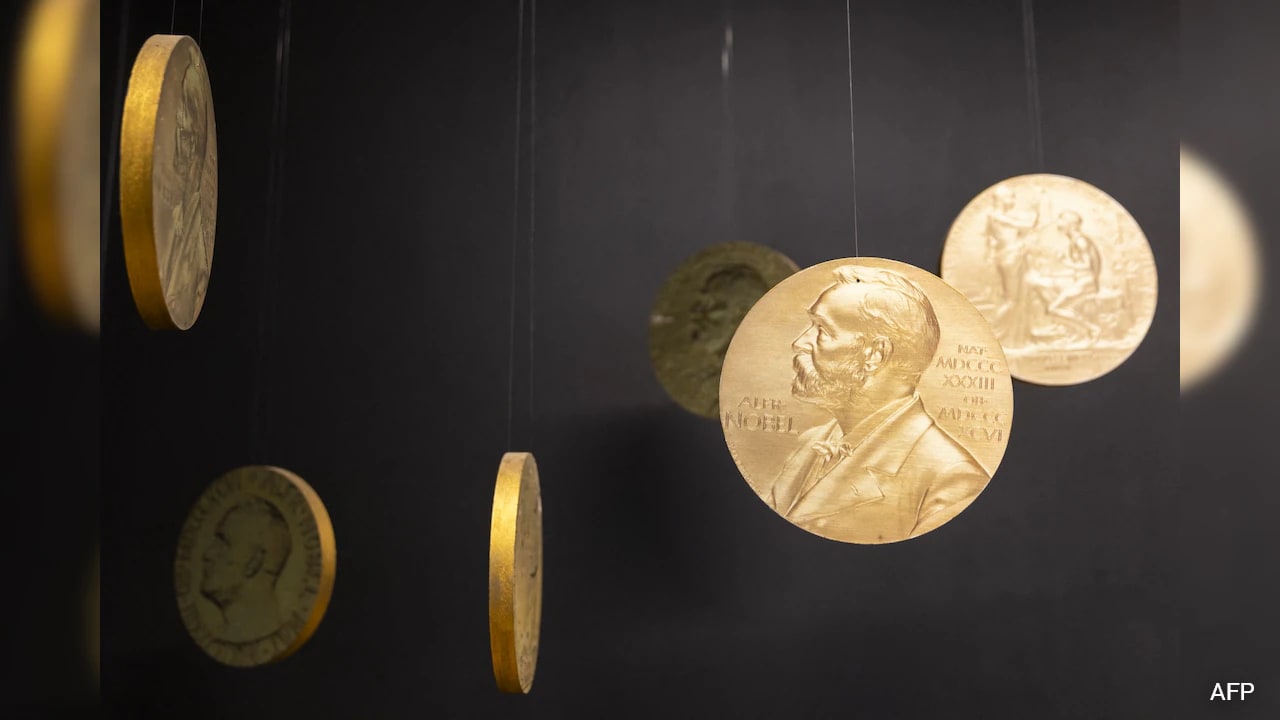
Every October, the media runs the same tired script. Pundits assemble on television panels, clutching their pearls and debating whether a particular dissident, diplomat, or environmental activist deserves the highest honor in international diplomacy. The narrative goes that a quiet committee in Oslo sits in a smoke-filled room, diligently weighing decades of humanitarian sacrifice against strict moral criteria, rewarding pure virtue with a gold medal and a million-dollar check.
It is a comforting bedtime story. And it is entirely false.
The Nobel Peace Prize is not a reflection of objective virtue. It is a political instrument wielded by a small European state to manage its own security, appease aggressive superpowers, and signal alignment with shifting global hegemonies.
If you still believe the Norwegian Nobel Committee operates as an independent tribunal of saints, you are looking at the institution through a lens of naive sentimentality. Strip away the rhetoric, look at the historical record, and a far more cynical, calculated mechanism emerges.
The Myth of the Objective Outsider
The standard explanation of how the prize gets decided points directly to Alfred Nobel’s famously vague will. He wanted the prize to go to the person who did the most to advance fraternity among nations, the abolition or reduction of standing armies, and the promotion of peace congresses.
Because those terms are broad enough to drive an aircraft carrier through, the five-member committee appointed by the Norwegian Parliament enjoys absolute discretion. Notice that detail: the Norwegian Parliament appoints them. These are not international jurists elected by the United Nations. They are retired politicians chosen by a domestic legislature in a country that relies entirely on NATO for its territorial defense while maintaining a massive sovereign wealth fund tied deeply to global capitalism.
When the committee selects a winner, they are not operating in a vacuum of pure ethics. They are managing Norway's foreign relations.
Look at the history of high-profile snubs and timely awards. Henry Kissinger and Le Duc Tho winning in 1973 for a ceasefire agreement that did not actually stop the Vietnam War was not an idealistic miscalculation; it was a desperate geopolitical signal from a Scandinavian nation navigating the terrifying peak of the Cold War. Awarding Barack Obama in 2009 after nine months in office was not a reward for past deeds. It was an ambitious lobby by a nervous European political class trying to lock an incoming American president into multilateral frameworks before he could pivot away from them.
The committee routinely confuses aspiration with achievement. They award potential, hoping to bribe leaders into good behavior, only to watch those same laureates preside over military escalations later. That is not peace-making. That is wishful PR.
Why the Nomination Process is a Vanity Fair
Anyone who thinks the nomination list represents a rigorous filtering of global humanitarian efforts has never looked at who is legally allowed to nominate someone.
The statutes permit thousands of people to submit names: university professors of history, political science, law, and philosophy; former laureates; members of national assemblies and governments; and current and past members of the Norwegian Nobel Committee itself.
The result is a bureaucratic cattle call. Every university department, every ambitious member of parliament, and every well-funded NGO pushes their pet candidate into the inbox. Thousands of nominations pour in every year. The mountain of paperwork is so vast that the permanent staff of the Nobel Institute spends months simply whittling down the technical validity of the entries before the committee ever sits down to deliberate.
This creates a massive advantage for institutional insiders. A grassroots organizer working in a forgotten conflict zone with zero administrative support does not have a retinue of law professors drafting elaborate nomination dossiers. A charismatic politician with a dedicated lobbying apparatus and a Washington PR firm does.
The system favors those who speak the fluent language of Western institutionalism. If your form of peace-building involves disrupting supply chains
Why the Nobel Peace Prize is Just a Political Weapon Disguised as Morality
news
The lazy consensus loves to paint the Nobel Peace Prize as the gold standard of global virtue. We are fed a steady diet of pristine narratives about Norwegian committees carefully weighing the moral weight of humanitarian giants, acting as the unbiased conscience of humanity. It is a comforting fairy tale. It is also completely detached from reality.
Strip away the gala dinners, the tailored tuxedos in Oslo, and the solemn pronouncements, and you find a mechanism deeply entangled in realpolitik, institutional self-preservation, and diplomatic convenience. The committee does not award peace; it rewards utility, manages optics, and occasionally panics.
The Myth of the Neutral Arbiter
Ask anyone how the prize works, and they will parrot the standard line. Alfred Nobel left a fortune in his will to reward those who confer the greatest benefit on mankind, specifically mentioning the reduction of standing armies and the promotion of peace congresses. Sounds straightforward. The Norwegian Parliament appoints a five-member committee, and away they go.
Except the Norwegian Nobel Committee is not an independent academic body of saints. It is a political appointment. Members are chosen by the Storting, reflecting the balance of power in Norwegian domestic politics. When you pack a peace prize committee with former politicians and political fixers, you do not get objective moral clarity. You get geopolitics wrapped in gold leaf.
Look at the history. The list of laureates is a masterclass in reactionary panic and retroactive justification. Henry Kissinger shared the prize with Le Duc Tho in 1973 while the Vietnam War was still raging. Tho had the good sense to reject the absurdity of it; Kissinger took the hardware. That was not a celebration of peace. That was an exhausted superpower trying to buy an exit strategy.
Rewarding Intentions While Ignoring Carnage
We celebrate the illusion of action over the reality of outcome. The committee loves a good symbolic gesture because symbols are cheap and require no body count accountability.
Take the 2009 prize awarded to Barack Obama less than nine months into his first term. What had he actually achieved? Nothing. The justification wasn't a track record of conflict resolution; it was an appreciation for his "vision" and a collective Western sigh of relief that George W. Bush was gone. It was an award given for a vibe. Meanwhile, the drone wars escalated, and the administration expanded military engagements across multiple fronts. The prize became an embarrassing anchor around the neck of a president who knew he hadn't earned it.
When you hand out prizes for promissory notes, you degrade the currency of actual peacebuilding. You tell the world that good PR and a charismatic speech outweigh the grueling, unglamorous, generational work of local mediators who stop actual killings without a camera crew in sight.
The Institutional Fear of Irrelevance
Why does the committee make these bizarre choices? Simple self-preservation.
An institution founded on celebrating peace is terrified of being ignored. To stay relevant in a multipolar world where traditional Western-dominated international structures are fracturing, the committee reaches for headlines. They chase high-profile political figures to stay on the front page, or they swing wildly in the opposite direction, giving it to obscure activists to prove their grassroots bona fides, only to watch those choices spark immediate international backlash or quiet irrelevance.
A prime example is the 1994 prize given to Yasser Arafat, Shimon Peres, and Yitzhak Rabin for the Oslo Accords. It was framed as the dawn of a new Middle East. Anyone paying attention on the ground knew the structural flaws baked into those accords guaranteed failure. But the committee needed a win. They needed to feel like history was bending to their will. A decade later, the second intifada had blown the accords to pieces, leaving the prize looking less like a prophetic vision and more like a catastrophic misread of tribal politics.
The Alternative Metric
If we stopped treating the Nobel Peace Prize as an oracle of moral authority, how would we judge it? We would stop looking at the press releases and start looking at the incentives it creates.
When international recognition is up for grabs based on elite consensus, aspiring leaders don't focus on grassroots reconciliation. They lobby Western capitals. They hire PR firms. They engineer high-profile photo ops designed to catch the eye of five politicians sitting in a room in Oslo. The prize encourages political theater over structural reform.
Real peace is boring. It looks like local police reform, trade agreements that lift millions out of subsistence farming, and tedious border negotiations that take decades. None of those things fit neatly into a twenty-minute ceremony broadcast from City Hall.
The Nobel Peace Prize remains an elite parlor game, funded by dynamite money, managed by Norwegian party politics, and consumed by a public desperate for simple heroes in a brutally complicated world. Stop looking to Oslo for moral guidance. The best peacebuilders on this planet will never see a medal, because they are too busy keeping people alive while the committee looks the other way.