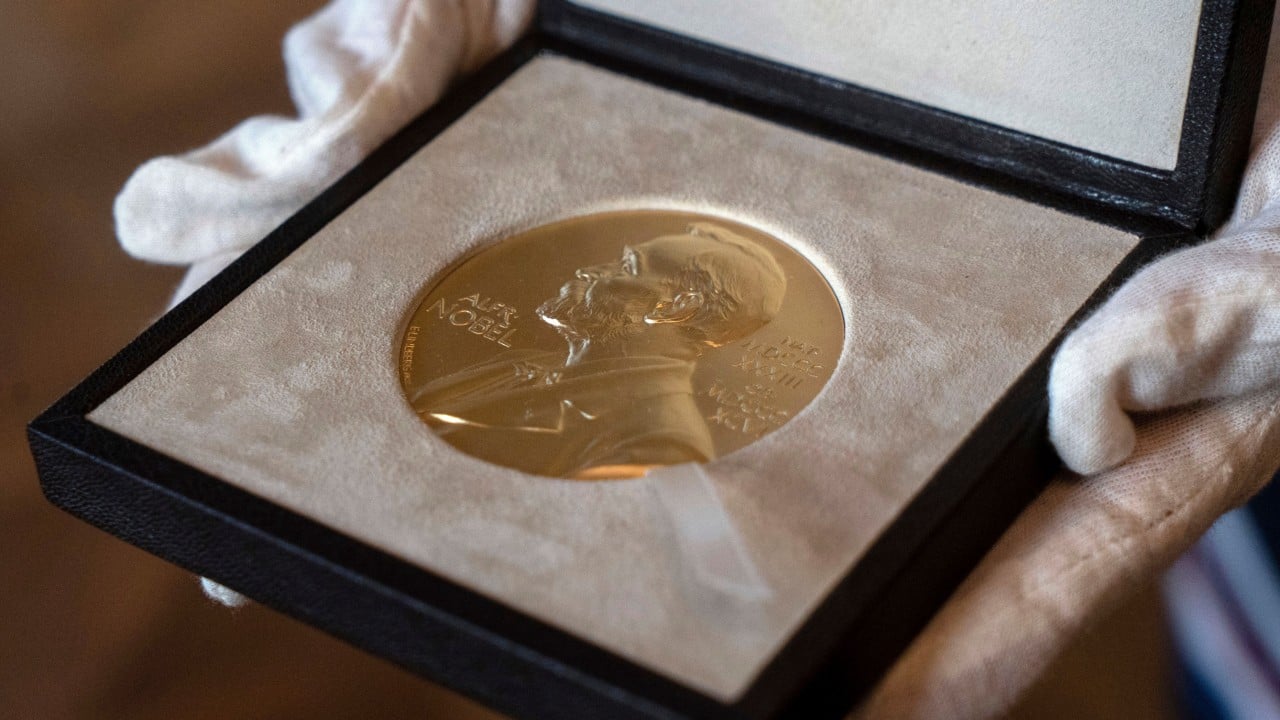
The media is currently hyperventilating over Francis Halzen taking home the 2026 Nobel Prize in Physics for the IceCube Neutrino Observatory. The lazy consensus everywhere you look is a predictable chorus of praise: a triumph of patience, a victory for publicly funded mega-science, and proof that if you drill a cubic kilometer of ice at the South Pole, the universe will eventually reward your persistence.
It is a great narrative. It is also dangerously incomplete.
I have watched academic institutions and funding committees blow millions on bureaucratic physics pipelines that prioritize safe, incremental scaling over actual conceptual leaps. While everyone is busy clapping for the detection of high-energy cosmic neutrinos, they are ignoring the structural rot in how modern physics decides what gets built, who gets funded, and why taking thirty years to answer a single question is treated as a feature rather than a systemic bug.
Let us define terms precisely. A neutrino is a subatomic particle with an extremely tiny mass that interacts so weakly with matter that light-years of lead would fail to stop most of them. To catch them, you need scale. Halzen understood this back in the late 1980s when he proposed turning glacial ice into a particle detector. That part is brilliant. What is not brilliant is an institutional ecosystem that forces scientists to spend decades begging governments for cable miles and photomultiplier tubes just to test a hypothesis that theoretical physics mapped out half a century prior.
The popular narrative paints IceCube as an overnight sensation that took three decades. That is a contradiction designed to make you feel good about slow bureaucracy. In reality, IceCube succeeded in spite of the academic grant-industrial complex, not because of it. When a field takes thirty years from concept to a crown jewel prize, it exposes an infrastructure paralyzed by risk aversion. We celebrate the survivor who beat the odds while ignoring the dozens of superior architectural concepts that died in committee because they did not fit into a traditional government budget cycle.
Imagine a scenario where we stop treating thirty-year lead times as normal. Physics is stuck in a holding pattern where mega-projects require decades of political lobbying before a single hole is drilled. By the time detectors like IceCube reach maturity, the technological baseline used to build them is ancient history. IceCube relies on thousands of digital optical modules dropped into melted ice holes. It works, but it is brute-force engineering. We threw a cubic kilometer of ice at a statistical problem because we lacked the theoretical precision to isolate neutrinos any other way.
Here is what the cheerleaders miss. Neutrino astronomy is heralded as a brand-new window on the universe. True. But it is a window we could have cracked open much sooner if academic gatekeepers had decentralized funding instead of funneling billions into monolithic projects that take generations to iterate. When you tie an entire generation of researchers to a single monolithic detector at the South Pole, you create a monopoly on data. If IceCube misses an anomaly or misinterprets a background signal, an entire subfield stumbles with it because there are no competing architectures of equivalent scale to cross-reference the findings.
The real lesson of Francis Halzen’s Nobel win is not that patience pays off. The real lesson is that modern physics has become a game of industrial endurance. If you live long enough, stay inside the bureaucratic lines, and manage to keep a massive international collaboration from fracturing over political squabbles, the Nobel committee will eventually hand you a medal for finishing a marathon that should have been a sprint.
Stop pretending this is how science is supposed to work. Stop glorifying the decades-long wait as romantic perseverance. It is an administrative bottleneck. Until we streamline how high-energy astrophysics is funded and built, we will keep waiting a lifetime for every single glimpse of the dark universe.
Francis Halzen wins 2026 Nobel Prize for neutrino research
This video provides context on the breakthrough detector technology and the historical significance of capturing high-energy cosmic neutrinos at the South Pole.