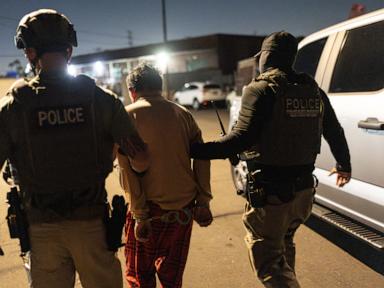
Twenty-eight federal prosecutions in a state of more than 22 million eligible residents and over 227 million registered voters nationwide do not prove systemic election fraud on their own—yet treating them as statistical noise misses the operational and legal friction they expose. When the U.S. Department of Justice announced charges against 28 foreign nationals across California's four federal judicial districts in October 2026 ahead of the November 3 election, standard wire coverage treated the story as a familiar clash between federal enforcement and state election officials. A rigorous analysis moves past that surface tension to examine the institutional architecture behind the dispute: how database mismatches occur, why criminal charges and civil lawsuits operate on different evidentiary tracks, and why headcount metrics distort both the scale of noncompliance and the administrative cost of policing it.
The core blueprint of this analysis rests on four structural pillars: Database Asymmetry, The Enforcement-to-Scale Gap, Federalism and Data Friction, and The Cost Function of Verification. Together, these mechanics explain why a relatively small set of individual criminal cases can trigger sweeping litigation over tens of thousands of registrations without resolving how election rolls and immigration records are reconciled in real time.
Database Asymmetry and How Eligibility Errors Occur
Public debates around noncitizen voting frequently assume a binary failure: either state agencies intentionally register noncitizens, or voter rolls are completely free of ineligible entries. In practice, registration errors in large jurisdictions emerge from fragmented record systems, timing lags, and human or interface friction rather than a single monolithic pipe.
In California, where universal mail-in ballots are sent to active registered voters, eligibility depends on citizenship at the moment of registration and voting. Federal authorities have pointed to cases involving alleged false claims of U.S. citizenship during voter registration, ballots cast by noncitizens, and alleged misrepresentations on naturalization applications where applicants stated they had never claimed citizenship or voted in U.S. elections. From a systems perspective, several distinct failure modes can produce or surface an improper registration:
- Self-attestation and transaction opt-outs: Where registration forms or agency workflows rely on applicant attestation or opt-out prompts, a noncitizen who misunderstands eligibility rules—or intentionally misstates status—can enter the registration pipeline.
- Cross-agency data latency: Citizenship status is adjudicated at the federal level through immigration and naturalization records, whereas voter registration is maintained at the state and county levels. A person's legal status can change over time, and matching records across agencies without standardized unique identifiers creates false positives and missed matches alike.
- Retroactive detection during naturalization: Several federal prosecutions in the October 2026 sweep involved allegations tied to naturalization applications, where federal reviewers examine prior conduct and statements. That means detection often happens years after an initial registration or ballot cast, creating a lag between the alleged act and criminal charging.
A critical distinction separates known facts from educated hypotheses. It is a known fact that federal prosecutors announced charges against 28 foreign nationals in California on October 19, 2026, alongside broader nationwide enforcement figures cited by the Justice Department. It is also a known fact that the Justice Department sought court intervention regarding more than 20,000 registrants flagged as "likely" noncitizens ahead of the November 3 election, while California officials disputed the evidentiary basis of that list. By contrast, any claim that a specific number of unverified flags equals confirmed illegal votes cast in a given election is an educated hypothesis—or an assertion to be tested in court—until individual records, citizenship histories, and ballot histories are verified.
Why "Likely Noncitizen" Flags Are Not Verified Votes
Conflating a flagged registration with a cast ballot is the single largest analytical error in noncitizen voting coverage. A registration record shows that an individual is on a roll to receive information or a ballot; casting a ballot requires an additional step, and eligibility requires citizenship at the relevant legal threshold. Furthermore, database matches based on name, birth date, or partial identifiers can flag lawful permanent residents or naturalized citizens whose immigration file was not cleanly linked to their voter record.
In operational terms, an audit pipeline has two separate gates:
- Identity and citizenship verification: Confirming whether the registrant was a U.S. citizen when registering and voting.
- Ballot activity verification: Confirming whether a ballot was actually issued, returned, and counted under that registration.
Skipping either gate turns a screening hypothesis into an overstated conclusion.
The Enforcement-to-Scale Gap
Standard news reporting often juxtaposes a small number of arrests—such as 28 defendants in California or roughly a hundred-plus defendants across multiple states over a multi-week span—against massive headline numbers like tens of thousands of flagged registrants or hundreds of millions of voters nationwide. Without a framework for why those numbers sit at different orders of magnitude, readers are left guessing whether small arrest counts mean the problem is tiny or merely under-prosecuted.
Three structural factors widen the gap between total flagged records and criminal prosecutions:
- High evidentiary bar for criminal intent: Criminal charges in federal court require proof beyond a reasonable doubt, including elements tied to knowing falsehoods or specific statutory violations. Administrative ambiguity or clerical confusion is far easier to flag in a data sweep than to prove as a felony.
- Investigative and prosecutorial bandwidth: Financial and immigration record tracing, witness interviews, and grand jury or information filings across four federal districts in California require substantial attorney and investigative capacity. Even an aggressive sweep can process only a fraction of a large data set immediately.
- Temporal lag in case detection: Many cases surfaced when individuals applied for naturalization or when historical records were cross-checked years after an election. Consequently, a single enforcement wave can bundle conduct spanning multiple election cycles rather than measuring a single year's rate.
Consider a conceptual example: suppose an automated cross-check flags 20,000 voter records for manual review. Even if half of those flags stem from outdated citizenship records, name similarities, or non-voting registrants, the remaining subset could still contain hundreds of potential eligibility discrepancies—far more than a single round of felony prosecutions can indict at once, yet a tiny fraction of a state's multi-million-voter roll. Both truths can hold simultaneously: the aggregate statistical share of a statewide electorate can be small while the administrative workload of resolving thousands of edge cases is heavy.
Federalism, Data Demands, and Institutional Friction
The conflict over noncitizen voters is not merely a dispute over individual defendants; it is a structural contest over data access, administrative authority, and pre-election timing.
State election systems operate under decentralized governance, with county registrars and state chief election officials managing voter lists, mail ballot distribution, and statutory procedures for voter list maintenance. Meanwhile, federal agencies hold federal immigration and naturalization records and enforce federal criminal statutes. When the Justice Department demands detailed voter roll data—such as dates of birth, addresses, driver's license numbers, and partial Social Security numbers—and sues states over access or ballot-counting restrictions ahead of an election, institutional friction spikes immediately.
This friction creates a classic principal-agent and timing bottleneck:
- Short review windows vs. verification complexity: Demanding rapid review of a large list of flagged registrants shortly before an election compresses verification into days or hours. Rushed list removals risk disenfranchising eligible voters through data errors, while slow reviews draw accusations of stonewalling or risking ballot dilution.
- Adversarial litigation vs. cooperative reconciliation: When disputes move straight into federal court over emergency injunctions or data production, legal posturing can outpace technical record matching. Officials trade accusations of hiding records or presenting unverified assertions rather than establishing a transparent audit protocol.
- Public trust externalities: High-profile arrests and competing public statements by prosecutors, governors, and attorneys general shape how citizens perceive election administration. Even when court outcomes are pending, visible enforcement actions alter political messaging and scrutiny around mail voting and registration rules.
What "People Also Ask" Beneath the Headlines
Readers encountering a sweep of this kind typically want answers to four practical questions, even when wire articles treat them as side notes:
- How can a noncitizen end up registered to vote? Errors can occur through misunderstanding eligibility rules on registration forms, misreading prompts during government transactions, or relying on outdated records when citizenship status is not verified at the point of registration.
- What happens to someone charged with illegal registration or voting? Defendants face federal criminal proceedings—such as charges involving false statements in naturalization matters or unlawful voting—where they are presumed innocent unless proven guilty in court, and potential penalties depend on the specific statutes charged and sentencing rules.
- Why do federal and state officials clash over voter lists? States guard voter data under state privacy and election laws and resist last-minute mandates that could alter ballot handling or remove eligible voters, while federal prosecutors argue they need complete data to investigate crimes and prevent ineligible ballots from being counted.
- Does a sweep prove an election outcome was changed? No. Proving an election outcome was affected requires showing both that enough unlawful ballots were actually cast and counted to exceed the margin of victory and that they favored a specific outcome—a threshold that a few dozen charges do not establish.
The Cost Function of Verification
Every election administration system faces a trade-off governed by a cost function of verification. In economics and operations research, tightening a filter reduces false positives (ineligible people slipping through) at the risk of increasing false negatives (eligible people blocked or delayed), while raising direct administrative and legal costs.
Let the operational cost $C$ of verifying a flagged set of $N$ voter records be modeled conceptually as:
$$C = c_{\text{review}} \cdot N + c_{\text{error}} \cdot E_{\text{false}} + c_{\text{litigation}}$$
In this relationship, $c_{\text{review}}$ is the per-record cost of human and technical investigation, $E_{\text{false}}$ represents erroneous removals or ballot rejections that trigger challenges or disenfranchisement, and $c_{\text{litigation}}$ captures the legal and institutional cost of court battles and contested procedures.
Why does this cost function matter? Because unit verification costs do not scale linearly under time pressure. If an agency has six months to cross-check 20,000 records against federal and state databases, staff can batch queries, send notices, and resolve ambiguities methodically. If the same list arrives with a 48-hour deadline weeks before a general election, overtime labor surges, automated match thresholds grow brittle, and the probability of wrongful exclusion rises sharply.
At the same time, ignoring anomalous flags carries its own cost: unresolved discrepancies fuel litigation, erode confidence in roll hygiene, and leave potential statutory violations unaddressed until much later.
Limitations of Any Single Fix
No single reform eliminates this trade-off. Strict pre-registration documentary hurdles can lower registration errors but create friction for eligible citizens who lack immediate access to specific documents or who move frequently. Relying solely on post-election audits or naturalization reviews avoids pre-election disruption but cannot stop a contested ballot from being cast in the immediate cycle. Cross-checking databases improves detection, yet imperfect data hygiene across agencies still produces false matches that require human adjudication.
Strategic Recommendation for Election Systems and Analysts
The most effective strategic move for election administrators, policymakers, and analysts covering these disputes is to decouple routine database reconciliation from pre-election emergency litigation by establishing continuous, auditable inter-agency matching protocols well ahead of election deadlines.
Specifically, election systems should build a standing two-stage verification workflow outside the final 90 days before an election:
- Run continuous, standardized record matching between state registration rolls and authoritative citizenship/identity sources using multi-attribute matching (full legal name history, date of birth, residential history, and statutory identifiers) rather than single-field or heuristic flags.
- Publish transparent audit metrics separating (a) total records flagged for review, (b) records confirmed as noncitizens or ineligible, (c) ballots actually cast on those records, and (d) false-positive flags resolved in favor of eligible voters.
For analysts and decision-makers evaluating future enforcement sweeps, the rule is equally clear: treat arrest counts as enforcement signals, treat flagged lists as investigative leads, and demand verified ballot-level evidence before drawing conclusions about electoral impact.


