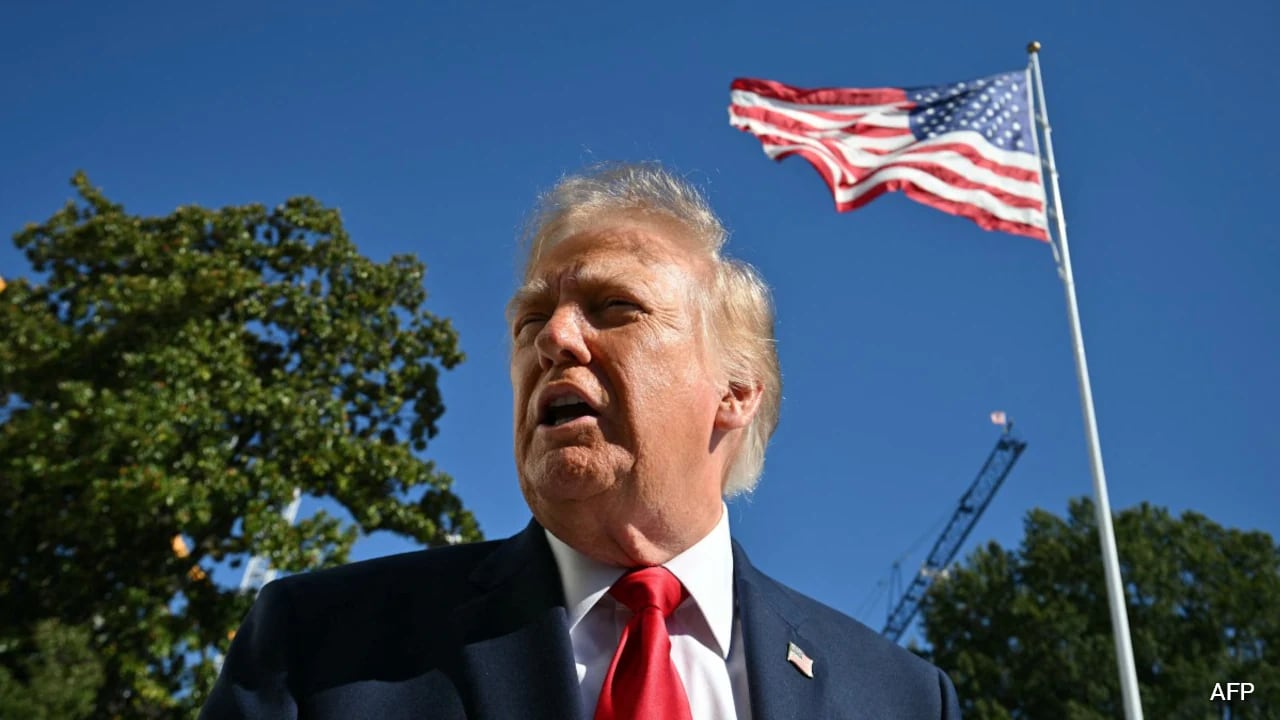
Every time Donald Trump mentions the Nobel Peace Prize, the media machine convulses on cue. Pundits roll their eyes. Fact-checkers dust off their keyboards. Critics mock his ego, and supporters furiously compile lists of his diplomatic breakthroughs to prove he was robbed.
Both sides are trapped in a remarkably shallow debate.
When you argue over whether Donald Trump deserves a gold medallion from a five-person committee in Oslo, you are validating a deeply flawed premise. You are assuming the Nobel Peace Prize is an objective, gold-standard audit of geopolitical success. It is not. Treating it like one turns high-stakes statecraft into an awards-show popularity contest.
If you want to understand why Trump keeps bringing up the prize—and why the foreign policy establishment loses its mind every time he does—you have to stop looking at the trophy and start looking at the scoreboard they are both ignoring.
The Lazy Consensus Around the Oslo Medallion
The standard coverage of Trump’s Nobel commentary follows a predictable, exhausted script. Outlets report that he believes he earned the honor for brokering the Abraham Accords, avoiding new foreign wars, or initiating dialogue with North Korea, followed immediately by a chorus of analysts explaining why the Norwegian Nobel Committee will never hand it to him.
That narrative is lazy because it treats the committee’s preferences as a neutral baseline of international morality.
Let’s look at the actual mechanics of how the Nobel Peace Prize operates. Under the terms of Alfred Nobel’s 1895 will, the prize is meant to go to the person who has done the most or the best work for fraternity between nations, the abolition or reduction of standing armies, and the holding and promotion of peace congresses. Notice the wording. It does not say "to the leader who maintains a polite diplomatic tone in Brussels." It is supposed to reward tangible reductions in conflict.
Yet over the last half-century, the Norwegian Nobel Committee—appointed by the Norwegian Parliament, reflecting the consensus of Scandinavian social democracy—has steadily shifted the prize from rewarding completed peace to rewarding aspirational signaling.
I have spent years watching foreign policy insiders treat Oslo’s annual announcement like papal infallibility, only to watch the geopolitical reality on the ground unravel six months later. Look at the historical ledger:
- Henry Kissinger and Le Duc Tho (1973): Awarded for the Paris Peace Accords while bombs were still falling and two years before Saigon collapsed. Two committee members resigned in protest. Le Duc Tho refused to accept it because peace had not actually been achieved.
- Barack Obama (2009): Awarded less than nine months into his first term, before he had passed a single major foreign policy initiative, based entirely on rhetoric and the promise of multilateralism. Even Geir Lundestad, the longtime secretary of the Nobel Committee, later admitted in his memoir that the committee regretted the decision and that it failed to achieve what they hoped.
- Abiy Ahmed (2019): Awarded to the Ethiopian Prime Minister for making peace with Eritrea. Within a year, he launched a devastating military offensive in the Tigray region that killed hundreds of thousands of people.
When you place Trump’s demand for recognition next to that track record, the dynamic flips. Trump isn't failing to meet an objective standard of peace; he is colliding with an ideological gatekeeper whose definition of diplomacy rewards process over disruption.
Transactional Diplomacy Versus Institutional Consensus
To understand why Trump and the Nobel Committee are oil and water, you have to strip away the personality politics and examine two competing theories of international relations.
The foreign policy establishment—the think tanks in Washington, the diplomats in Geneva, and the committee in Oslo—operates on liberal institutionalism. In this framework, peace is maintained through multilateral treaties, international bodies, incremental consensus, and predictable norms. If you offend allies, bypass the United Nations, or threaten tariffs, you are seen as destabilizing the system, even if your actions stop a war.
Trump operates on transactional realism. He views international relations not as a rules-based community, but as a series of bilateral leverage points. To a transactional realist, multilateral frameworks often calcify conflicts rather than solve them, because they give every minor player a veto over major outcomes.
Consider the 2020 Abraham Accords. For decades, the orthodox consensus among Middle East envoys—from Dennis Ross to John Kerry—was that normalization between Israel and Arab nations was strictly impossible without first resolving the Israeli-Palestinian conflict. That was an unbreakable rule of statecraft.
The Trump administration looked at that rule, decided it was a dead end, and went around it. By using bilateral incentives—security guarantees, F-35 sales to the UAE, removing Sudan from the state sponsors of terrorism list, recognizing Moroccan sovereignty over Western Sahara—they brokered four normalization agreements in four months.
Did it solve every problem in the Middle East? Obviously not. Critics rightly point out that bypassing the Palestinian question left a core regional wound untreated, which later erupted with catastrophic force. Pretending the Accords created permanent regional harmony is dishonest.
At the exact same time, dismissing them because they didn't follow the Oslo playbook is equally dishonest. If a traditional multilateral diplomat had secured four peace and normalization treaties in the Middle East, their name would have been engraved on a Nobel medallion before the ink was dry. Because it was done through bilateral horse-trading rather than a UN-sponsored summit, the institutional establishment treated it as an anomaly rather than a triumph.
Answering the Questions People Actually Ask
When people search for why Trump hasn't won the Nobel Peace Prize—or whether he ever could—they usually run into partisan talking points. Let’s dismantle the real questions behind the search bar.
Can a US President Win the Nobel Peace Prize Without Institutional Support?
Technically, yes. Practically, almost never. Nominations are open to a massive pool of people: members of national assemblies, university professors of history and social sciences, directors of peace research institutes, and previous laureates. Getting nominated is trivial; thousands of people qualify to submit a name, and Trump has been nominated multiple times by figures like Norwegian parliamentarian Christian Tybring-Gjedde.
Winning, however, requires surviving a five-member committee chosen by Norway’s parliament. These are former Norwegian politicians, academics, and civil servants. Their worldview is deeply rooted in European multilateralism, climate accords, and international courts. A leader who withdraws from the Paris Climate Agreement, pulls out of the Iran nuclear deal, and openly questions the funding structure of NATO is actively dismantling the exact institutions the committee views as the architecture of world peace. Expecting them to give him the prize is like expecting a union boss to give an award to a corporate restructuring firm.
Does Trump Actually Care About the Prize, or Is It a Political Weapon?
Both. Anyone who claims Trump doesn't care about prestige hasn't been paying attention for forty years. He wants the trophy, especially because Barack Obama has one. Trump views Obama’s 2009 win as the ultimate proof that the global elite operates on a rigged double standard—rewarding his predecessor for speeches while ignoring his own concrete deals.
By publicly stating that he should win the prize and immediately adding that he doubts he ever will, Trump executes a classic rhetorical trap. If he doesn't win, he proves his point to his base: the international establishment is biased against him and the results he delivers. If, by some miracle, a future negotiation—such as brokering an end to the war in Ukraine—forces the committee’s hand, he gets the ultimate vindication. He turns a guaranteed snub into political fuel.
What Is the Flaw in Trump’s "No New Wars" Argument?
Trump’s supporters frequently point out that he was the first president in decades not to enter the US into a new foreign war, contrasting him with George W. Bush and Obama. While factually accurate regarding new large-scale ground invasions, using that metric alone to claim the mantle of a "peace president" oversimplifies the record.
During his presidency, Trump dramatically loosened rules of engagement for airstrikes in Somalia and Yemen, escalated drone warfare beyond Obama-era levels, vetoed bipartisan congressional resolutions aimed at ending US support for the Saudi-led war in Yemen, and ordered the targeted killing of Iranian General Qasem Soleimani—a move that brought the US and Iran to the brink of direct military conflict. Restraint in starting new invasions does not equal pacifism. Deterrence through unpredictable force is a valid strategic doctrine, as realists like Henry Kissinger and John Mearsheimer have long argued, but calling it pure peacebuilding blurs the line between deterrence and diplomacy.
The Dangerous Illusion of the Peace Prize Metric
Here is the contrarian truth that neither MAGA commentators nor mainstream editorial boards want to admit: the obsession with the Nobel Peace Prize is actively bad for foreign policy.
When politicians and the public treat a Scandinavian committee's approval as the ultimate validation of statecraft, it creates perverse incentives. It encourages leaders to chase splashy, premature photo-ops rather than doing the unglamorous, generational work of conflict resolution.
Imagine a scenario where a sitting president is weighing two options in a volatile region. Option A is a quiet, decades-long containment strategy that keeps a lid on violence, produces zero headlines, and never results in a formal treaty. Option B is a rushed, high-profile summit that yields a vague joint declaration, looks magnificent on television, and collapses into bloodshed three years later.
In a media ecosystem obsessed with legacy awards and Nobel buzz, Option B wins every single time. We saw it with the premature celebration of the Oslo Accords in 1993, we saw it with the 2018 Singapore Summit with Kim Jong Un—which produced great television and zero denuclearization—and we see it every time a White House leaks that the president is "being considered" for a nomination.
Real peace is rarely photogenic. Often, it is ugly, coercive, and morally compromised.
Look at the Dayton Accords that ended the Bosnian War in 1995. Richard Holbrooke didn't achieve that by holding hands and singing about global unity. He locked warring Balkan leaders in an air force base in Ohio, subjected them to relentless psychological pressure, used NATO bombing campaigns as leverage, and forced them to sign a deeply imperfect partition agreement that cemented ethnic divisions just to stop the killing. Holbrooke never won a Nobel Peace Prize. Yet his brutal, transactional arm-twisting saved tens of thousands of lives.
Stop Grading Statecraft on a Curve
If you want to evaluate Donald Trump’s foreign policy—or any president’s foreign policy—throw the Nobel criteria in the trash. Stop asking what five politicians in Oslo think about American diplomacy, and start applying a ruthless, empirical audit to the actual outcomes.
- Measure durability, not ceremonies. A signing ceremony on the White House lawn is a media event, not a strategic victory. Does the agreement hold five years later without constant US financial life support?
- Audit the second-order consequences. When you strike a bilateral deal to solve Problem A, did you accidentally ignite Problem B? Every diplomatic shortcut carries a hidden price tag; honest analysis counts the cost alongside the trophy.
- Separate rhetoric from leverage. Ignore what a leader says at a rally or a UN podium. Watch where the carrier groups move, where the sanctions bite, and whether adversaries change their behavior out of fear or incentive.
Donald Trump knows he isn't getting a Nobel Peace Prize, and deep down, the foreign policy establishment knows why: he refuses to play by the etiquette of their club. Let the pundits keep arguing over who deserves the gold medal. Serious observers know that in international relations, the only prize that actually matters is whether the shooting stops—and stays stopped—after the cameras leave.



