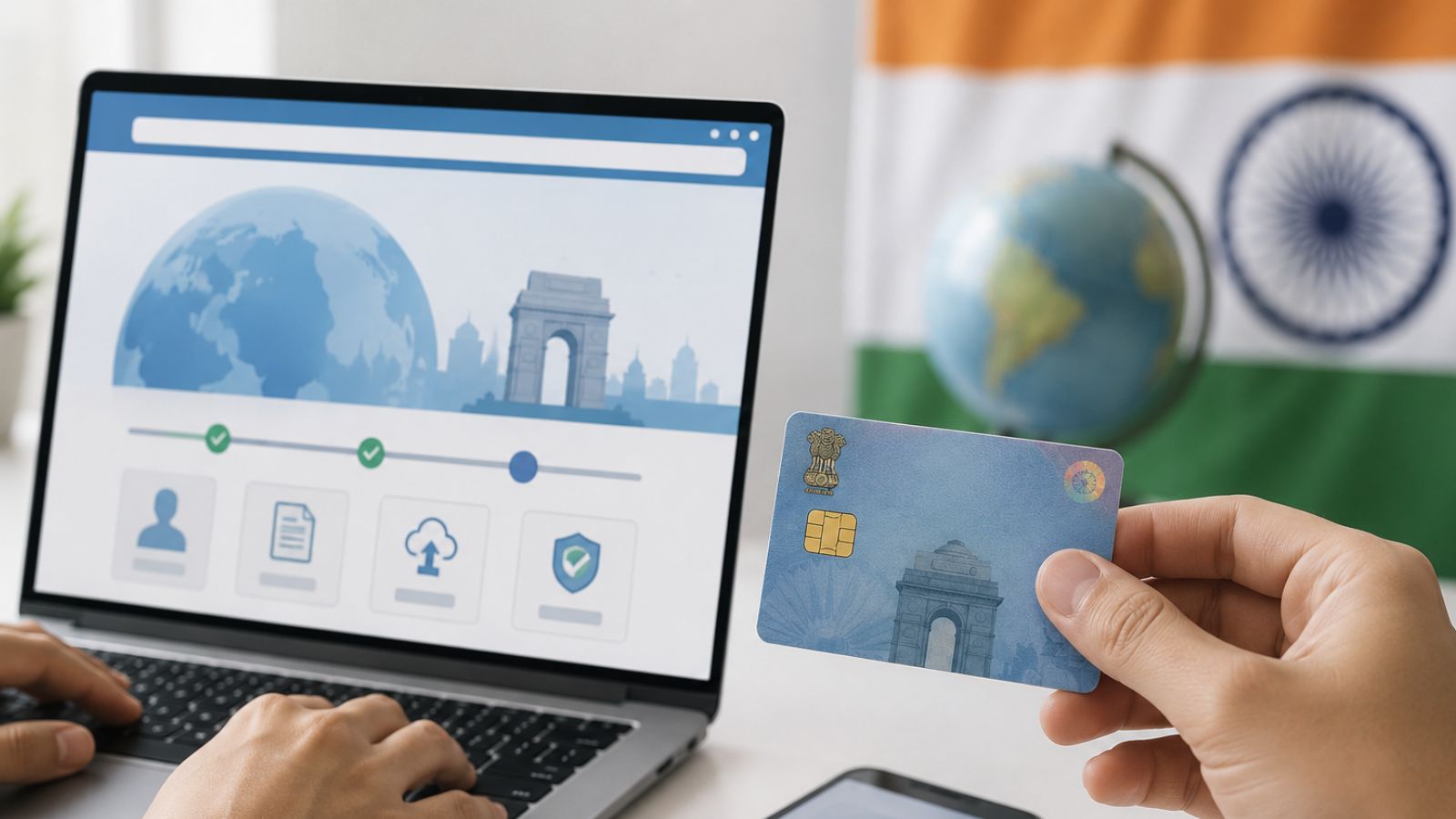
Mainstream travel blogs love to treat the Overseas Citizen of India (OCI) application like a routine weekend chore. They publish sleek, step-by-step guides detailing the "e-OCI" online portal, listing documents as if they are checking off a grocery list, and promising a "seamless" bridge to your ancestral roots.
They are selling you a lie.
The online portal is not an efficiency upgrade; it is a digital velvet rope designed to filter out the impatient. What the generic guides call a straightforward application is actually a complex navigational exercise in bureaucratic compliance. If you approach the OCI process with the casual attitude of applying for a digital nomad visa, you are setting yourself up for months of rejected uploads, forfeited fees, and administrative limbo.
Let us dismantle the lazy consensus and look at what the OCI actually is, why the digital process fails most applicants, and how to navigate the system without losing your mind.
The Dual Citizenship Myth
Let us establish a fundamental legal reality that standard guides gloss over: India does not allow dual nationality. Period.
Article 9 of the Constitution of India explicitly states that any citizen who voluntarily acquires the citizenship of another country loses their Indian citizenship. The OCI card is not a passport. It is a lifelong, multi-purpose, multiple-entry visa bundled with a few economic privileges.
Calling it "Overseas Citizenship" is a masterclass in political branding. It gives the emotional satisfaction of dual nationality while legally extending none of its core protections. You cannot vote. You cannot hold public office. You cannot buy agricultural land or plantation property.
When you apply for an OCI, you are not reclaiming a lost identity; you are applying for a highly specific, conditional immigration status. Treat it with the same legal scrutiny you would accord a permanent residency application in any western nation.
Why the Portal Fails
The official online portal looks simple on paper. You fill out Form A, fill out Form B, upload your images, and wait.
Here is what actually happens. I have advised corporate executives and tech founders who assumed their administrative teams could breeze through this process, only to see them hit a wall for six months because of a single mismatched syllable.
The system is built on absolute typographical rigidity. The Indian bureaucracy does not tolerate the concept of a "common-use name" or an anglicized middle initial.
The Document Disconnect
Standard advice tells you to upload your foreign passport, your naturalization certificate, and proof of Indian origin (like an old Indian passport). What they do not tell you is that if your current foreign passport says "Jon Smith" and your naturalization certificate says "Jonathan Smith," or your old Indian passport spells your birthplace differently than modern maps, your application will be rejected. Not flagged for review—rejected.
The digital portal does not feature an intelligent verification layer. It accepts your files, takes your money, and leaves the actual vetting to consular officials who process thousands of files a week. A single discrepancy between your surrendered Indian passport and your current foreign document triggers an immediate administrative halt.
The Surrender Certificate Trap
You cannot get an OCI without formally giving up your Indian citizenship. This requires a Surrender Certificate.
Many applicants assume that because they have lived abroad for twenty years and their Indian passport expired in 1999, the citizenship is automatically dissolved. It is not. Under the Indian Passport Act, holding onto an Indian passport after acquiring foreign nationality is subject to penalties.
The "lazy consensus" guides tell you to apply for both simultaneously or assume the OCI process handles the surrender. In reality, you must resolve your citizenship surrender first, pay any backdated fines for holding an expired passport if applicable, and secure that certificate before your OCI application can move forward.
Dismantling the Premier Explanations
Let us break down the standard questions found on forums, stripped of the diplomatic fluff.
Can I buy property with an OCI?
You can buy residential and commercial property. You cannot buy agricultural land, farmhouses, or plantation properties. If you inherit agricultural land, you can hold it only with specific permission from the Reserve Bank of India (RBI), and you can generally only sell or gift it to a resident citizen of India. The generic advice says "OCI opens up real estate." The reality is it opens up a heavily regulated subset of real estate.
Is the e-OCI fully digital?
No. This is the biggest misconception driving applicants crazy. The portal is an intake mechanism. Once you upload your documents, you still have to physically submit or mail your physical passport, original documents, and hard copies of the application to the designated outsourcing agency (such as VFS Global) depending on your jurisdiction. You are not bypassing the physical queue; you are just buying a ticket to stand in it.
How long does it actually take?
Ignore the "4 to 6 weeks" timeline quoted on official landing pages. That timeline assumes an immaculate file with zero name discrepancies, perfect image resolutions (down to the exact pixel and aspect ratio requirements), and zero regional backlogs. Real-world timelines fluctuate between eight weeks and four months. If your lineage requires tracing back to grandparents who left pre-1947 undivided India, expect the verification process to take significantly longer as local authorities verify physical land records.
The Unconventional Blueprint for Success
If you want to secure an OCI card without your application getting stuck in a bureaucratic black hole, stop following generic checklists. Use this operational strategy instead.
1. Execute an Identity Audit
Before opening the portal, lay your current passport, your naturalization certificate, your marriage certificate, and your Indian origin documents side-by-side.
- Every letter, middle name, and suffix must match perfectly.
- If there is a discrepancy because you changed your name upon marriage or naturalization, you must secure a formal name change deed or court order before you apply.
- If your parents' names are spelled differently on your birth certificate than on their Indian passports, you need an affidavit attested by a notary stating that both names belong to the same person.
2. Over-Index on the Digital Specifications
The portal's photo upload tool is notoriously sensitive. Do not take a smartphone selfie against a white wall and try to crop it. Go to a professional passport photo service, demand the exact dimensions specified by the Indian consulate (typically 2x2 inches, minimum 51x51 mm, square aspect ratio), and ensure the file size is under the exact maximum kilobyte threshold without sacrificing clarity. If the image looks slightly blurry when compressed, the face-recognition software used during intake will flag it.
3. Maintain the Paper Trail
When you ship your physical passport and originals to the processing center, do not use standard mail. Use a tracked, signature-required courier service. Keep exact digital scans of every single page you submit, including the signed declarations. The outsourcing centers handle thousands of identity documents daily; if a document is misplaced, your scanned archive is your only leverage to prove compliance.
The Real Cost of the Card
The true cost of an OCI is not the baseline application fee. It is the cost of absolute compliance.
If you are a business professional looking to expand operations into Mumbai or Bengaluru, the OCI is an invaluable tool that frees you from employment visa renewals and registration with the Foreigners Regional Registration Officer (FRRO). But if you are a casual traveler looking to visit family once every five years, calculate whether the administrative burden, the surrender fees, and the document alignment process are worth it compared to a standard long-term tourist e-Visa.
Stop treating the OCI application as a casual digital form. It is a rigorous legal transition. Align your documents, verify your lineage down to the exact letter, settle your citizenship surrender debts first, and expect a test of bureaucratic endurance.
Sort your paperwork before the portal rejects it for you.