The siren sounds don't stop when you walk out of a safe room. For the survivors of the October 7 massacres, the physical evacuation to hotels across Israel was just the beginning of a much heavier psychological and political reckoning. You'd think a shared national trauma would forge a unified front. You'd expect people who watched their neighbors dragged into captivity or murdered in their kitchens to lock arms on the path forward.
Instead, the survivors of that horrific Saturday are deeply split. They disagree violently on who should govern Israel, how the military campaign should unfold, and what the future of the nation looks like. This fragmentation matters because these individuals aren't just voters anymore. They hold a unique moral authority in a country paralyzed by political gridlock. When they speak, politicians listen. But right now, they aren't speaking with one voice.
The Fracture Line Across the Kibbutzim
Drive down to the southern perimeter near the Gaza border, and you'll find shattered communities trying to rebuild amidst the ruins. Before October 7, many of these kibbutzim were bastions of Israel's traditional left-of-center peace movement. They voted for territorial compromise, believed in coexistence initiatives, and often employed workers from Gaza.
The massacre shattered those foundational beliefs for some, while hardening them for others.
You see two distinct camps emerging among the survivors from places like Be'eri, Kfar Aza, and Nir Oz. One faction argues that the security paradigm of the last two decades utterly failed. They've shifted hard to the right. They maintain that security can only be achieved through total military dominance and permanent territorial control. They don't want a political settlement with a neighbor that harbors genocidal intent. They believe any talk of diplomatic compromise right now is sheer delusion.
The other faction reached the exact opposite conclusion. They argue that the extreme right-wing policies of the current government created the blind spots that allowed October 7 to happen. They point to years of ignoring the political horizon for Palestinians, managing the conflict instead of resolving it, and funding Hamas to keep Palestinian leadership divided. For these survivors, the path to safety requires a radical political reset. They demand new leadership that will pursue a regional diplomatic architecture, even if it feels terrifyingly naive to their neighbors.
Why Political Allegiance Runs Deeper Than Survival
It's tempting to assume that trauma erases political history. It doesn't. Decades of entrenched voting habits and ideological conditioning survive even the most devastating personal losses.
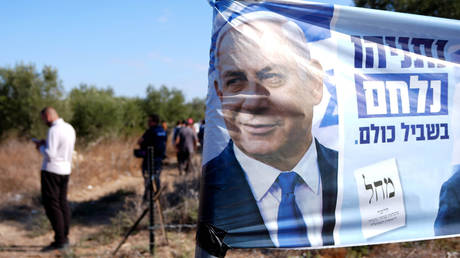
When you talk to survivors who were lifelong supporters of Prime Minister Benjamin Netanyahu, their loyalty often remains remarkably firm. They separate the state's military response from the political leadership that oversaw the intelligence failure. They trust Netanyahu's security rhetoric because the alternative feels like handing victory to the attackers. They want a leader who projects uncompromising strength on the world stage.
Conversely, survivors who spent years protesting against the judicial overhaul and the current coalition see October 7 as the ultimate indictment of this administration. For them, the government abandoned its primary social contract: keeping citizens safe. They participate in weekly anti-government protests in Tel Aviv and Jerusalem, holding up pictures of hostages alongside placards demanding immediate elections.
This deep ideological divide mirrors the broader Israeli public, but with a sharper edge. The survivors have skin in the game. Their homes were burned. Their friends are dead or still held underground in Gaza. Because of this, their political arguments carry an undeniable weight that ordinary citizens can't easily dismiss.
The Hostage Crisis as a Political Wedge
Nothing exposes the friction among survivors quite like the ongoing debate over how to secure the release of the remaining hostages.
Some families of hostages and survivors argue that bringing everyone home must supersede every other war objective, even if it means halting military operations and releasing thousands of Palestinian security prisoners. They are willing to stomach a deeply painful deal because the moral imperative of redemption outweighs long-term strategic calculations.
Other survivors, including those who lost family members in the initial onslaught, argue that a lopsided ceasefire deal will only invite another October 7. They fear that releasing high-profile prisoners will fuel future violence and endanger more lives down the road. They demand total military victory, arguing that crushing Hamas is the only language understood in the region.
This painful disagreement has turned the hostage issue from a humanitarian consensus into a bitter political football. Politicians have capitalized on these divisions, weaponizing the grief of survivors to shore up their own political bases or pressure coalition partners.
Moving Past the Binary
The debate over who should rule Israel isn't just about choosing a new face for the prime minister's office. It's a fundamental existential argument about the soul of the country.
Can Israel survive as a vibrant democracy while maintaining military control over millions of Palestinians? Can it ever trust a neighbor again after the atrocities of that autumn morning? The survivors are living out these questions in real time. Their lack of consensus is proof that there are no easy answers.
Ignoring these internal fractures won't heal them. If you want to understand where Israel is heading, stop looking at the polls in Tel Aviv. Look at the makeshift memorial sites in the south, listen to the arguments in the evacuation hotels, and recognize that the people who paid the highest price are just as divided as the rest of the country on how to pick up the pieces.


