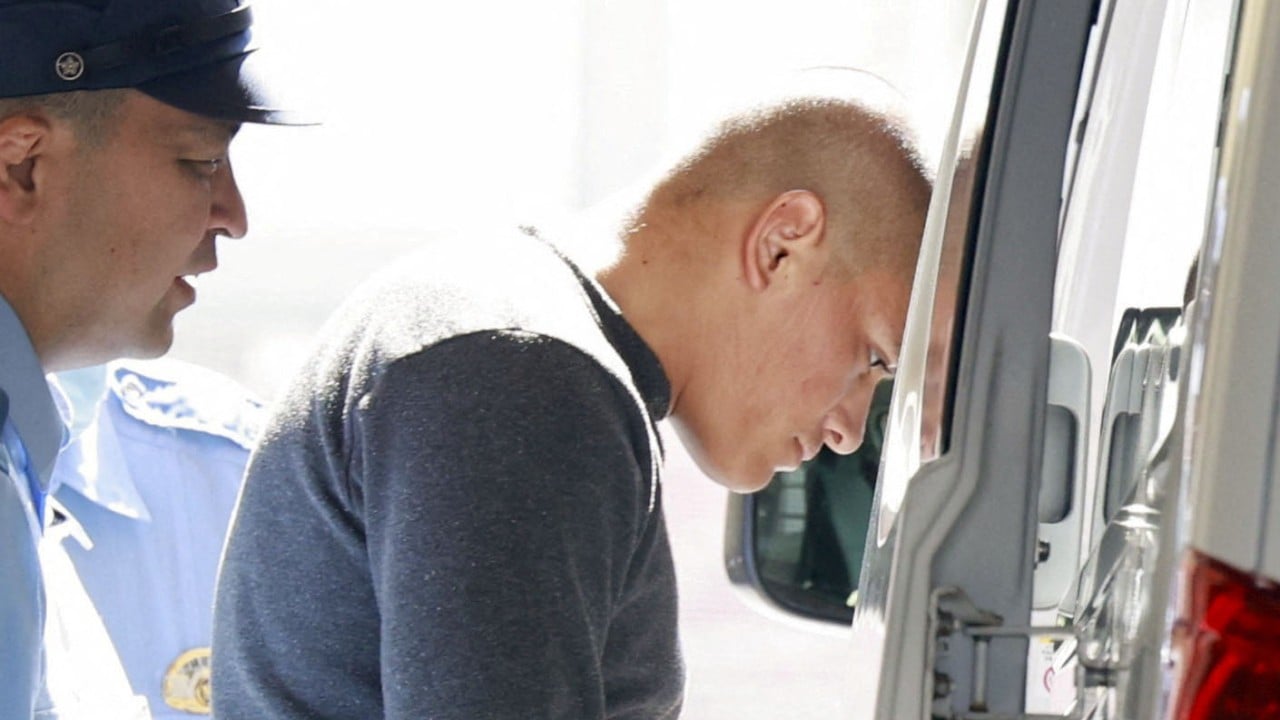
Every single time a US Marine steps out of line in Okinawa, the playbook spins up with the predictability of a Swiss watch. Local outrage peaks. Politicians posture at podiums. A commanding officer issues a sweeping midnight curfew, restricting liberty for twenty thousand service members who had nothing to do with the crime. The mainstream media dutifully reports the curfew as a serious disciplinary correction.
It is security theater of the highest order.
Treating a murder charge or a violent assault as a curfew problem is the exact equivalent of banning shoes because someone committed a crime while wearing Nikes. It solves nothing, placates the outrage machine, and fundamentally misunderstands the structural friction of military basing in a sovereign democracy.
Let us strip away the diplomatic varnish and look at what is actually happening.
The Lazy Consensus Of Midnight Lockdowns
The prevailing narrative sold by cable news and local editorial boards is simple. Troops get restless, alcohol flows, bad decisions happen, and the local population suffers. Therefore, the logic goes, locking everyone in the barracks by ten o'clock at night protects the civilian community and restores order.
This argument collapses under thirty seconds of scrutiny.
The vast majority of off-base incidents involving service members do not happen because a Marine was roaming the streets at two in the morning. They happen because of systemic stress, cultural alienation, inadequate mental health triage within specific battalions, and a command climate that treats discipline as a checklist rather than a culture.
A curfew forces the pressure cooker to seal tighter. It herds thousands of young, stressed, armed professionals into confined quarters with limited outlets for recreation. When you cage people who are trained for high-intensity violence and give them zero autonomy, you do not eliminate volatility. You compress it.
I have watched commanders implement these knee-jerk restrictions for years. They treat liberty as a privilege to be granted or revoked based on behavior, rather than treating the command structure as accountable for the human beings under its flag. When a Marine commits a heinous crime off base, a curfew does not punish the perpetrator—he is already behind bars facing a court-martial and a Japanese prison cell. The curfew punishes the nineteen-year-old lance corporal who wanted to grab a late bowl of ramen before a six-day field exercise.
Why The Status Quo Benefits Both Militaries
To understand why this broken ritual repeats itself, follow the incentives.
For the Japanese prefectural government, demanding restrictions gives them a political scalp to wave in front of local voters who understandably want the bases gone entirely. It proves they can extract concessions from Washington.
For the US military leadership, a curfew is the ultimate administrative shield. It allows them to stand before the press and say action was taken. It checks a box. It provides plausible deniability that the chain of command is addressing the root cause, even though every senior officer with a brain knows that a curfew has zero correlation with long-term behavioral trends.
Neither side wants to address the uncomfortable truth. Okinawa hosts roughly half of the total US military footprint in Japan while accounting for a fraction of Japan's landmass. That concentration creates an unnatural socio-economic friction point. You have a dense civilian population living cheek-by-jowl with a permanent garrison of young foreign combatants.
When you crowd that much raw demographic energy into a small space, friction is inevitable. Curfews are the band-aid slapped over a gaping structural wound, designed purely to keep the alliance machinery humming without requiring actual, difficult structural reform.
The Myth Of Total Control
The foundational error of the curfew mindset is the belief that human behavior can be micromanaged into compliance.
Military planners love control. They build checklists, standard operating procedures, and liberty buddy rules as if human psychology were an engine block that could be tuned with a wrench. But combat arms units are not corporate offices. They attract and forge aggressive, risk-tolerant personalities. You cannot engineer the combat edge out of a force during peacetime and expect them to flip a switch when the shooting starts.
Instead of addressing the cultural silos that separate the base from the local community, the command structure retreats into paternalism. They treat grown adults like wayward high schoolers. And what happens when you treat adults like children? They act like rebellious children the second the supervision slips.
The recidivism data on military justice bears this out. Blanket restrictions correlate poorly with reductions in serious felony offenses. The individuals who commit violent crimes against locals are rarely deterred by administrative check-ins or midnight sign-out sheets. They are driven by internal pathology, substance abuse, or profound personal failure—issues that a curfew sign-in roster will never catch.
What Real Accountability Looks Like
If we want to stop this endless cycle of crime, outrage, curfew, and repeal, we have to abandon the administrative theater and face reality.
First, stop punishing the collective for the individual. Collective punishment is not just toxic for morale; it is lazy leadership. When a leader cannot maintain discipline within a specific unit without locking down an entire prefecture, that leader should be relieved of command.
Second, dismantle the insular enclave mentality. The more isolated a base is from the surrounding community, the more foreign and threatening it becomes. Integration should not mean mandatory cultural sensitivity briefings delivered via PowerPoint slides in a stuffy gymnasium. It means genuine engagement, transparent local jurisdiction partnerships, and holding units socially responsible for their footprint.
Third, fix the mental health pipeline. The Department of Defense loses more service members to preventable behavioral crises than it cares to admit publicly. When young personnel snap, it is rarely out of nowhere. The warning signs are usually flashing red inside the barracks months before an incident spills out onto the streets of Naha.
The Unspoken Reality Of The Alliance
The elephant in the room that nobody in uniform wants to acknowledge is that the strategic necessity of the Okinawa base complex is on a collision course with twenty-first-century geopolitics.
As precision missile technology advances and regional tensions shift, the concentration of massive force packages on a single strategic island becomes an increasingly fragile posture. The crimes and cultural friction are symptoms of a deeper obsolescence.
As long as the base remains vital to regional deterrence, the US military owes the people of Okinawa something better than a midnight curfew and an apology tour. It owes them a military force composed of professionals who understand that their presence is a guest arrangement, not an occupation right.
Until leadership stops hiding behind curfew orders and starts demanding real behavioral standards and cultural respect from the gate out, every future crime will trigger the exact same hollow performance.
And everyone involved will pretend it changes something.


