Every desk in Washington and every trading terminal in London is currently hyperventilating over a single headline. The lazy consensus says that if Iran proposes opening the Strait of Hormuz in six days, Donald Trump should take the deal, claim a diplomatic scalp, and drop crude prices by ten bucks a barrel before midterms.
It sounds clean. It sounds like a dealmaker's dream. It is also an amateurish misread of maritime choke points, economic warfare, and Tehran's actual survival playbook.
I have spent the better part of two decades watching foreign policy wonks fall for the oldest trick in the Persian Gulf playbook: treating a tactical PR stunt as a strategic concession. Tehran is not offering a gesture of goodwill because sanctions are pinching or because a new administration cowed them into submission. They are floating a six-day timeline because the Strait of Hormuz is not a tollbooth they own; it is a weapon they only control when they keep their hand on the throat of global commerce. The moment you negotiate access to a bottleneck, you validate their right to put a chokehold on it in the first place.
Accepting this proposal does not secure energy independence or lower prices. It legitimizes maritime extortion.
The Geography Of A Choke Point Myth
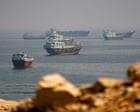
Let us clear up the core misconception right out of the gate. People talk about the Strait of Hormuz as if it were a narrow highway where Iranian gunboats sit with toll tickets. The actual shipping lanes are split into two two-mile-wide channels, sitting entirely within the territorial waters of Oman and the United Arab Emirates. Legally, under the United Nations Convention on the Law of the Sea, vessels have a right of transit passage. Iran cannot legally shut it down permanently without committing an act of war that invites total naval annihilation.
So why does everyone panic every time a Revolutionary Guard speedboat plays chicken with a tanker? Because marine insurance rates do not care about international law. They care about risk.
When Tehran hints at closing or opening the strait, they are not moving concrete blocks across the water. They are shifting the risk premium. A six-day opening proposal is a clever liquidity play. It signals to tanker syndicates that the threat meter is dialed down just enough to lower freight and insurance spikes for a week, allowing backlog to clear while keeping the underlying leverage intact.
If Washington takes the bait and treats this as a bilateral negotiation between the White House and Tehran over Gulf access, we hand the mullahs a veto over global energy flows. We tell the world that American naval dominance is insufficient to guarantee free passage, and that you have to clear your passage through Tehran's permission slip.
The Domestic Politics Of Cheap Oil
Let us look at the internal calculus driving this obsession. A sitting American president wants lower retail gas prices. It is the single most visible metric of economic competence to voters who do not read trade balance reports.
Advisors whisper that securing an open strait, even a temporary one packaged as a confidence-building measure, will flood the market with perceived supply security and force Brent crude downward.
This is where the math falls apart under basic market scrutiny. Physical supply through Hormuz rarely drops to zero during these standoffs because the oil must flow for Iran to get its own revenue, illicit or otherwise, through shadow fleets to Asian buyers. The disruption is almost entirely psychological and financial, driven by war risk surcharges.
When you negotiate a temporary opening, you are treating a symptom while feeding the disease. You are telling the market that normal operations are conditional on Iranian mood swings. That is not stability. That is ransom underwriting. Every time a nation negotiates for the right to use international waters, the price of future extortion goes up.
Imagine a scenario where a corporate CEO negotiates with an extortionist to lower the protection fee from ten percent to five percent for a week, then calls it a major corporate turnaround win. Wall Street would run him out of town. Yet in geopolitics, this passes for statesmanship.
The Real Power Play
If you want to break the cycle instead of playing a losing hand in a six-day news cycle, you ignore the proposal entirely. You do not dignify it with a counter-offer. You scale up naval escort operations, enforce secondary sanctions with ruthless automation, and make it clear that any interference with commercial shipping flying any flag is met with kinetic decoupling of the attacking assets from their command structure.
When you hold the cards, you do not negotiate for permission to play.
Tehran’s proposal is a distress signal disguised as an olive branch. Their fiscal reserves are strained, domestic discontent is simmering, and the shadow fleet is getting harder to mask. They need a headline to stabilize their own currency markets just as badly as an American administration needs lower pump prices.
Falling for a six-day timeline means letting a cornered regime set the tempo of global energy diplomacy. Real strength is refusing to bargain for what is already yours.
The Strait of Hormuz is not a bargaining chip. It is a test of whether international rules still apply, or whether we are all just renting our waterways by the week. Stop treating a shakedown like a summit.