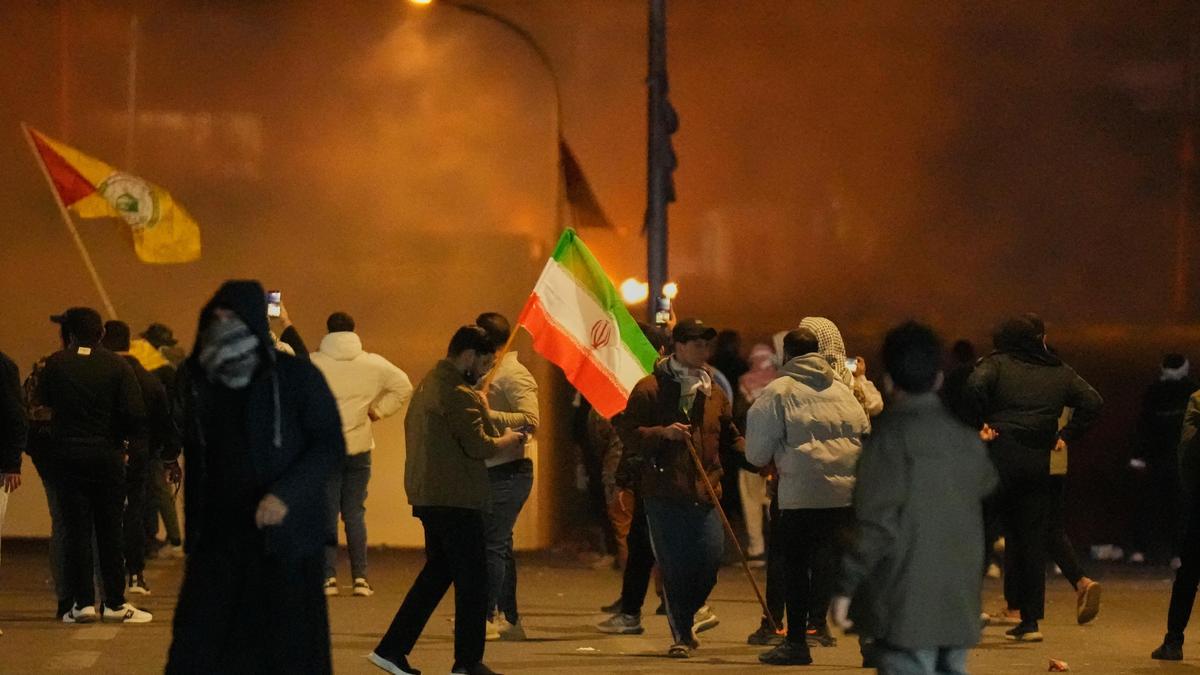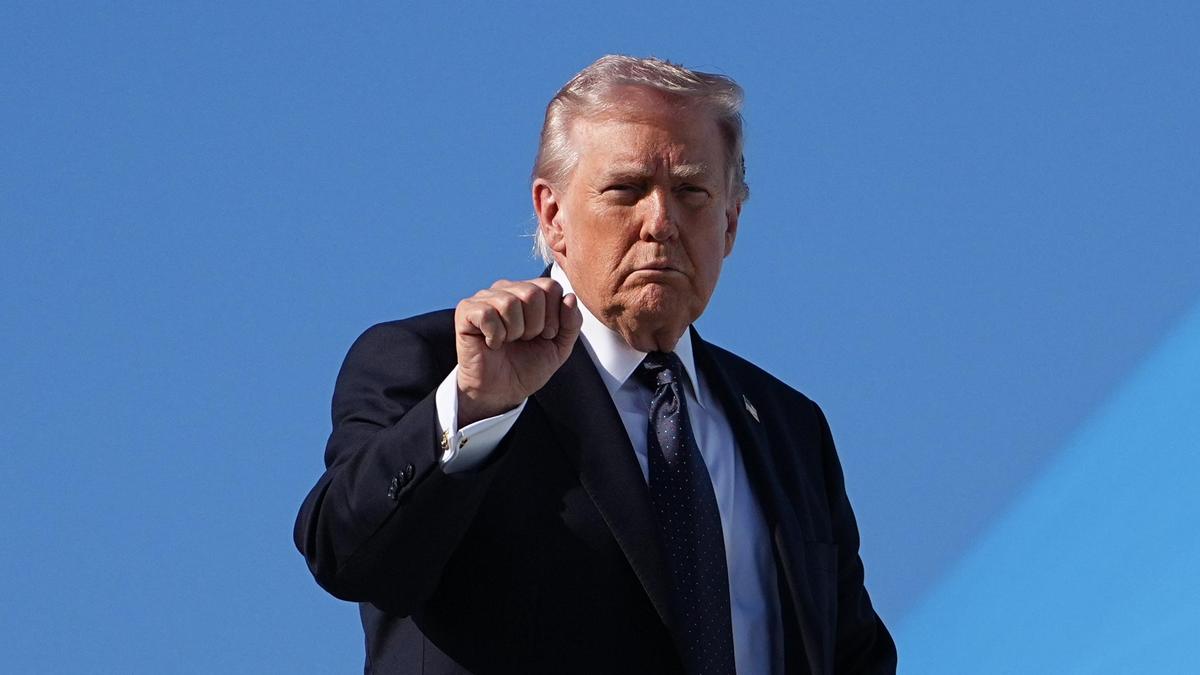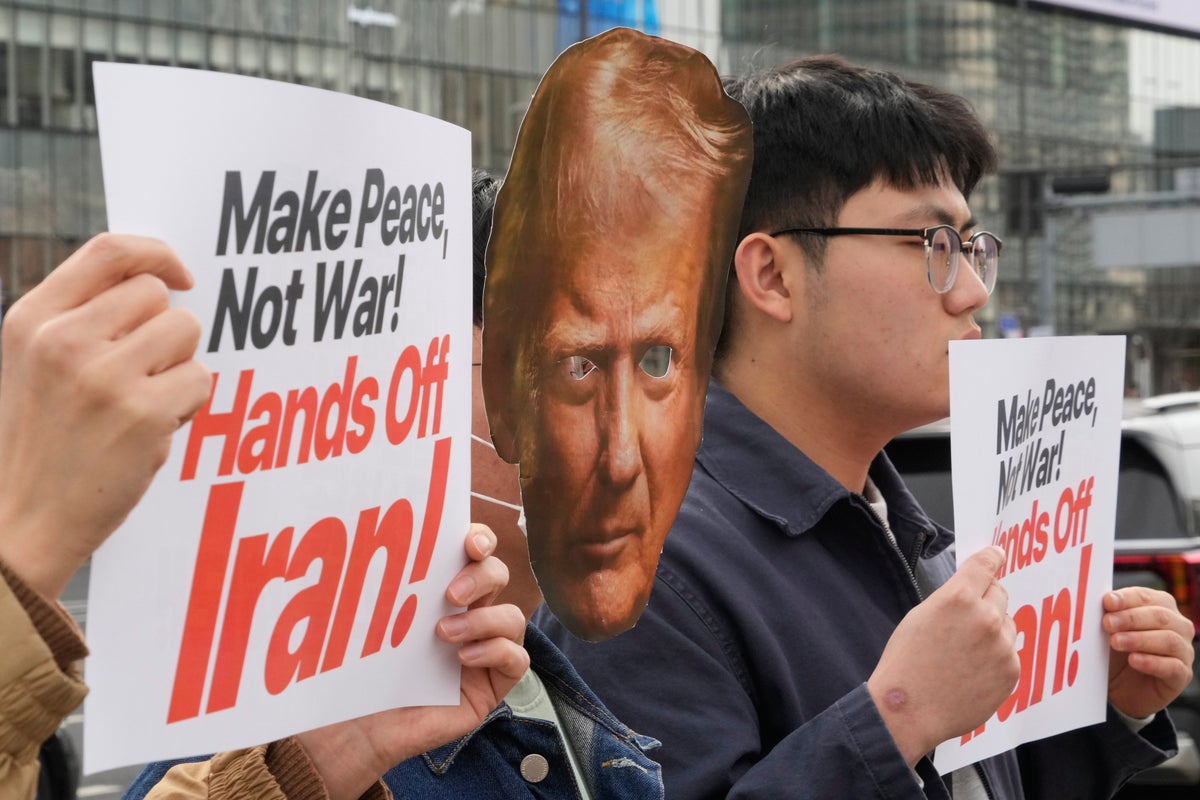
The smoke rising from Tehran’s Pasteur district has yet to clear, but the political fallout in Washington is already toxic. Only 27% of Americans support President Donald Trump’s decision to launch Operation Epic Fury, a massive joint U.S.-Israeli military campaign aimed at decapitating the Iranian leadership and "obliterating" its nuclear infrastructure. This isn't just a polling dip; it is a fundamental rupture between a White House committed to "total victory" and a public exhausted by decades of Middle Eastern entanglements.
As of March 2, 2026, the Reuters/Ipsos data reveals a nation deeply skeptical of the administration's "regime change" objectives. While the White House celebrates the reported death of Supreme Leader Ali Khamenei as a "spectacular military success," the American public sees a different ledger. 43% of the country flatly disapproves of the strikes, while another 30% are paralyzed by uncertainty, waiting to see if the promised "short conflict" spirals into a regional conflagration that sends gas prices into the stratosphere.
The Strategy of Decapitation vs. The Reality of Resistance
The administration’s gamble relies on a specific theory of power: that by removing the head of the "snake," the body will wither or be reclaimed by a pro-Western populace. This "decapitation" strategy, fueled by intelligence from special envoys Jared Kushner and Steve Witkoff, assumes the Iranian people are ready to seize this moment.
However, historical precedent suggests otherwise. Air power has rarely, if ever, forced a total change in government without the presence of boots on the ground. By targeting the heart of Tehran, the U.S. has not just hit a regime; it has hit the nerve center of a complex, multi-layered state apparatus.
The immediate Iranian response—firing missiles at U.S. bases in Bahrain, Qatar, and the UAE—confirms that the "obliteration" of their capabilities was far from complete. The U.S. Navy’s most advanced carrier, the USS Gerald Ford, is currently steaming toward a combat zone where the adversary has explicitly threatened to sink an American warship.
The Partisan Divide and the Independent Collapse
The polling internals show a country fractured along predictable lines, but with a dangerous twist for the administration.
| Demographic Group | Approve | Disapprove | Unsure |
|---|---|---|---|
| Republicans | 55% | 13% | 31% |
| Democrats | 7% | 74% | 19% |
| Independents | 19% | 44% | 37% |
The most alarming figure for the White House is the 19% approval among Independents. This group, which often decides midterm elections, is signaling a profound lack of trust in the administration's rationale. Unlike the 2003 Iraq invasion, where "weapons of mass destruction" served as a unifying (if flawed) rallying cry, the justification for Epic Fury feels amorphous to many. Is it about nuclear enrichment? Is it about the 2025 crackdown on protesters? Or is it about a personal desire for a "legacy" victory?
Economic Volatility and the Energy Trap
Beyond the moral and strategic arguments, there is the brutal math of the gas pump. Iran remains the fourth-largest oil producer in OPEC. Even if U.S. strikes remain "limited" to Iranian soil, the proximity of the conflict to the Strait of Hormuz—the world's most important oil transit point—has the markets in a state of high-altitude panic.
The administration recently implemented a 10% global tariff, a move already under fire from the Supreme Court and major corporations like FedEx. Adding a war-induced energy spike to a tariff-strained economy is a recipe for a domestic political crisis. 61% of Americans already believe the country is moving in the "wrong direction." If a gallon of gas hits $7.00 because of a drone strike in Isfahan, that 27% support for the war will look like a high-water mark.
The Constitutional Crisis in the Situation Room
While the bombs fall, a legal battle is brewing in Washington. President Trump initiated this campaign without congressional approval, bypassing the War Powers Act under the guise of "pre-emptive defense."
Critics, including Senior Fellow Christopher Preble, argue this is a "betrayal" of the populist promise to prioritize American interests over foreign "adventures." 70% of voters believe the President should seek congressional approval before attacking another country. By bypassing the legislature, the White House has won a tactical military advantage at the cost of its constitutional standing.
Technical Precision vs. Strategic Blur
The technology used in Epic Fury is undeniably impressive. For the first time, Task Force Scorpion Strike deployed low-cost, one-way attack drones in high-volume swarms to overwhelm Iranian S-300 and S-400 air defense systems. The Israeli Air Force (IAF) carried out its largest combat sortie in history, with 200 fighter jets hitting 500 targets in a single wave.
Yet, even with this "pinpoint" accuracy, the political objectives remain blurred. If the regime does not collapse, what happens on Day 14? If the IRGC (Islamic Revolutionary Guard Corps) takes control in the vacuum left by Khamenei, the U.S. may find itself facing a more radical, less predictable adversary than the one it just "obliterated."
The disconnect between the White House and the public isn't just about a poll number. It’s about a fundamental disagreement on the definition of American strength. To the administration, strength is the ability to strike anywhere, at any time, with "epic fury." To the 73% of Americans who aren't on board, strength is the wisdom to know when to stop.
Would you like me to analyze the specific economic impact of the Strait of Hormuz closure on 2026 global trade?