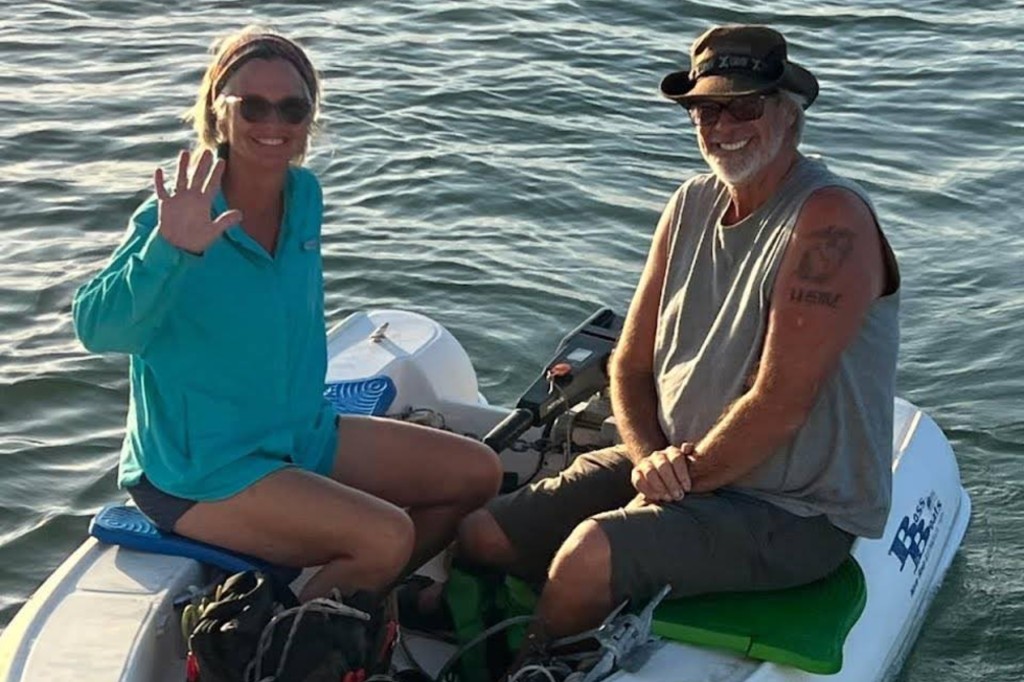
The release of a person of interest without charges following a high-profile disappearance in a foreign jurisdiction is not a failure of justice, but a predictable outcome of the Triad of Investigative Constraints: jurisdictional sovereignty, evidentiary thresholds in maritime environments, and the "Habeas Corpus" clock. In the case of the American woman missing in the Bahamas, the transition from detention to release illustrates the immense difficulty of sustaining a criminal theory when the primary locus of the event—the open ocean—precludes the collection of physical evidence.
The legal mechanism at play is the Detention-to-Charge Ratio. In most Common Law jurisdictions, including the Bahamas, law enforcement operates under a strict temporal ceiling. Without the "Smoking Gun" or a body to establish corpus delicti (the body of the crime), the state cannot satisfy the burden of "Reasonable Suspicion" required to escalate a detention into a formal indictment.
The Jurisdictional Bottleneck and Sovereignty Barriers
The disappearance of a foreign national in Bahamian waters triggers a complex layering of legal authorities. While the FBI often provides technical assistance in cases involving U.S. citizens, the Principle of Territoriality dictates that the Royal Bahamas Police Force (RBPF) maintains absolute command over the physical investigation and the custody of subjects.
This creates an immediate information asymmetry. U.S. agencies may possess superior forensic tools, but they lack the legal standing to execute search warrants or conduct interrogations on sovereign Bahamian soil without specific bilateral treaty activations. The delay inherent in these diplomatic handshakes often grants a subject the "First-Mover Advantage."
- Evidence Degradation: In maritime cases, the environment is actively hostile to forensics. Saltwater, tidal currents, and biological consumption act as a natural "scrubbing" mechanism.
- The 48-Hour Constraint: Most democratic legal systems permit a maximum hold of 48 to 72 hours without a formal charge. If the RBPF cannot link a specific physical act to the subject within this window, they face a mandatory release to avoid a human rights violation or a lawsuit for wrongful imprisonment.
The Absence of Corpus Delicti in Open Water
The most significant hurdle in this investigation is the Evidentiary Void. In a typical domestic homicide, investigators rely on a stable crime scene. In a maritime disappearance, the crime scene is dynamic and expanding at the rate of the local current.
Without a body, the prosecution must prove two distinct elements simultaneously: that a death occurred and that the death was the result of a criminal act. This is the Double Burden of Proof. In the Bahamas, as in the U.S., a missing person is not legally dead until a specific period has elapsed or "Death in Absentia" is proven via overwhelming circumstantial evidence.
Structural Challenges of Circumstantial Prosecution
- The Accidental Variance: In a maritime setting, the defense can almost always argue "Misadventure." A slip on a deck, a rogue wave, or a sudden medical emergency are all plausible alternatives that create "Reasonable Doubt" before the case even reaches a courtroom.
- The Digital Shadow Gap: While GPS data from a vessel can track location, it rarely provides the granularity needed to prove a struggle or a deliberate act of pushing someone overboard.
- Witness Isolation: Luxury vessels and private charters are often "Closed Systems." If the only witnesses are the subject and the victim, the investigation relies entirely on physical forensics—which, as established, are rapidly lost to the sea.
The Calculus of Release vs. Surveillance
The decision to release the husband is a strategic pivot, not an exoneration. From an operational standpoint, law enforcement often employs the "Pressure and Observe" Model once the legal detention limit is reached.
By releasing a subject, investigators shift from a custodial interrogation strategy to a long-term surveillance and forensic data-mining strategy. The release serves two tactical purposes:
- Resource Allocation: Holding a subject without evidence consumes high-level legal and diplomatic resources. Releasing them allows the RBPF to refocus on the "Search and Recovery" phase, which is required to establish the corpus delicti.
- Behavioral Monitoring: A subject who believes the immediate threat of arrest has passed may exhibit "Leakage"—contacting associates, returning to specific sites, or altering digital footprints in ways that provide the missing link for a future warrant.
The Forensic Logistics of Bahamas-US Cooperation
The RBPF’s reliance on the FBI for "Technical Assistance" usually involves three specific domains of the Forensic Stack:
- Digital Forensics: Analyzing encrypted communications and cloud-synced data that may have been recorded by the victim's or subject's devices before the disappearance.
- Hydrodynamic Modeling: Using U.S. Coast Guard data to retroactively map current patterns at the exact time of the reported disappearance to narrow the search for physical remains.
- Financial Pathing: Tracking sudden movements of assets or insurance inquiries that could establish "Motive," a critical component when physical evidence is absent.
The bottleneck here is the MLAT (Mutual Legal Assistance Treaty) Process. This is a slow-moving legal bridge used to transfer evidence between countries so it remains admissible in court. If the FBI finds incriminating data on a server in Virginia, it must be funneled through the Bahamian Attorney General’s office to be used by the RBPF. Any shortcut in this process results in the evidence being thrown out, protecting the subject from future prosecution.
Critical Flaws in the Investigative Timeline
The "Golden Hour" of a maritime investigation is the first 12 hours. In this case, the time elapsed between the reported disappearance and the arrival of specialized forensic units created a Chain of Custody Vulnerability.
Every hour a vessel remains in use after a disappearance is an hour where biological evidence (DNA, blood spatter, struggle marks) can be cleaned, contaminated, or naturally degraded by the elements. If the vessel was not immediately impounded and processed in a sterile environment, the defense will argue that any evidence found later was "Planting" or "Contamination."
The release of the husband indicates that the initial "Sweep" of the vessel failed to produce high-velocity impact spatter or other indicators of immediate violence. In the absence of such clear markers, the state's case remains purely speculative.
The Strategic Path Forward
The investigation must now move from a Reactive Custodial Model to a Proactive Forensic Build. This involves a three-pronged approach to bypass the lack of a body:
- Establishment of Pre-Event Patterning: Investigators will scrutinize the 30 days leading up to the trip. The "Planning Stage" of a crime often leaves more traces than the execution stage, especially in digital formats.
- Acoustic and Satellite Reconstruction: Utilizing commercial satellite imagery or underwater acoustic sensors (if available in the region) to determine if any "Anomaly" was recorded at the timestamp of the disappearance.
- Pressure on Legal Standing: While the husband is "Released," his travel may be restricted, or his passport flagged via INTERPOL. This creates a "Legal Purgatory" that forces the subject to remain within reach of process servers while the slow grind of MLAT evidence collection continues.
The objective is to move the needle from "Missing Person" to "Homicide" through the systematic elimination of all "Misadventure" variables. This is a process of subtraction: once you prove it was impossible for her to have fallen or jumped based on the vessel's physics and her psychological profile, the only remaining variable is a third-party act. Until that mathematical certainty is reached, the legal system's "Release" valve remains the only compliant path forward.