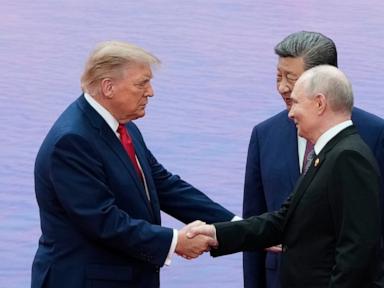
Standing beside Donald Trump and Xi Jinping gives Vladimir Putin something no military parade in Red Square can manufacture. It delivers immediate visual proof that Western efforts to turn Russia into a global pariah have failed.
For years, foreign policy analysts and diplomatic observers have tracked how Moscow uses high-profile summits to project domestic strength and international relevance. According to assessments from international relations scholars and geopolitical researchers, the core value of a trilateral spotlight lies in legitimacy by association. When the leaders of the United States and China share a frame with the Russian president, the image itself becomes the policy message, signaling to audiences in Moscow, Beijing, Washington, and across the Global South that Russia remains an indispensable pillar of world order rather than a sanctioned outlier.
Yet the mechanics behind that photograph are far more complicated than a simple diplomatic victory. Behind the choreographed handshakes and joint press appearances sits an asymmetric reality where each leader enters the room with incompatible goals, uneven bargaining power, and distinct domestic pressures.
The Architecture of Visual Diplomacy
Diplomatic stagecraft is never accidental. Every seating arrangement, motorcade sequence, and bilateral pull-aside is negotiated down to the minute by protocol teams who understand how modern media consumes power.
In the case of Vladimir Putin, the visual contrast between isolation and inclusion carries extraordinary political weight. Following the full-scale invasion of Ukraine in 2022, Western governments moved rapidly to sever diplomatic channels, freeze central bank assets, and issue an International Criminal Court arrest warrant that restricted Putin’s travel to dozens of countries. For a leader whose domestic authority rests heavily on the image of a statesman restoring Russia's great-power status, empty chairs at major international forums posed a quiet, persistent threat.
Sharing a podium or summit table with Trump and Xi erases that visual deficit in seconds.
State television networks in Russia do not need to fabricate diplomatic breakthroughs when they have high-definition footage of their president flanked by the leaders of the world's two largest economies. Viewers see parity. They see a multipolar world operating on Moscow's terms, where Washington and Beijing both treat the Kremlin as an equal partner whose consent is required to settle major global disputes.
Political communication experts point out that this dynamic works just as effectively outside Russia's borders. Across parts of Asia, Africa, and Latin America, governments skeptical of Western sanctions regimes look to major power summits as barometers of global alignment. When Washington engages Moscow directly at the highest level, it lowers the political cost for third-party nations to expand trade, energy purchases, and security cooperation with the Kremlin.
What Washington and Beijing Actually Want From the Frame
A common mistake in punditry is treating a shared stage as evidence of shared ideology. In practice, Trump and Xi approach a three-way dynamic with Putin from entirely different strategic baselines, neither of which prioritizes Moscow's long-term resurgence.
Beijing's Calculated Embrace
For Xi Jinping, appearing alongside Putin reinforces China's narrative that American-led alliances are giving way to a new international architecture. Beijing has consistently framed its partnership with Moscow as a stabilizing counterweight to U.S. influence, while carefully avoiding direct military entanglement or secondary sanctions that could damage China's export-driven economy.
However, diplomatic historians and trade analysts note that the balance of power inside that partnership has shifted decisively toward Beijing. Russia relies heavily on Chinese markets for energy exports and on Chinese manufacturers for dual-use industrial goods, microelectronics, and heavy machinery. On a three-way stage, Xi projects the image of a senior statesman capable of convening both Washington and Moscow, positioning China as the central hub of Eurasian diplomacy while keeping Russia economically dependent.
Washington's Transactional Calculus
Donald Trump’s approach to summitry operates on a very different set of incentives. Throughout his political career, Trump has favored direct, leader-to-leader engagement over traditional multilateral institutions, arguing that personal rapport and transactional dealmaking can break deadlocks that career diplomats leave frozen for years.
Supporters of this approach argue that excluding Russia from high-level negotiations only pushes Moscow deeper into Beijing's orbit while prolonging destructive conflicts in Europe. From this perspective, bringing Putin to the table creates space to negotiate ceasefires, arms control frameworks, or burden-sharing arrangements that reduce American financial and military commitments abroad.
Critics, including former national security officials and European diplomats, counter that granting Putin high-profile visibility before securing concrete concessions hands the Kremlin an upfront reward. They argue that Moscow routinely uses prolonged negotiations to buy time on the battlefield, test cohesion within NATO, and extract legitimacy without altering its core territorial ambitions.
The Myth of the Equal Triangle
Look closely at the economic fundamentals behind the three leaders, and the illusion of a symmetrical triangle falls apart immediately.
| Metric | United States | China | Russia |
|---|---|---|---|
| Economic Base | Advanced services, technology, global reserve currency | Manufacturing powerhouse, massive export surplus | Commodity-driven, heavily reliant on hydrocarbons |
| Primary Leverage | Financial system, alliance network, military reach | Supply chains, industrial scale, regional infrastructure | Nuclear arsenal, energy resources, regional spoiler capacity |
| Vulnerability | Domestic political polarization, fiscal debt | Demographic decline, property sector drag, export reliance | Sanctions pressure, labor shortages, war-economy distortion |
Russia’s gross domestic product represents a fraction of either the American or Chinese economy. Its civilian technology sector lags far behind both, and its long-term fiscal health remains tethered to volatile oil and gas revenues alongside massive state defense spending.
Putin cannot compete with Washington or Beijing on economic output or technological innovation. Instead, he competes through asymmetric disruption. By maintaining the world's largest nuclear stockpile, controlling critical energy and grain corridors, and demonstrating a willingness to absorb high military and economic costs in regional conflicts, Moscow forces larger powers to factor Russia into every major security calculation.
A three-way spotlight masks this structural weakness. When cameras capture three leaders standing shoulder to shoulder, the viewer sees three equivalent superpowers rather than two economic giants and one resource-rich military power punching above its economic weight.
How Domestic Audiences Read the Same Image
One reason high-level summits generate fierce debate is that each leader's domestic media ecosystem translates the exact same footage into a completely different story.
In Moscow, state-controlled broadcasters frame any joint appearance as proof that Western pressure has collapsed. Commentators emphasize body language, protocol details, and bilateral meeting durations to argue that Russia has successfully weathered sanctions and forced Washington back to the negotiating table. For ordinary Russians dealing with high interest rates, inflation, and the prolonged strain of war, those images reinforce a message of national endurance.
In Beijing, official outlets highlight Xi Jinping's composure and global stature. The narrative centers on China as a responsible major power promoting dialogue while Western nations struggle with internal divisions. Chinese state media rarely portrays Russia as a junior partner openly, yet the underlying message to domestic audiences is unmistakable: China sits at the center of global decision-making, capable of engaging both Moscow and Washington without yielding ground on its own core interests.
In the United States, the reaction splits sharply along partisan and institutional lines. Supporters of direct summitry view the image as evidence of strong, unconventional leadership willing to bypass diplomatic orthodoxy to pursue peace deals or strategic realignments. Detractors view the same photograph as a dangerous normalization of authoritarian aggression that undermines democratic alliances in Europe and Asia.
The Strategic Risks Hidden Behind the Podium
Elevating Putin’s global profile carries tangible consequences that extend well beyond cable news commentary.
First, it complicates alliance management. European nations that have absorbed high energy costs and committed billions of euros to defense and economic aid for Ukraine watch trilateral optics with acute sensitivity. If allies perceive that Washington and Moscow are discussing European security architecture over their heads, trust within transatlantic institutions erodes quickly. That uncertainty can prompt allied governments to hedge their bets, slowing coordinated sanctions enforcement or complicating defense planning.
Second, high-profile recognition alters bargaining incentives inside the Kremlin. Throughout Russian diplomatic history, leaders have viewed summits with American presidents not merely as problem-solving sessions, but as status milestones confirming Russia’s sphere of influence. When status is granted at the outset through shared global platforms, Russian negotiators face less immediate pressure to offer substantive compromises on territory, security guarantees, or troop withdrawals.
Third, there is the risk of misreading Moscow's flexibility. Some Western strategists hope that engaging Putin directly alongside Trump can drive a wedge between Russia and China, replicating Cold War triangular diplomacy in reverse. Yet regional specialists point out that the structural conditions today bear little resemblance to the 1970s. Back then, China and the Soviet Union were bitter ideological rivals fighting border skirmishes. Today, Putin and Xi share a deep institutional alignment rooted in opposition to American global dominance, reinforced by interlocking energy pipelines and trade networks that cannot be undone by a single summit.
Why Optics Still Matter in Hard Power Politics
It is tempting for hard-nosed realists to dismiss summit photography as superficial theater compared to troop movements, interest rates, and weapons production. That dismissal misses how power actually operates in international affairs.
Perceptions shape behavior. Markets react to signals of diplomatic stability or escalation. Neutral states calibrate their alignment based on who appears to hold momentum. Domestic elites judge their leader's durability by how foreign counterparts treat them in public.
For Vladimir Putin, sharing a stage with Donald Trump and Xi Jinping solves a specific, urgent problem that tanks and tariffs cannot address on their own. It restores the visual grammar of great-power legitimacy at a moment when Russia's long-term economic and demographic trajectory faces severe headwinds. Whether that borrowed spotlight translates into lasting geopolitical gains depends entirely on what happens after the cameras stop clicking, when abstract optics collide with the stubborn realities of territory, sanctions, and competing national interests.