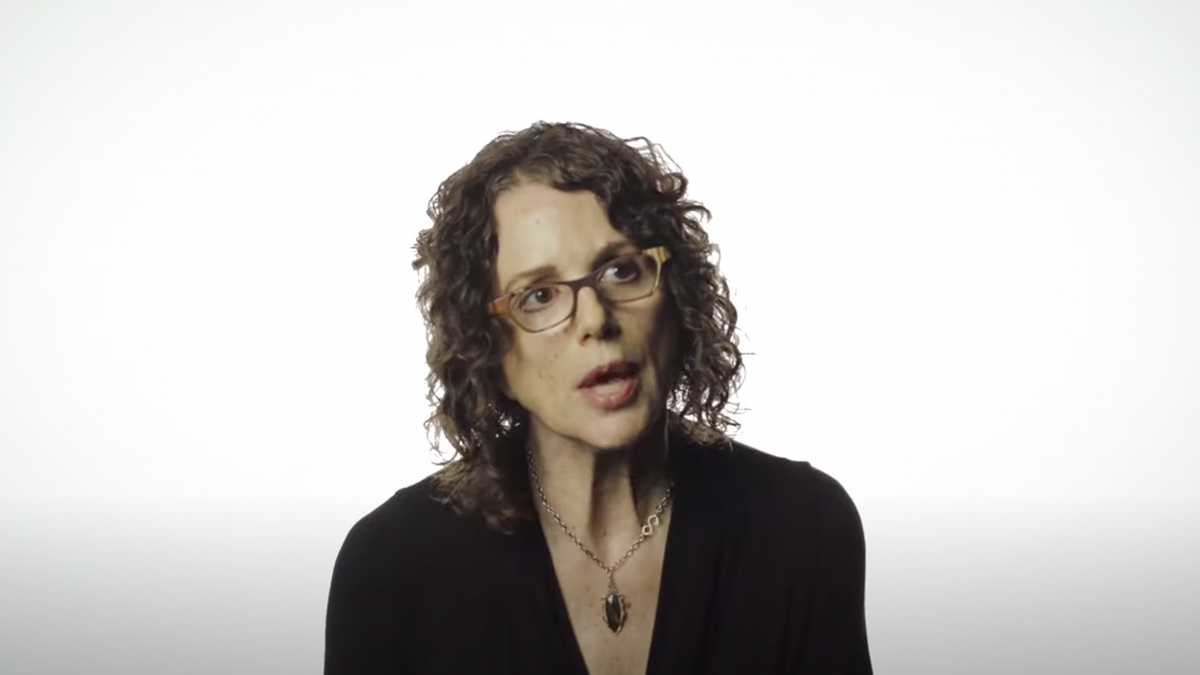
Picture a man walking barefoot across the polished wooden floors of Downing Street, tossing out unorthodox ideas about how to fix a government that feels too big, too distant, and too deaf to ordinary lives. That was Steve Hilton two decades ago—a brilliant, slightly frantic intellectual whispering policy proposals into the ear of a British Prime Minister.
Fast forward through years of television studios, Silicon Valley startup attempts, and endless political commentary, and that same man is standing on a stage in Huntington Beach, wearing a red hat, trying to convince millions of Californians that the golden dream they were promised has been traded away for bureaucratic red tape and unaffordable gas bills.
The story of Steve Hilton is not a standard political biography. It is a collision between European policy theory, populist American anger, and the sun-bleached asphalt of a state trying to figure out its own identity.
The London Architect
Long before he ever thought about the governor's office in Sacramento, Hilton was shaped by an unlikely background. Born in London to a Hungarian refugee mother who escaped the 1956 Soviet invasion, he grew up understanding the fragility of stability. He learned early that institutions, when left unchecked, stop serving people and start serving themselves.
At Oxford, he studied philosophy, politics, and economics—the traditional incubator for the British ruling class. But Hilton was never entirely comfortable in the traditional mold. While other rising stars played the game with quiet deference, Hilton developed a reputation as an iconoclast. When he became the director of strategy for Prime Minister David Cameron in 2010, he brought a chaotic, high-energy style of brainstorming that drove traditional civil servants mad. He wanted to dismantle public sector monopolies. He wanted to decentralize power. He wanted ordinary citizens to have direct control over local services.
It was an ideology built on a simple premise: centralized authority destroys community.
Yet, British politics has strict boundaries. Eventually, the gravitational pull of Westminster grew too small for his ambitions. He packed his bags and crossed the Atlantic, heading for the hyper-accelerated technology hub of Northern California, seeking a different kind of revolution.
Silicon Dreams and Studio Lights
Silicon Valley in the early 2010s promised something intoxicating. It promised that code could bypass corruption, that algorithms could replace politicians, and that transparency could cure political cynicism.
Hilton co-founded Crowdpac, a startup designed to bring data transparency to campaign contributions and political accountability. The idea was simple: give voters an easy way to see who was funding whom, and let the market of public opinion clean up the ballot box. But building a tech platform is very different from winning hearts and minds in a sprawling electorate. The startup world proved less interested in radical political upheaval than in scalable software models, and Hilton eventually stepped away.
He did not vanish. Instead, he found a microphone.
On Fox News, hosting The Next Revolution, Hilton carved out a distinct television persona. Gone were the hushed tones of elite think tanks. In their place was a populist megaphone directed squarely at what he perceived as the arrogance of coastal elites. Week after week, from a studio desk in Los Angeles, he diagnosed the ailments of the modern American experiment: soaring inflation, decaying infrastructure, skyrocketing housing costs, and a cultural drift that left working-class families feeling like strangers in their own neighborhoods.
He was angry. Millions of viewers were angry with him.
And then, television commentary stopped being enough. The armchair critic decided to jump into the arena.
The Pitch to a Restless State
California in the mid-2020s was a pressure cooker.
Underneath the postcard imagery of coastal sunsets and tech wealth lay a quiet desperation. Families were packing moving vans, driving across state lines to Texas, Idaho, and Tennessee. They were fleeing high income taxes, crushing gas prices, and a pervasive sense that the state government had lost its grip on basic competency. When Gavin Newsom reached his term limit, the gubernatorial race blew wide open, creating a volatile vacuum.
Enter Hilton, pitching himself not as a polished career politician, but as an insurgent fixer.
His platform read like a direct assault on the orthodoxies of the reigning political establishment. He proposed eliminating state income tax on the first one hundred and fifty thousand dollars of earnings, offering immediate relief to middle-class wage earners. He promised to halve the gas tax by suspending environmental regulations that artificially drove up fuel costs. On homelessness—the visible, heartbreaking scar running through every major California city—he argued against low-barrier shelters that accepted individuals regardless of sobriety, advocating instead for funding tied directly to treatment and sober housing.
He targeted the California Environmental Quality Act, known locally as CEQA, arguing that it had been weaponized by special interests and labor unions to block the construction of starter homes and infrastructure.
To his supporters, it was common sense. To his critics, it was a dangerous unravelling of decades of environmental and social protections.
Consider what happens when an outsider tries to rewrite the operating system of a single-party state. Resistance isn't just political; it is institutional.
The Math of an Uphill Climb
Running a campaign in California is an exercise in demographic gravity.
Democrats outnumbered Republicans nearly two to one. The machinery of state politics—unions, environmental coalitions, urban party networks—was entrenched and formidable. Yet, in the primary election, Hilton managed to navigate a chaotic, crowded field, capturing a significant share of the vote and securing a spot in the general election against Xavier Becerra.
The general election became a referendum on two opposing visions of America's most populous state.
On one side stood Becerra, representing the continuation of the reigning political structure, backed by the deep institutional trust of millions of voters who saw the Democratic Party as a bulwark against national conservative policies. On the other side stood Hilton, trying to stitch together an unlikely coalition: rural farmers tired of water restrictions, suburban commuters crushed by the cost of living, tech workers disillusioned with progressive governance, and working-class Latino voters looking for economic relief.
He walked a tightrope. He needed the energy of Donald Trump’s loyal base to fuel his rallies, yet he needed to convince moderate suburbanites that he was more than a partisan shock jock. He wore the red hat in Huntington Beach while talking earnestly about zoning reform and vocational training.
Yet, the gravitational pull of national partisanship proved heavy. For many voters, a vote for Hilton was inextricably linked to battles being fought thousands of miles away in Washington, eclipsing the local debates over housing and gas prices.
The Verdict at the Ballot Box
November arrived with the quiet tension that always accompanies high-stakes elections. Mail-in ballots piled up by the millions weeks before the final tally.
When the votes were counted, the map told a familiar story. Xavier Becerra secured a decisive victory, winning the general election by a wide margin. The blue wall held. The political establishment absorbed the shockwave and continued its unbroken streak of executive leadership.
For Hilton and his supporters, the defeat was stark. The ambition of turning the nation's most iconic progressive stronghold red ran hard against the immovable bedrock of demographic reality.
Defeat.
It is a quiet, heavy thing in politics. The campaign offices empty out. The rented sound systems are packed into trucks. The television cameras move on to the next crisis.
Yet, campaigns are rarely just about the winner's podium. They are seismic events that expose the fault lines beneath the surface.
The Unresolved Questions
The election is over. The results are certified. But the grievances that powered Steve Hilton’s campaign did not evaporate on election night.
Families are still calculating whether they can afford next month's rent. Drivers are still wincing at the pump. Tents still line the underpasses of urban centers, a quiet testament to a humanitarian crisis that defies easy solutions. Whether one views Hilton as an iconoclastic visionary or an opportunistic outsider, his campaign forced a reluctant conversation about the cost of governance in a state where paradise has become too expensive for the people who keep it running.
Ideas linger long after candidates fade.
Out on the Pacific Coast Highway, the sun dips below the horizon, painting the smog-softened sky in shades of bruised orange and deep violet. The traffic rolls on. The ocean breathes its steady, indifferent rhythm against the cliffs. California remains what it has always been—a sprawling, magnificent contradiction, caught forever between the memory of its golden promise and the hard work of tomorrow.