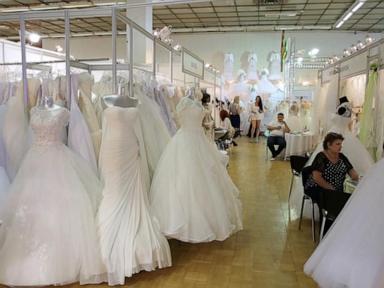
The old rule for buying a wedding dress was simple. You shop twelve months out, order the gown nine months before the big day, and expect a couple of minor tweaks during alterations to account for the "wedding shred." But the rise of GLP-1 medications like Ozempic and Mounjaro has completely trashed that schedule.
Brides aren't just losing five pounds of water weight anymore. They’re dropping forty, fifty, or sixty pounds in the time it takes for a designer in Milan to ship a gown to a local boutique. I’ve seen the math, and it’s messy. When you drop five dress sizes between your first fitting and your final steam, that $3,000 lace A-line doesn't just need a "tuck." It needs a total reconstruction that might cost more than the dress itself.
The Shrinking Bride Problem
For decades, bridal shops operated on a slow-motion clock. You order a size 12 because that’s what you are in October. You might be a size 10 by June. Most gowns can handle a two-size swing. But doctors at institutions like AdventHealth note that patients on these new medications can lose 15% to 20% of their total body weight in just six months.
That isn't a "swing." It’s a transformation. If you buy a dress in January for a September wedding and lose 50 pounds, the structural integrity of the garment vanishes. The cups don't sit right. The lace patterns get chopped up. The boning ends up in your armpits. Honestly, some dresses just weren't meant to be shrunk that much.
Bridal shop owners are now playing a high-stakes game of "guess the goal weight." If they order too small and the bride doesn't lose the weight, the dress won't close. If they order to current measurements, they’re left with a tent six months later. It’s a logistical nightmare that has shop owners sweating more than the brides.
Shops Are Fighting Back With Waivers
You might find a new piece of paperwork at your next appointment. Boutiques like Satin and Lace Bridal in Florida and Sew Bridal in Chicago have started implementing legal waivers. They’re basically forcing you to sign a document that says, "If you lose a ton of weight, it’s not our fault if the dress looks weird or costs $2,000 to fix."
It sounds harsh. But think about it from their side. A seamstress can only do so much magic. When a bride shows up for her first fitting and the dress literally falls to the floor because she’s three sizes smaller than the day she was measured, the shop is the one that gets the frantic phone call. These waivers are a defense mechanism against the rapid, unpredictable nature of GLP-1 weight loss.
The Rise of the Eight Week Pivot
The industry is adapting by ditching the "one year out" rule. Some boutiques are now offering what they call "quick ship" programs or eight-week shifts. Instead of ordering a custom gown from a designer with a nine-month lead time, they focus on designers who keep stock in a warehouse.
This allows you to wait until you’re much closer to your goal weight before pulling the trigger. It’s a pivot toward instant gratification that mirrors how we shop for everything else. Why wait months for a dress that might not fit your future body when you can buy one eight weeks before the "I dos"?
- Off-the-rack is king. More brides are buying the floor sample or "ready to wear" options.
- Corset backs are a lifesaver. They offer several inches of flexibility that a zipper simply can't provide.
- A-line silhouettes are the safest bet. They’re much easier to take in at the waist compared to a fitted mermaid gown that requires perfect proportions at the hips and knees.
Stop Lying to Your Stylist
The biggest mistake you can make right now is being "discreet" about your medication. Your stylist isn't your doctor, but they need to know your trajectory. If you’re on a GLP-1, tell them. They aren't there to judge your choices; they’re there to make sure you don't look like you’re wearing a bedsheet on your wedding day.
If you know you’re aiming for a 40-pound loss, your stylist might suggest a specific fabric that holds its shape better during heavy alterations. They might steer you away from intricate backless designs that rely on a perfect skin-tight fit. Honesty saves money. It also saves you from a last-minute breakdown in a dressing room three weeks before your wedding.
What You Should Actually Do
If you’re planning a wedding and currently taking or starting a weight loss medication, your strategy has to change. Don't follow the "standard" bridal timeline you found on Pinterest.
First, look for boutiques that specialize in off-the-rack or quick-delivery designers. This reduces the "gap" between measurement and delivery. Second, budget for "reconstruction" alterations, not just "standard" alterations. Standard might be $500; reconstruction can easily hit $1,500. Third, choose a dress with a corset back or a simple side seam. Avoid heavy beading or complex lace overlays that wrap around the entire body, as these are the hardest to resize without ruining the pattern.
Basically, buy for the body you have or the body you’ll have in two months, not the body you hope to have in a year. The closer you shop to your actual wedding date, the less likely you are to end up with a gown that belongs to a stranger.