Every November, the international press dust off the exact same template.
They send a stringer to a roadside bazaar in Rawalpindi or Quetta. They snap a photo of a grandmother haggling over a bundle of acacia wood. Then they publish a tear-jerker about how soaring Liquefied Petroleum Gas (LPG) prices are forcing Pakistani families back into the dark ages of biomass burning.
It is lazy journalism. It relies on an easy villain—greedy LPG cartels or volatile global markets—while ignoring the structural rot that actually freezes Pakistani households every winter.
If you think Pakistan’s winter energy crunch is a simple story of inflation and expensive cylinders, you have missed the entire plot. Families are not burning firewood because LPG became unaffordable overnight. They are burning firewood because decades of populist gas subsidies destroyed the domestic pipeline network, bankrupted state utilities, and trained an entire economy to treat a finite natural resource like free tap water.
The Myth of the Sudden LPG Shock
Let’s dismantle the primary premise of the mainstream narrative right now.
When headlines scream that families are "returning" to firewood, they imply a sudden, tragic regression from a modern, reliable energy grid. That grid never existed for the vast majority of the country. According to data from Pakistan’s own Ministry of Energy and the World Bank, roughly half of Pakistan’s population relies on solid biomass—firewood, crop residue, and dung—year-round, regardless of what the Oil and Gas Regulatory Authority (OGRA) sets as the monthly LPG price cap.
Even among urban households connected to the Sui Northern Gas Pipelines Limited (SNGPL) or Sui Southern Gas Company (SSGC) networks, the "return" to wood is a seasonal certainty, not a market anomaly.
Here is why. Pakistan’s domestic natural gas reserves—led by the aging Sui field in Balochistan—have been in terminal decline for over a decade. Domestic production drops by roughly 7% to 9% annually. Meanwhile, winter heating demand in northern provinces like Punjab and Khyber Pakhtunkhwa triples between November and February.
When pipeline pressure drops to zero during peak winter hours, piped gas disappears. Households that spent decades paying artificially suppressed tariffs for piped gas suddenly have to buy fuel at actual market value. That means buying imported Regasified Liquefied Natural Gas (RLNG) or retail LPG cylinders.
To a family accustomed to paying pennies on the dollar for subsidized pipeline gas, unsubsidized LPG feels like extortion. In reality, it is simply the first time they are seeing the real price of energy.
How Populism Broke the Pipeline
I have spent years analyzing South Asian energy markets, and I have watched governments in Islamabad repeat the exact same fatal mistake across every political party. They treat energy pricing as a campaign slogan rather than an economic equation.
For twenty years, successive administrations kept domestic residential gas tariffs absurdly low. They cross-subsidized household cooking and heating by overcharging industrial exporters and commercial users.
The predictable happened.
- Zero Incentive to Conserve: When gas is dirt cheap, nobody insulates their home. Nobody buys high-efficiency condensing boilers. Uninsulated concrete houses in Lahore and Islamabad bleed heat all night while cheap gas heaters run at full blast.
- Utility Insolvency: SNGPL and SSGC accumulated hundreds of billions of rupees in circular debt—the financial black hole where utilities cannot pay upstream producers because the government refuses to let them charge cost-recovery rates.
- Exploration Freeze: Foreign energy majors packed their bags and left. Why spend hundreds of millions of dollars drilling high-risk exploration wells in Balochistan or Sindh when the state controls the wellhead price and pays months late in depreciating rupees?
When you starve upstream exploration and subsidize reckless consumption, shortages are not a risk. They are mathematical certainty.
The LPG Cartel Excuse Is a Distraction
Whenever winter hits and cylinder prices spike above OGRA’s notified rates, politicians immediately blame "profiteers" and "black-market mafias." District commissioners stage photo-ops raiding roadside shops and confiscating a few dozen cylinders.
It makes great television. It fixes nothing.
LPG is a globally traded commodity. Pakistan produces a fraction of its LPG demand domestically; the rest must be imported, primarily from the Middle East, priced in US dollars. When the Pakistani rupee loses value, or when global winter demand pushes Saudi Aramco’s Contract Price (CP) upward, the landed cost of LPG in Karachi rises automatically.
Furthermore, local distributors face real logistical friction. Transporting pressurized gas across mountainous terrain to Gilgit-Baltistan or rural Balochistan in freezing weather carries massive freight and safety costs that bureaucratic price caps routinely ignore. When a regulator sets a ceiling price below the actual cost of delivery, two things happen: legal supply vanishes, and a shadow market emerges to clear the gap.
Calling that a conspiracy is like blaming a thermometer for a fever.
Why Firewood Is Not the Real Villain Either
The environmental hand-wringing in Western coverage of Pakistan’s firewood usage misses another crucial nuance. Reporters love to pair photos of stacked timber with dire warnings about deforestation.
Deforestation in Pakistan is severe—driven largely by commercial timber mafias, agricultural expansion, and chaotic urban sprawl. Household cooking and winter heating certainly add pressure to local tree cover, particularly in fragile mountain ecosystems in the north.
Yet for millions of rural and peri-urban families, switching to wood in December is not an act of desperation; it is cold, rational economics.
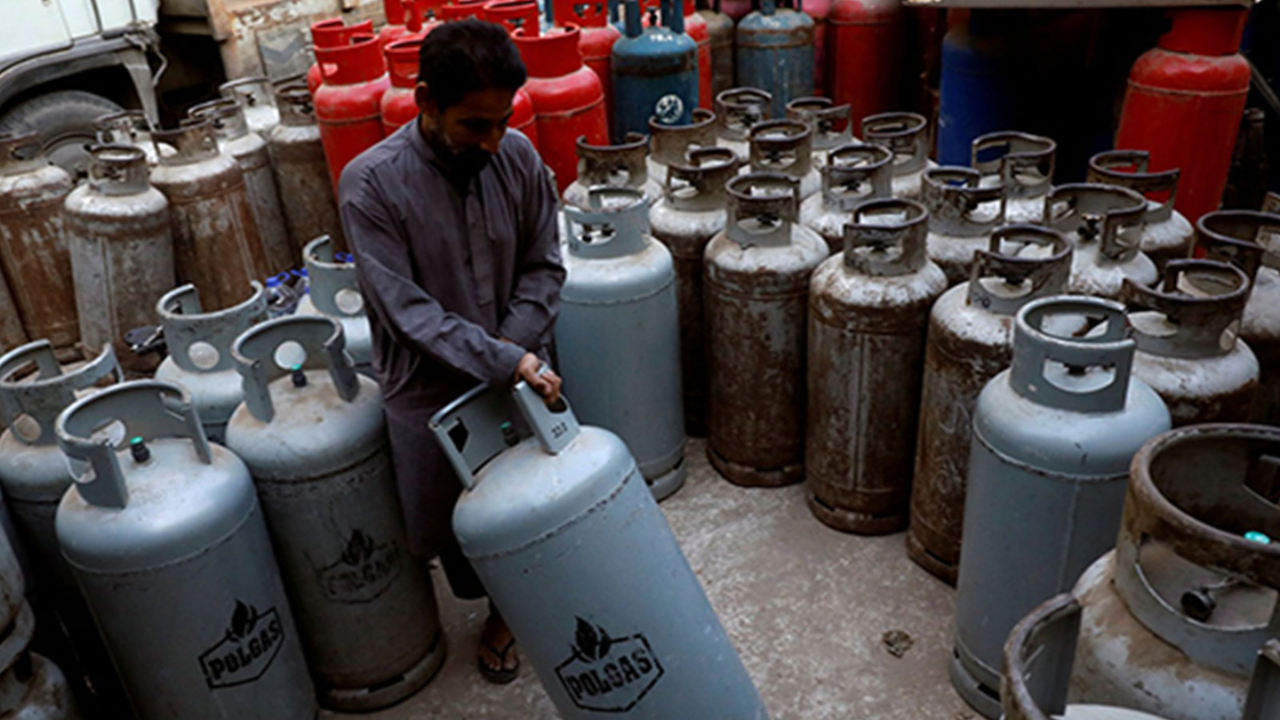
Think about the cash flow of a daily-wage laborer in Multan or Peshawar. Buying a standard 11.8-kilogram LPG cylinder requires a lump-sum cash outlay of several thousand rupees upfront. That is a massive hit to a household operating on thin daily margins. Firewood, by contrast, can be bought in tiny, daily increments—two kilograms today, three kilograms tomorrow—or gathered for free from agricultural trimmings and roadside scrub.
Until retail energy companies solve the upfront capital barrier—through micro-metered smart cylinders or pay-as-you-go distribution models—low-income households will choose fractional cash outlays over bulk fuel purchases every single time.
Dismantling the Wrong Questions
If you search online for answers about Pakistan’s energy crisis, you will see the same flawed questions dominating the conversation. Let’s tear them apart.
"When will Pakistan’s gas prices go back down?"
They won't. Not in nominal rupee terms, and certainly not back to the subsidized fantasy rates of the early 2000s. Pakistan is under strict International Monetary Fund (IMF) structural benchmarks that explicitly forbid unfunded energy subsidies and require semi-annual tariff adjustments to stop circular debt from bleeding the national treasury. Anyone promising cheap piped gas is lying to you.
"Why doesn't the government just import more LNG?"
Because LNG terminals do not run on good intentions; they run on hard foreign currency. Pakistan’s central bank reserves have spent years walking a tightrope. Every cargo of spot LNG purchased on the international market drains dollars needed for medicines, industrial machinery, and sovereign debt repayments. Even when the state imports expensive LNG and diverts it to domestic winter heating—a policy called "gas load management"—it triggers catastrophic losses because residential tariffs still do not cover the imported LNG price.
"Is solar power going to solve the winter heating crisis?"
Pakistan has experienced an astonishing rooftop solar boom, importing gigawatts of cheap Chinese panels over the past two years. That has transformed daytime electricity generation. It will not solve winter heating. Solar output drops in winter due to shorter days and thick Punjab smog, and converting electricity into resistive heat on a national scale would instantly overload local distribution transformers that are already held together with copper wire and prayer.
The Uncomfortable Fix Nobody Wants to Hear
There is a way out of this annual winter humiliation, though no politician in Islamabad has the stomach to sell it to voters. It requires abandoning the delusion that the state can heat every home with cheap gas.
First, kill residential pipeline expansion completely. Connecting new housing societies to a dying gas grid is pure vandalism. Existing pipeline gas should be ring-fenced for high-value industrial manufacturing—textiles, fertilizers, and export sectors that actually generate foreign exchange—and power generation. Residential consumers in cities must transition permanently to bottled LPG, electric induction cooking, and localized heating.
Second, shift from price caps to targeted cash transfers. Deregulate LPG and domestic gas pricing entirely so private capital floods into storage terminals, bottling plants, and supply chains. Use Pakistan’s existing Benazir Income Support Programme (BISP)—one of the most data-rich cash transfer networks in the developing world—to send direct winter fuel stipends to the bottom 30% of households. Subsidize poor people, not molecules of methane.
Third, enforce building codes and import efficiency. Pakistan wastes a staggering percentage of its winter energy heating leaky concrete boxes. Eliminating import duties on double-glazed windows, thermal insulation materials, and high-efficiency heat pumps while penalizing uninsulated commercial construction would cut peak winter heating demand faster than drilling a new gas field.
The Catch With Market Liberalization
I will be the first to admit the brutal downside of this approach: the transition period will hurt.
Deregulating fuel prices in an economy already battered by high inflation and stagnant real wages carries immense social and political risk. Even with targeted cash transfers, middle-class urban families—who earn too much to qualify for poverty stipends yet too little to absorb sudden utility spikes—will feel squeezed. Without strict competition enforcement, dominant private importers could also attempt to collude on port storage bottlenecks.
The alternative, however, is far worse. Continuing to subsidize a depleting resource guarantees that the pipeline pressure drops to zero every January anyway. You end up with the worst of both worlds: bankrupt state utilities, starved industries, and freezing families chopping down trees in the dark.
Stop Blaming the Firewood
The next time you read an article lamenting how high LPG prices drove Pakistani families back to burning wood, recognize what you are actually looking at.
You are not witnessing a temporary market failure. You are watching the inevitable collapse of a decades-old energy subsidy scheme colliding with basic geology and basic arithmetic. No amount of price controls, police raids on cylinder shops, or sympathetic newspaper headlines will put gas back into an empty pipe.
The fuel isn't coming back at 2010 prices. Adapt the grid, price the carbon honestly, and let the market build the supply chain—or get used to the smell of woodsmoke every winter.