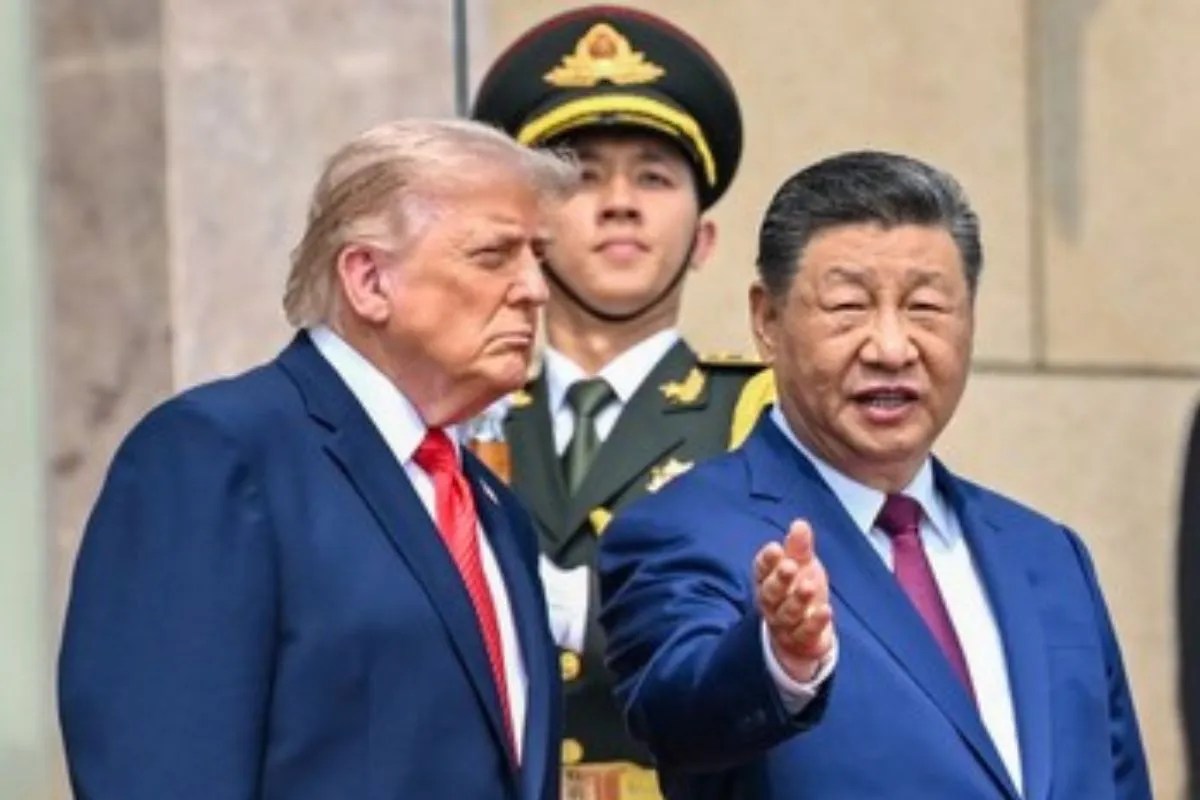
Diplomacy rarely arrives with a warning siren. More often, it sounds like the quiet clicking of teletype machines in foreign ministries long after midnight, where career bureaucrats realize the floor has shifted beneath their feet. When whispers began circulating through diplomatic channels regarding an impending summit between the leaders of the United States and China, the immediate reaction in East Asia was not celebration. It was acute, palpable alarm.
In the high-stakes corridors of power across Seoul and Tokyo, alarm bells started ringing before the formal agendas were even drafted. Allies who spent decades anchoring their security policies to predictable American commitments suddenly found themselves staring into a diplomatic vacuum. Marco Rubio, positioned at the center of this diplomatic scramble, found his schedule dominated by frantic phone calls, closed-door briefings, and hurried damage control missions across the Pacific. The underlying fear across both capitals is stark and unvarnished. Leaders in South Korea and Japan worry they will be treated as bargaining chips rather than sovereign partners in whatever grand bargain Washington and Beijing might forge behind closed doors.
To understand why capitals from Seoul to Tokyo are sweating through expensive wool suits, one must look past the polished communiqués and examine the structural mechanics of modern great power rivalry. For decades, the post-war architecture of East Asian security relied on an unspoken compact. The United States provided a security umbrella and economic openness, while its regional allies aligned their foreign policies and supply chains to Washington's strategic orbit.
That framework is fraying. When Washington contemplates a direct, high-level reset with Beijing, regional partners instantly calculate their vulnerability. If the world's two largest economies decide to de-escalate tension by carving out spheres of influence, middle powers find themselves squeezed. Tokyo remembers the economic shockwaves of previous bilateral trade accords negotiated over the heads of local industries. Seoul remembers the economic retaliation it faced during regional security disputes, while Washington offered verbal solidarity rather than substantive protection.
Marco Rubio's diplomatic interventions are designed to stanch this bleeding of confidence. As a key figure shaping American foreign policy, his objective during recent regional tours has been straightforward: reassure jittery allies that American security guarantees remain ironclad and that no bilateral arrangement with Beijing will sacrifice regional sovereignty. Yet, diplomatic reassurance is a perishable commodity. When words clash with structural realities, allies tend to trust the structural realities.
The structural reality is that China remains the largest trading partner for both South Korea and Japan, even as security ties bind them tighter to the United States. This dual dependency creates an almost impossible balancing act. For Tokyo, the anxiety centers on maritime security, disputed island chains, and the creeping normalization of Chinese coast guard incursions near the Senkaku Islands. If Washington signals a willingness to trade regional friction for global stability, Japan fears it will be left to face an assertive Beijing alone.
For Seoul, the stakes are equally existential, albeit heavily intertwined with the Korean Peninsula's unique security matrix. South Korea sits within artillery range of a nuclear-armed North Korea that has increasingly found a diplomatic shield and economic lifeline in Beijing. Any high-level understanding between Washington and Beijing that freezes nuclear proliferation dynamics or alters regional force postures without Seoul's direct consent strikes at the heart of South Korean national security.
Hence the frantic damage control. Rubio and other senior American officials have rushed to distribute talking points, reaffirm alliance frameworks, and coordinate intelligence sharing to prove that transparency has not been abandoned. But the very necessity of these hurried diplomatic missions betrays the depth of the anxiety. When allies require emergency reassurance to prevent them from hedging their bets or pursuing independent diplomatic overtures, the traditional alliance architecture is already under severe stress.
Beneath the diplomatic friction lies a deeper transformation in how regional power is distributed. Tokyo and Seoul are not merely passive spectators waiting for instructions from Washington. Both nations possess formidable industrial bases, advanced technological sectors, and growing military capabilities. Japan has steadily expanded its defense spending, reinterpreting its pacifist constitution to allow for counterstrike capabilities. South Korea has emerged as a global defense export powerhouse, supplying advanced hardware to nations across Europe and Asia.
These developments represent a quiet quest for strategic autonomy. Neither Japan nor South Korea wants to break away from the American alliance system—the cost of doing so would be prohibitive, given persistent regional threats. Instead, they are quietly building insurance policies. They are diversifying supply chains, strengthening bilateral security cooperation between themselves—historically a difficult diplomatic feat given historical grievances—and hedging against the possibility of erratic American leadership or a grand bilateral compromise between Washington and Beijing that ignores their core interests.
The diplomatic scramble managed by Rubio in Tokyo and Seoul is therefore a symptom of a transition era. It highlights the friction of an old order giving way to a multipolar reality where middle powers demand a voice in decisions that affect their territorial integrity and economic survival.
The summit between Washington and Beijing will eventually take place. Flashbulbs will pop, handshakes will be broadcast across global networks, and spokespersons will declare a new era of stable dialogue. But the true measure of that summit will not be found in the official joint statements. It will be measured in the quiet calculations made by defense planners in Seoul and Tokyo as they quietly continue stockpiling strategic resources, upgrading their domestic defense industries, and preparing for a future where they can no longer take American protection entirely for granted.