The gas station and the pawn shop have become the two most reliable barometers of the American working-class struggle. When prices at the pump climb, the line at the loan counter grows. This isn't just a coincidence or a minor trend in consumer behavior. It is a desperate survival mechanism for millions of people living on the razor’s edge of solvency. For these individuals, a $0.50 jump in the price of a gallon of unleaded is not a nuisance. It is a catastrophic event that forces a choice between getting to work and keeping the family television.
The logic is cold and mathematical. If you drive a twenty-year-old pickup truck twenty miles to a job that pays near the minimum wage, the math of employment eventually stops working. When fuel costs consume 20% or 30% of a daily paycheck, the vehicle becomes a liability rather than a tool for advancement. To keep the tank full for the rest of the week, workers are increasingly liquidating their assets. They are trading their power tools, their jewelry, and their electronics for a tank of gas.
The Invisible Bank of the Working Class
Pawn shops often function as the primary financial institution for the unbanked and underbanked. Traditional banks have no interest in lending $50 to someone to cover a commute. Credit cards are often maxed out or unavailable due to poor credit scores. This leaves the local pawn broker as the only lender willing to provide immediate, liquid cash with no questions asked beyond the value of the collateral.
Brokers across the country are seeing a specific profile of customer that didn't exist three years ago. These aren't the habitual gamblers or the long-term unemployed. These are the "working poor" who are fully employed but cannot absorb the volatility of the energy market. They bring in items they actually use—circular saws, tablets, even musical instruments—just to bridge the gap until the next payday. The "spike" reported by local news outlets is actually a signal of a deeper, systemic failure in how the American labor market handles transportation.
Collateral as a Buffer
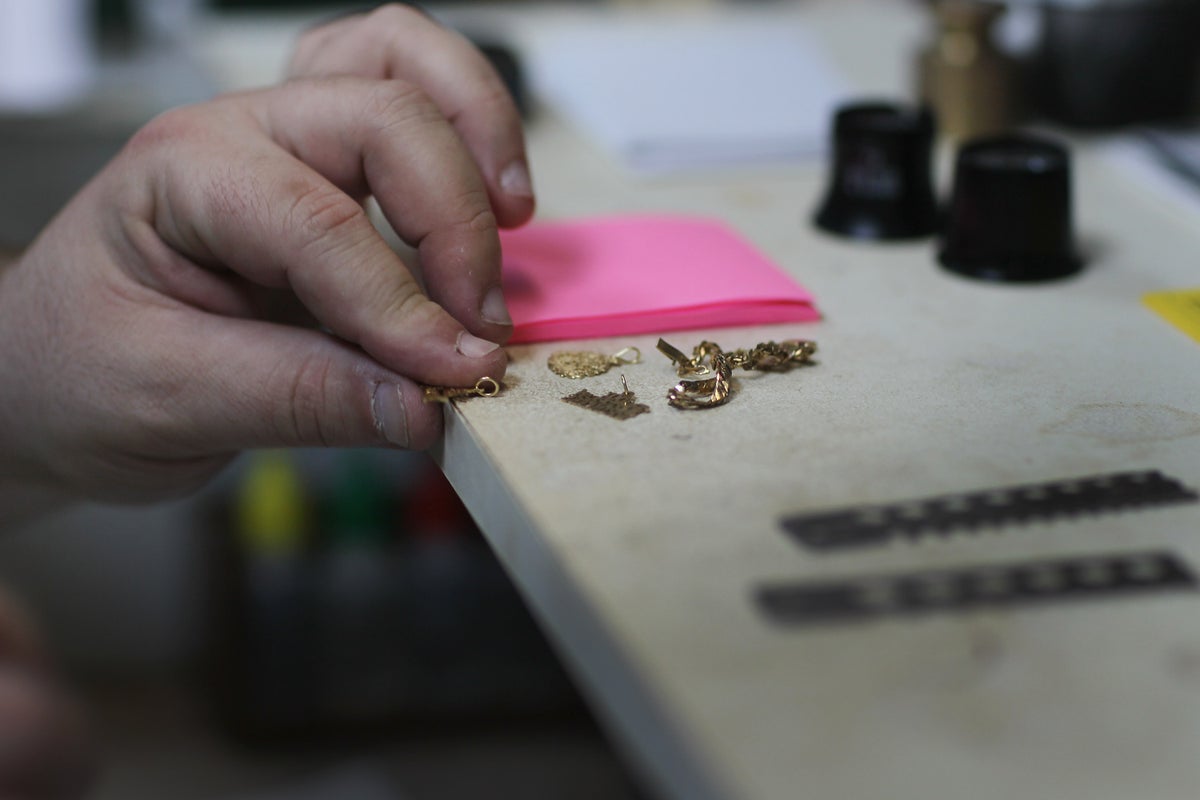
The transaction is simple. A customer brings in an item, the broker appraises it, and a short-term loan is issued, usually at high interest rates. If the customer doesn't return to pay off the loan plus interest within a set period, the shop keeps the item.
In a high-gas-price environment, the redemption rate—the frequency with which people come back to reclaim their items—drops significantly. People are effectively selling their possessions at a massive discount because they have no other way to fund their commute. They aren't "pawning" in the traditional sense of a temporary loan; they are conducting a fire sale of their lives to stay mobile.
Why Gas Prices Hit Differently
Inflation is a broad metric, but energy costs are uniquely aggressive. While you can choose to buy a cheaper brand of cereal or delay a clothing purchase, you cannot choose to not drive to a job that requires your physical presence. Service workers, construction crews, and healthcare aides don't have the luxury of "working from home." They are tethered to the pump by the nature of their labor.
The geographic layout of American cities compounds this problem. Decades of urban planning have pushed affordable housing further away from job centers. This creates a "poverty trap" where the cheapest places to live require the longest, most expensive commutes. When gas prices rise, the very people who moved to the suburbs to save money on rent find those savings erased by the cost of the commute.
The Breakdown of the Micro-Economy
Pawn shops are seeing the "de-accumulation" of wealth in real time. For a middle-class family, wealth might be in a 401(k). For a worker living paycheck to paycheck, wealth is stored in "hard goods." A $400 chainsaw is more than a tool; it is a $100 emergency fund sitting in the garage.
When fuel prices stay elevated for months, these household reserves are depleted. Once the chainsaw is gone, and the wedding ring is gone, and the gaming console is gone, the worker has no more "insurance" left. This is the point where the cycle turns from a struggle into a total collapse.
The Broker’s Perspective
It is easy to cast pawn brokers as vultures, but the reality is more nuanced. A pawn shop is a business that relies on the movement of inventory and the repayment of loans. When the market is flooded with common household items because everyone is trying to pay for gas at once, the resale value of those items plummets.
Brokers are now forced to be more selective. If twenty people bring in the same model of budget television on a Tuesday morning, the shop cannot take them all. This creates a secondary crisis: people who are willing to part with their belongings find that their belongings have lost their "currency" status. The market is saturated with the artifacts of a struggling lower class.
Risk Management at the Counter
The veteran broker knows how to read the economy better than many Wall Street analysts. They see the quality of the items coming in. When they start seeing "professional grade" tools—the kind of equipment a person uses to earn a living—it indicates that the customer has reached a state of total desperation. Loaning against a man’s livelihood is a high-risk move for both parties. If he loses his tools, his ability to earn the money to pay back the loan vanishes.
The Ripple Effect on Local Retail
The money being diverted into gas tanks and then filtered through pawn shops is money that isn't going into local grocery stores, pharmacies, or small businesses. This is a massive extraction of wealth from local communities straight into the hands of global energy conglomerates.
Every dollar spent at the pump by a struggling worker is a dollar that doesn't circulate in their neighborhood. The pawn shop acts as a temporary dam, holding back the total financial ruin of a household for a few weeks, but it cannot fix the fundamental problem of an economy that requires more energy to function than its workers can afford to buy.
Beyond the Pump
We often look at gas prices as a political football, but for the person standing at the pawn counter, it is a personal reckoning. There is no "energy transition" for someone driving a 2008 Chevy Malibu. They cannot afford an electric vehicle. They cannot afford to move closer to work. They are stuck in a cycle of high-interest debt and depreciating assets.
The data shows that when fuel prices drop, pawn shop volume doesn't immediately return to normal. It takes months, sometimes years, for a family to buy back the items they lost or to save enough to replace the "emergency fund" they traded for a few weeks of gasoline. The damage is durable.
The False Choice of Public Transit
In most of the regions seeing the highest pawn shop spikes, public transportation is either non-existent or completely impractical. Telling a construction worker in rural Ohio or a night-shift nurse in suburban Florida to "take the bus" is an insult. The car is the only way to the paycheck, and the gas is the only way to the car.
The Math of the Modern Hustle
The rise of the "gig economy" has only made this worse. Delivery drivers and ride-share contractors are essentially small businesses that bear 100% of their fuel costs. When gas goes up, their "salary" effectively goes down. Many of these workers are now pawning personal items just to keep their "business" (their car) running so they can earn enough to eventually get their items back. It is a snake eating its own tail.
Key Financial Pressures Facing Commuters:
- Fuel Volatility: Unlike rent, gas prices can change 20% in a single month.
- Asset Depletion: Selling tools or electronics removes the ability to handle future emergencies.
- Interest Traps: Pawn loans, while useful in a pinch, carry APRs that make long-term recovery difficult.
The Strategy for Survival
For those trapped in this cycle, the only way out is a radical restructuring of their daily movement. This might mean grueling carpool arrangements with unreliable strangers or taking on a second job within walking distance just to fund the gas for the primary job.
Others are forced to downsize their lives even further, moving into shared housing or "van life" not out of a desire for adventure, but because the cost of a fixed address plus a commute has become mathematically impossible.
The pawn shop isn't just a place to get quick cash. It is the graveyard of the American Dream for those who were told that hard work and a reliable car were all they needed to succeed. As long as our economy remains tethered to volatile energy prices and car-dependent infrastructure, the line at the pawn shop will continue to grow every time the number at the pump ticks upward.
Stop looking at the stock market to see how the country is doing. Go to a pawn shop in a working-class zip code on a Thursday afternoon. Look at what’s on the shelves and who is standing at the counter. That is the only economic indicator that truly matters.
Negotiate for the highest possible loan on your items, pay the interest as soon as you can, and never pawn something you can't live without, because in this energy market, you might never see it again.