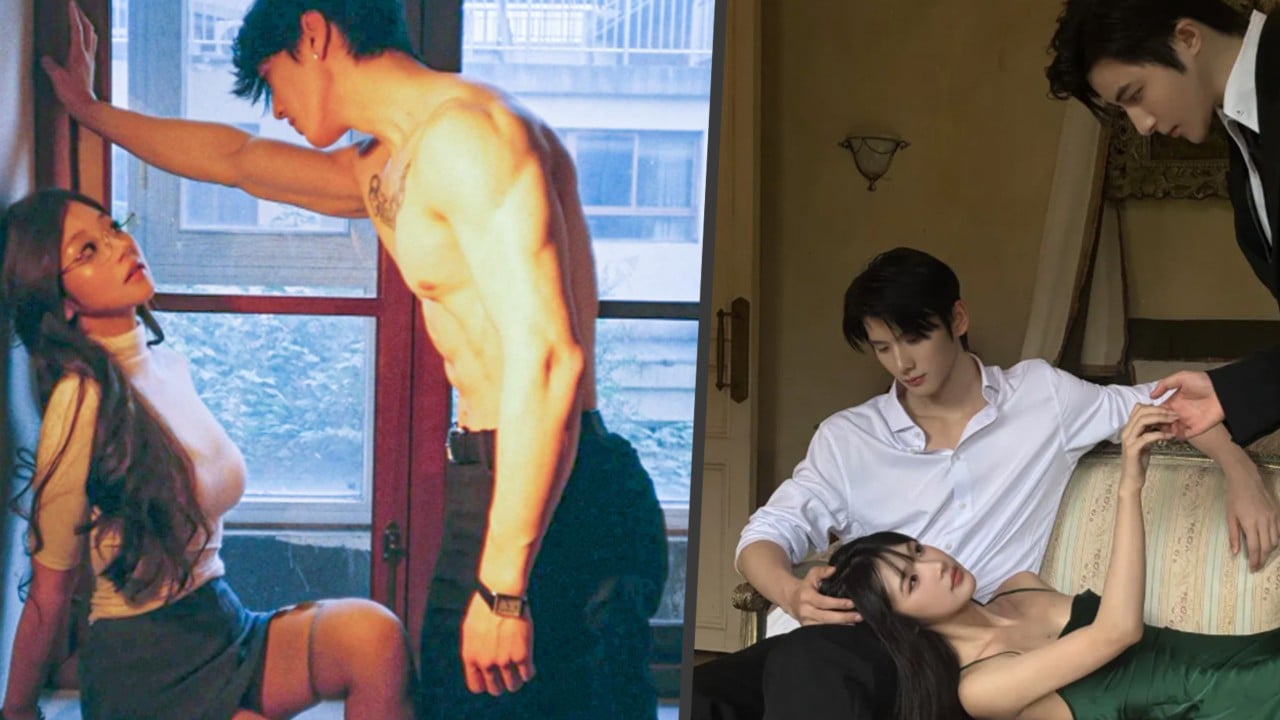
The media has spent the past year clutching its collective pearls over Chinese urban centers turning professional male model photography into a multi-million-dollar entertainment asset. The standard narrative runs on comfortable autopilot. Commentators look at professional urban women dropping thousands of yuan to pose with impeccably styled, attentive male models in high-end shopping districts and immediately diagnose a cultural crisis. They call it a symptom of alienation. They frame it as a pathetic commercial substitute for real human intimacy, a transactional cry for help in a hyper-capitalist society that commodifies affection.
They are missing the entire point because they are looking at the transaction through a lens of 1950s sentimentality rather than modern portfolio management.
I have watched young professionals in Beijing and Shanghai burn out on traditional dating apps faster than a venture-backed food delivery startup. They are not paying for these shoots because they are lonely or delusional. They are paying because traditional dating has become a catastrophically bad return on investment.
The Broken Ledger Of Modern Dating
Let us look at the numbers the hand-wringers refuse to audit. Traditional courtship in a competitive Tier-1 Asian metropolis is a high-friction, low-yield enterprise. It demands an endless sequence of Saturday night dinners, tedious small talk with strangers who lied about their height on their profiles, emotional labor spent managing fragile egos, and the quiet erosion of personal boundaries—all with a success rate hovering near single digits.
The financial cost of a year of active dating—drinks, Ubers, clothes, time spent agonizing over text cadence—easily clears the price tag of a premium, multi-hour conceptual photo session with a professional model. But the financial cost is the cheap part. The real drain is the opportunity cost.
When a woman books a high-end studio shoot where a professional model acts as an attentive, perfectly coordinated companion for an afternoon, she is buying a fixed-cost, guaranteed-outcome asset. There is zero risk of ghosting. There is zero risk of unprompted misogyny. There is no awkward split check or mandatory negotiation over who texts back first. She gets the aesthetic and emotional validation of a high-status pairing, executed with cinematic precision, delivered on a predictable timeline.
Call it commodified affection if you want. I call it efficient resource allocation.
The Rise Of Experiential Hedging
We live in an era where attention is the primary currency, and social proof is the liquidity. The viral trend of hiring male models for styled date-night photo shoots is not a retreat from reality. It is a masterclass in experiential hedging.
For years, men have utilized transactional environments to optimize their presentation, lifestyle, and social capital without apology. They hire photographers for their LinkedIn profiles, rent luxury cars for weekend reels, and pay for curated travel experiences that project abundance. Yet, the moment women begin applying the exact same instrumental logic to their social presentation and emotional leisure, the cultural gatekeepers scream that romance is dead.
Romance is not dead. It was just a terribly inefficient monopoly, and consumers are finally breaking it up.
When you book a professional model shoot, you are not buying a boyfriend. You are buying a polished narrative artifact. You control the lighting, the wardrobe, the narrative arc, and the final output. You are the director of your own social capital. In a media environment that rewards hyper-visual proof of a high-value life, spending capital on a curated narrative where you are treated like the protagonist is infinitely more rational than spending three hours listening to a middle-management consultant drone on about his cryptocurrency portfolio over lukewarm pasta.
The Downside Nobody Wants To Admit
Let us be entirely transparent about the vulnerabilities of this model, because every strategy has a failure mode.
The danger of hyper-curated transactional companionship is the feedback loop of manufactured perfection. When you normalize interactions where the other party is contractually obligated to look at you with undivided admiration and adjust their posture to your best angle, real human friction can start to feel intolerable. If you spend your weekends orchestrating cinematic vignettes with professional actors, you risk developing an allergy to the messy, contradictory reality of actual human beings.
Real relationships require negotiation, compromise, and the unglamorous work of dealing with someone else's neuroses. If you use paid aesthetic validation as an anesthetic rather than a recreational tool, you end up substituting a rich, if messy, life for a high-definition museum exhibit of yourself.
That is the trade-off. But let us stop pretending that the alternative—the soul-crushing meat grinder of modern algorithmic swiping—is somehow morally superior because it is free.
Rewriting The Script
The market has spoken, and it is voting against inefficiency. As long as traditional social structures demand immense emotional overhead from women while offering diminishing returns in genuine partnership, services that guarantee high-aesthetic validation with zero systemic friction will continue to scale.
Stop treating this trend as a social pathology. It is a rational adaptation to a broken ecosystem. The women paying for these shoots aren't victims of modern loneliness. They are the market disruptors, and they have finally figured out how to cut out the middleman.