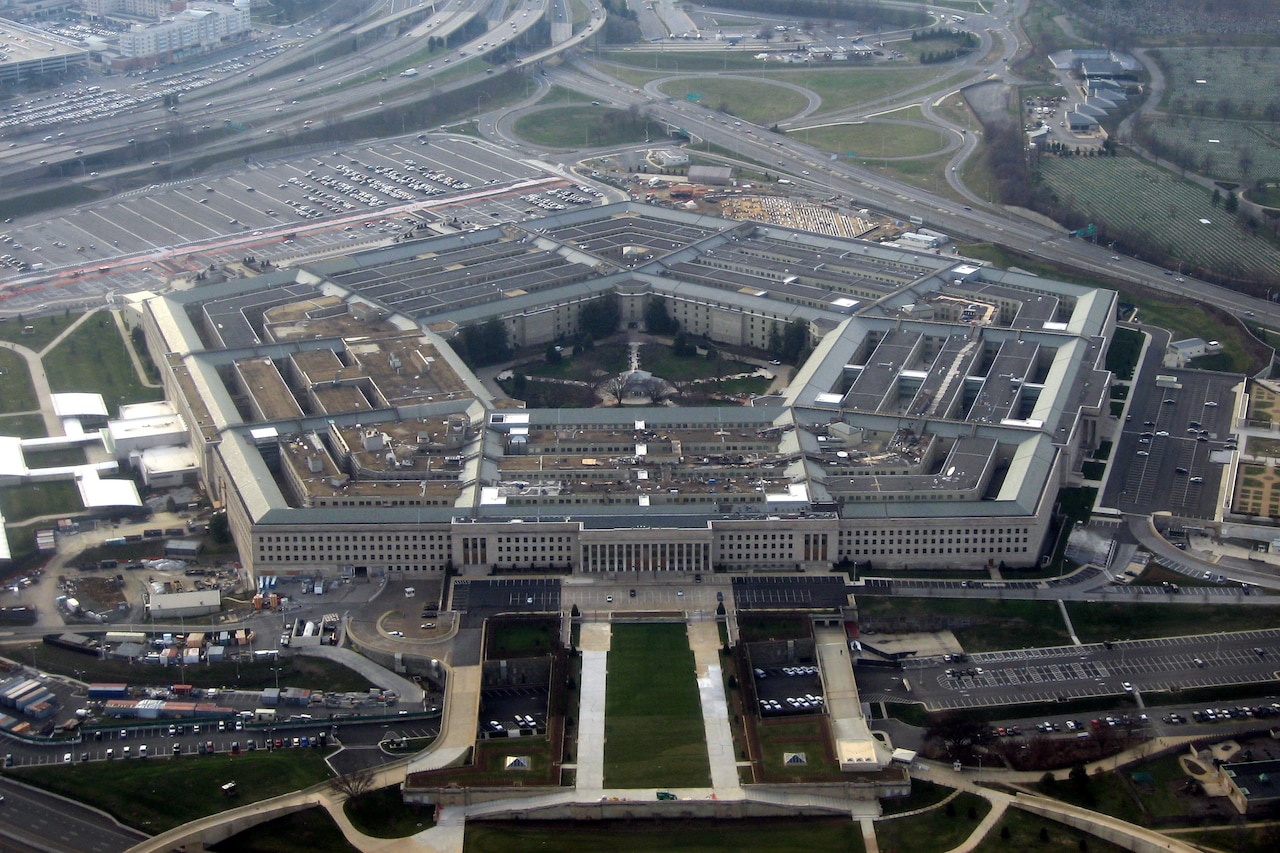
You’ve probably seen the headlines screaming that the US is "defenseless" against the latest wave of advanced missiles. It sounds terrifying. It’s supposed to. But if you take a step back from the panic, the reality is far more nuanced—and arguably more dangerous for different reasons. The Pentagon isn’t "defenseless" in the sense that our military is sitting ducks. They are, however, fighting a massive, expensive, and frustrating battle against math.
The math, unfortunately, is currently tilting in the wrong direction. You might also find this related coverage interesting: The Humanitarian Disaster in Darfur is Killing a Generation of Children.
The Myth Of The Impregnable Shield
When we talk about air defense, most people picture the systems working in Ukraine or the Middle East—Patriot batteries, Aegis destroyers, THAAD systems. These are incredible feats of engineering. They were built, however, during the Cold War to stop a specific type of threat: ballistic missiles that follow a predictable, arching trajectory. You see the arc, you calculate the interception point, and you fire. It’s like hitting a bullet with another bullet.
The new reality involves missiles that don’t follow an arc. As reported in recent articles by USA Today, the results are worth noting.
Hypersonic glide vehicles, for instance, don’t just move at extreme speeds—they maneuver. They glide through the atmosphere, changing altitude and direction, making that "calculable intercept point" a moving target that disappears and reappears on radar. When officials admit they are "defenseless," they’re specifically talking about the lack of a reliable, layered, and cost-effective way to stop weapons that essentially rewrite the physics of the engagement.
The Real Problem Is Capacity Debt
There is a second, even more immediate issue that rarely makes it into the dramatic soundbites. It’s called "capacity debt."
We’ve seen this play out in the ongoing conflict with Iran. It’s easy to focus on the flashy technology, but modern warfare is a game of economics. A single Patriot interceptor missile costs millions of dollars. The drones and lower-end cruise missiles used to saturate these defenses often cost a fraction of that.
If an adversary throws a swarm of cheap, mass-produced drones and missiles at a US installation, the defender has to choose: do I burn a multi-million dollar interceptor on a $50,000 drone? If you do, you run out of missiles. If you don't, you risk a strike.
The Pentagon recently burned through a massive chunk of its interceptor stockpile in regional conflicts. This isn't just about whether we can shoot something down; it’s about whether we have enough bullets in the magazine to keep doing it for weeks or months at a time. When you are fighting a war against multiple adversaries, the math stops working quickly.
Why The Current Strategy Is Shifting
The "defenseless" narrative is actually a strategic signal. The Department of Defense is using these admissions to clear the path for the massive, multi-billion dollar shift required for the "Golden Dome" initiative.
The vision here is a complete overhaul of how we track and engage. The old model of "see missile, shoot missile" is being replaced by a networked, space-based architecture. Imagine thousands of sensors in low-earth orbit that can track a maneuvering target from the moment it launches, handing that data off in real-time to interceptors on land, sea, and potentially directed-energy weapons.
This is the shift from mechanical defense to information dominance. If you can’t outrun a hypersonic missile, you have to out-think it.
The Tactical Reality Of Asymmetric Warfare
What most people miss is that the US military is designed for a type of war that rarely happens anymore. We spent decades optimizing for a "near-peer" conflict where two massive fleets clash in the Pacific. Instead, we are fighting asymmetric conflicts where adversaries use "low-tech" saturation tactics.
This creates a blind spot. Your billion-dollar Aegis destroyer is a lethal machine, but it isn’t optimized to fight off 50 cheap, synchronized drones attacking from different altitudes. We are currently trying to fit a square peg of Cold War-era air defense into the round hole of modern, multi-domain warfare.
What Happens Next
We’re in the middle of a messy, expensive transition period. You’re going to keep hearing these alarmist headlines because the industrial base is currently "in the red," struggling to replenish the stockpile of interceptors we burned through in the Middle East.
If you’re looking at the big picture, the vulnerability isn’t that we lack the smarts or the technology to build better defenses. The vulnerability is time and money. Scaling up production of precision munitions takes years. Integrating a space-based sensor layer is a decade-long project.
The US military is essentially performing an engine swap while the plane is in the air. We are moving from a system of localized defense to a global, networked, and automated shield. It’s risky, it’s expensive, and for the next few years, it’s going to leave gaps that adversaries will absolutely try to exploit.
Don't buy into the panic that we are helpless, but definitely understand that the era of total dominance through a handful of static defense systems is over. We’re now in a race of production numbers, sensor speed, and integration. Whoever manages the math better, wins.