The media loves a good "gotcha" moment. When the Pentagon releases a report suggesting Iran’s military remains a formidable force despite years of "maximum pressure," the press rushes to frame it as a simple contradiction of executive rhetoric. They treat military strength like a scoreboard in a high school football game—who has more points, who has more tanks, and who called the better play.
They are looking at the wrong map. You might also find this related coverage interesting: The Hormuz Illusion Why Tanker Seizures Are Not About War.
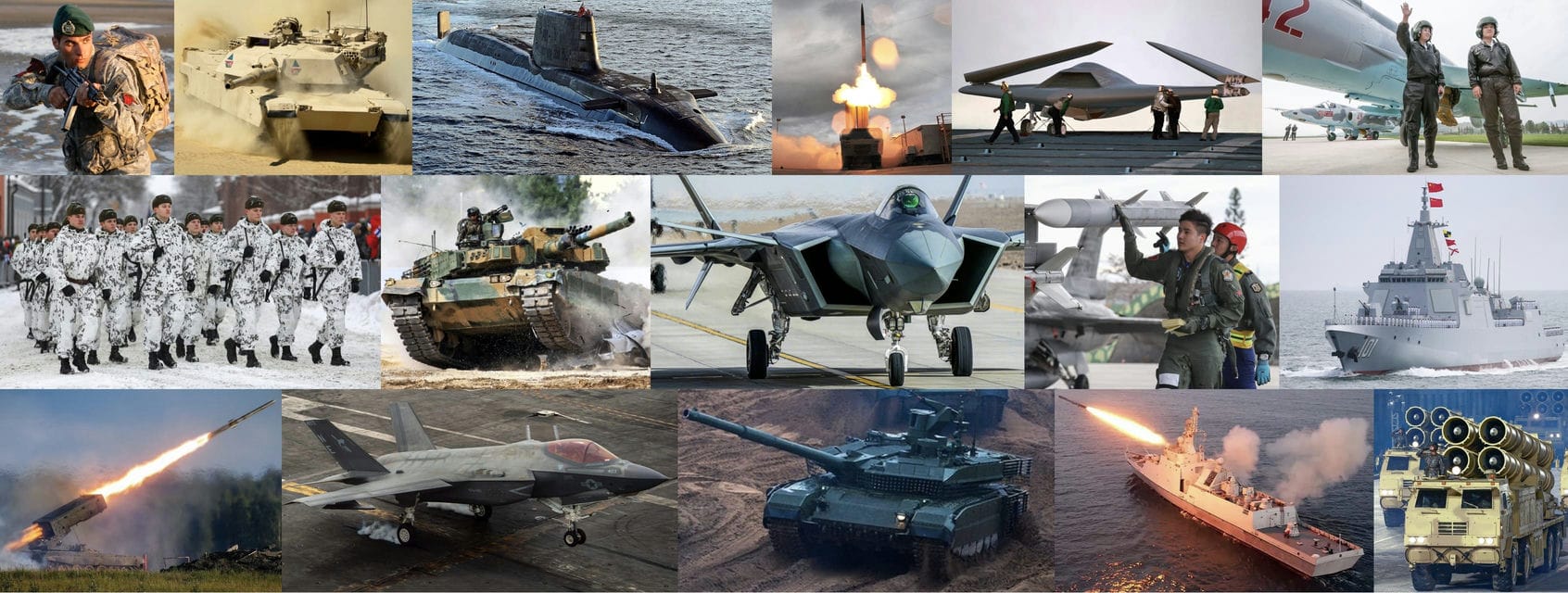
The lazy consensus suggests that because Iran lacks a fifth-generation fighter jet or a blue-water navy, they are somehow "contained" or "deterred" by conventional Western might. This ignores the brutal reality of 21st-century attrition. While Washington debates whether sanctions are "working," Tehran has fundamentally rewritten the physics of Middle Eastern warfare. They didn’t try to build a better version of our military; they built a military designed to make ours irrelevant.
The Hardware Delusion
Most analysts fall into the trap of counting hulls and airframes. They see Iran’s aging F-14 Tomcats—relics of the Shah’s era—and scoff. They look at the Iranian navy’s "mosquito fleet" of fast-attack boats and compare them to a U.S. carrier strike group. As highlighted in recent reports by Al Jazeera, the results are worth noting.
This is a category error.
The Pentagon isn't sounding the alarm because Iran is becoming a conventional peer. They are terrified because Iran has mastered the art of the cheap kill.
Consider the mathematics of the modern intercept. A single Iranian-produced Shahed-136 drone costs roughly $20,000 to $50,000. To shoot it down, Western forces often use missiles that cost between $1 million and $2 million.
If you are spending $2 million to stop a $20,000 asset, you aren't winning. You are being bled dry. This is the Asymmetric Deficit. I have watched defense contractors celebrate "successful intercepts" while ignoring the fact that the enemy is effectively bankrupting the defense budget one low-tech lawnmower engine at a time. Iran isn't trying to sink the fleet; they are trying to make the cost of maintaining the fleet unsustainable.
Strategic Depth is Not About Geography
The competitor reports often frame Iranian strength through the lens of "proxies." They speak of Hezbollah, the Houthis, and various militias in Iraq as if they are merely "agents" or "employees" of Tehran.
This misunderstanding is dangerous.
Tehran has achieved something far more sophisticated: distributed sovereignty. By exporting the means of production—giving groups the blueprints and components to build their own missiles and drones—Iran has eliminated the "head of the snake" vulnerability. If you strike Tehran, the factories in Yemen, Lebanon, and Iraq don't stop humming.
The conventional military mindset thinks in terms of "Center of Gravity" (CoG). In Clausewitzian theory, the CoG is the source of power that, if destroyed, leads to total collapse.
Iran has decentralized its military power to the point where it no longer has a single Center of Gravity. It is a network, not a pyramid. The Pentagon knows this. The politicians, however, still want to believe there is a "red line" or a single target that ends the threat. There isn't.
The Sanctions Paradox
We are told that sanctions cripple military development. The data tells a different story.
Sanctions acted as an evolutionary pressure. By being cut off from the global arms market, Iran was forced to skip the expensive, bloated R&D cycles that plague Western defense procurement. They couldn't afford a $1.7 trillion program like the F-35. Instead, they perfected short-range ballistic missiles (SRBMs) and cruise missiles.
They built what they needed, not what looked good in a parade.
Today, Iran possesses the largest and most diverse missile arsenal in the Middle East. They can hit any base, any port, and any refinery in the region with high precision. While we were focused on "stealth," they focused on "volume." In a saturated environment, stealth doesn't matter. If 100 missiles are flying at a target, it doesn't matter if you can see them; it matters if you have enough interceptors to stop them. Spoiler: you don't.
The Intelligence Community's Secret Fear
The Pentagon report isn't "contradicting" any specific president; it is acknowledging a shift in the nature of power. The U.S. military is built for Power Projection. Iran’s military is built for Area Denial.
These are two different sports.
- Power Projection: The ability to deploy and sustain forces outside of one’s home territory.
- Area Denial (A2/AD): Making it too risky or too expensive for an opponent to enter or remain in a specific area.
Iran doesn't need to be able to invade Florida. They only need to be able to close the Strait of Hormuz for 48 hours to crash the global economy. They don't need to win a war; they just need to ensure that nobody else can win one without losing everything.
The "Nuclear Program" Red Herring
The obsession with the "breakout time" for a nuclear weapon is the ultimate distraction. While the West focuses on centrifuges and enrichment levels, Iran has already achieved "threshold status."
They have the delivery systems. They have the hardening. They have the regional reach.
A nuclear warhead is a political tool, but a precision-guided conventional missile that can take out a desalination plant or a power grid is a practical tool. Iran has thousands of the latter. By the time we confirm a "bomb," the regional map will have already been redrawn by the shadow of their conventional reach.
The Failure of "Maximum Pressure"
Logic dictates that if you squeeze a regime, it will eventually trade its security for its economy. This assumes the regime views the economy and security as separate entities.
In Tehran, the military-industrial complex (specifically the IRGC) is the economy. They control the construction, the telecommunications, and the black market. Sanctions didn't weaken the IRGC; they eliminated their private-sector competition. Every time a foreign firm pulled out of Iran due to sanctions, an IRGC-linked firm took its place.
We didn't starve the beast. We fed the beast the only food it likes: total domestic control.
The Logistics of the Next Conflict
Imagine a scenario where a conflict breaks out in the Persian Gulf.
The U.S. relies on a massive, delicate logistics chain. Fuel, parts, and personnel must travel thousands of miles. Iran is fighting in its backyard. Its "bases" are often tunnels carved into mountains or mobile launchers hidden in civilian infrastructure.
Our high-tech sensors are designed to find tanks in a desert. They are less effective at finding a guy with a tablet and a drone launcher in a crowded coastal city. This is the Detection Gap. We have spent trillions on "eyes" that are looking for a type of enemy that no longer exists.
The Actionable Truth
If we want to actually address Iranian influence, we have to stop treating them like a 19th-century nation-state and start treating them like a 21st-century tech startup.
They iterate. They fail fast. They use off-the-shelf components. They don't care about "rules-based order" because the rules were written by the people they are trying to displace.
The Pentagon isn't being "political" when it reports on Iranian strength. It is being pragmatic. It is admitting that the tools we used for fifty years—carrier diplomacy, economic blockades, and conventional threats—are hitting a wall of diminishing returns.
Stop asking if the sanctions are working. Start asking why, after forty years of being "contained," Iran’s fingerprints are on every major geopolitical shift from the Levant to the Bab el-Mandeb.
The status quo isn't working because the status quo assumes we are playing a game of chess while the opponent is simply setting the board on fire. You can't checkmate someone who isn't playing by your rules.
We are obsessed with the "strength" of their regime. We should be obsessed with the "resilience" of their architecture. One is a person you can replace; the other is a system you can't kill.
The Pentagon isn't contradicting the White House; they are telling the White House that the building is already leaning, and more weight on the roof won't fix the foundation.
Stop looking for the collapse. It isn't coming. Start looking at the new reality: Iran has successfully decoupled its military capability from its economic health. They are the first fully "sanction-proof" military power because they built their strength out of the very isolation we intended to be their downfall.
That isn't a failure of intelligence. It's a failure of imagination.
The era of uncontested Western dominance in the Middle East didn't end with a bang or a whimper; it ended with the hum of a $20,000 drone flying past a $2 billion destroyer.