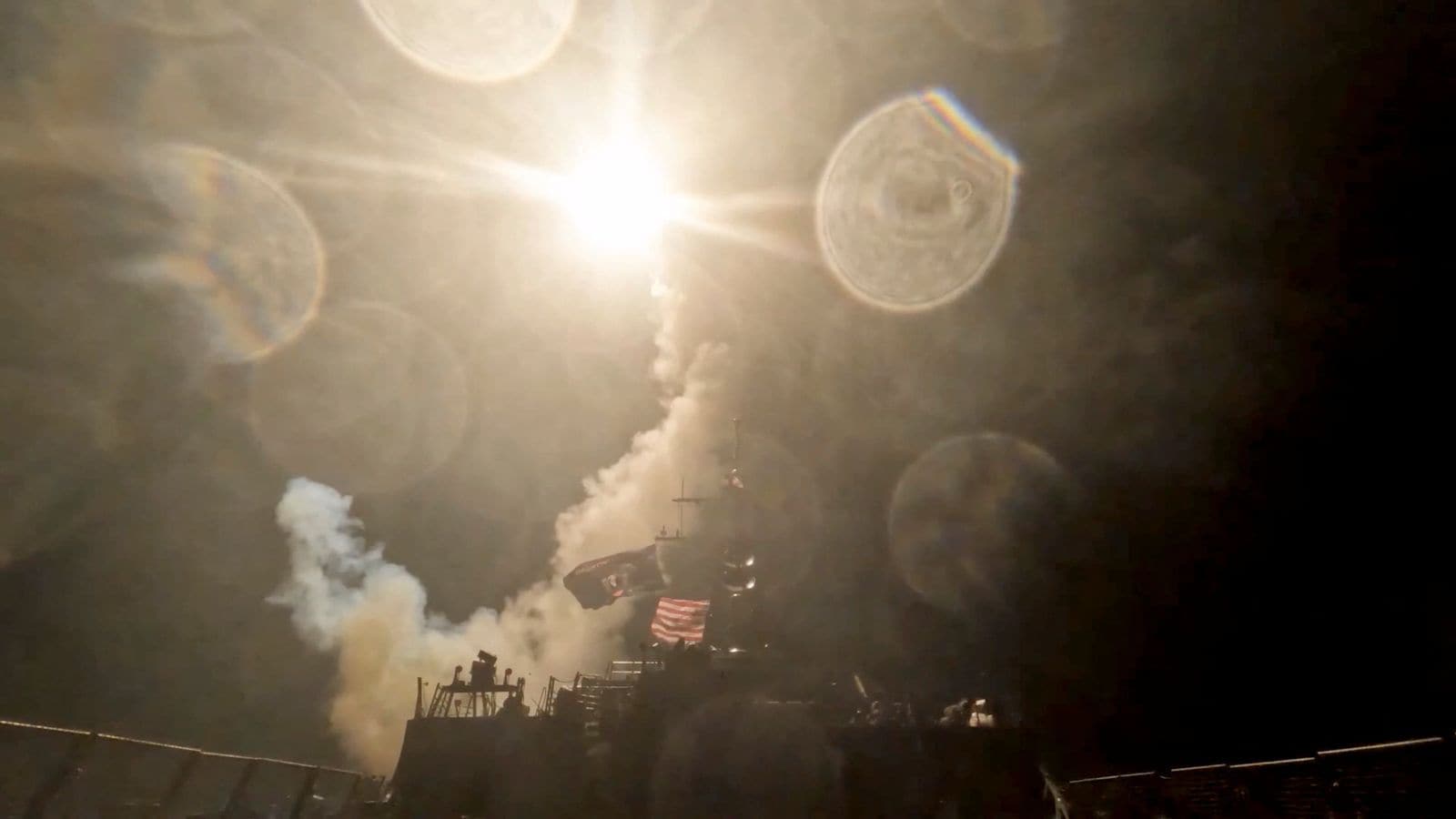
Reports detailing the sudden relocation of United States military aircraft from a second Royal Air Force installation in the United Kingdom highlight a critical shift in modern force protection. Driven by credible intelligence regarding potential Iranian asymmetric retaliation, Pentagon planners ordered the dispersal of high-value aerial assets away from concentrated European hubs. While routine deployments often mask strategic anxieties, pulling hardware from British soil—historically considered a safe rear-echelon sanctuary—signals that Western airbases are no longer outside the reach of Tehran’s extended strike capabilities or its covert networks.
Defense correspondents love a dramatic headline, and "evacuation" certainly sells papers. Yet anyone who has spent twenty years tracking Air Force logistics knows that the military rarely panics; it calculates. When commanders move tankers, reconnaissance platforms, or strike fighters out of established bases like RAF Mildenhall, RAF Lakenheath, or RAF Fairford, they are executing a doctrine known as Agile Combat Employment. The math is brutally simple. A billion-dollar bomber sitting on a predictable concrete apron in Suffolk or Gloucestershire is a stationary target. An aircraft dispersed to an undisclosed forward operating location—or pulled back beyond immediate threat rings—survives to fly another sortie. Read more on a related issue: this related article.
The Geography of Vulnerability
For decades, the United Kingdom functioned as Washington’s unsinkable aircraft carrier on the edge of the Atlantic. During the Cold War, the primary threat to British bases came from Soviet long-range aviation and ballistic missiles, a calculation that faded after 1991. Base security settled into a predictable rhythm of perimeter fences, local police patrols, and basic anti-terrorism checks.
That complacency died slowly over the last decade, and the reported dispersal from a second UK facility proves the obituary is final. More journalism by BBC News highlights comparable perspectives on the subject.
Modern threats do not require a fleet of heavy bombers crossing the North Sea. Consider the tools available to Iran and its proxy network today:
- One-way attack drones assembled from commercial components inside a rented warehouse ten miles from a runway fence.
- Ballistic and cruise missiles with ranges stretching past two thousand kilometers, pushing the envelope from Middle Eastern launch sites toward southeastern Europe.
- Covert sabotage teams utilizing local criminal intermediaries to bypass traditional counter-intelligence screening.
- Cyber intrusions targeting local civilian power grids and fuel pipelines that keep military airfields operational.
When intelligence agencies detect chatter or logistical movement pointing toward any of these vectors, base commanders face an immediate dilemma. You cannot build hardened aircraft shelters overnight. Reinforced concrete takes years to pour and millions of dollars to fund, and several British bases hosting American rotational forces still rely on open tarmac parking for large-frame aircraft like KC-135 Stratotankers and RC-135 Rivet Joint surveillance planes. If you cannot harden the target, you move the target.
How Dispersal Actually Works Under Pressure
To the casual observer watching flight-tracking websites, a sudden spike in military transponders leaving East Anglia or Oxfordshire looks like a retreat. Inside a Combined Air Operations Center, it looks like force preservation.
When a threat warning escalates, logistics officers run through a strict triage protocol. First to move are the low-density, high-demand assets. Intelligence, surveillance, and reconnaissance platforms—the eyes and ears of the theater—cannot be easily replaced if damaged on the ground by shrapnel from a commercial quadcopter rigged with mortar shells. Aerial refueling tankers follow closely behind. Without tankers, fighter wings are tethered to short-range combat radii, rendering them useless in a crisis stretching from the Levant to the Persian Gulf.
The aircraft do not simply fly home to the continental United States. Instead, planners scatter them across a web of secondary airfields, allied civilian airports, and lesser-known military strips across Northern Europe or the Mediterranean. This shell game forces an adversary to burn valuable intelligence assets just to find where the planes went. By the time a hostile surveillance network confirms a new tail number on a remote tarmac, the aircraft has already refueled, rotated crews, and moved again.
This operational tempo comes with a steep hidden cost. Maintenance crews lose access to specialized diagnostic equipment housed back at their main operating bases. Spare parts supply chains stretch thin. Pilots fly longer hours with less ground support, increasing fatigue and mechanical wear. Commanders only accept that operational friction when the intelligence picture on the ground turns genuinely ugly.
The Iranian Reach Problem
Skeptics often ask how Tehran could realistically threaten an airfield in rural England when the two nations sit nearly three thousand miles apart. Asking that question reveals a fundamental misunderstanding of how Iran projects power.
Tehran does not fight symmetrical wars against superior conventional militaries. It outsources risk. Over the past several years, Western intelligence services—including Britain’s MI5 and the FBI—have repeatedly disrupted plots linked to Iranian intelligence operatives operating on European soil. Rather than deploying trained paramilitary officers who leave passport trails and diplomatic footprints, Iranian handlers increasingly recruit local organized crime syndicates, petty criminals, and ideological sympathizers via encrypted messaging apps.
A hypothetical scenario illustrates why base commanders lose sleep over this model. Imagine a local smuggling ring paid fifty thousand dollars in cryptocurrency to launch three commercial heavy-lift drones from a wooded patch outside an RAF perimeter at three in the morning. They do not need to destroy a hangar. Puncturing the thin aluminum skin of four parked refueling tankers with small shaped charges takes those aircraft out of the war for months. Against an unhardened flight line, a five-thousand-dollar drone neutralizes five hundred million dollars in strategic airlift.
Beyond domestic sabotage, the geopolitical map itself has compressed. British sovereign bases in Cyprus—specifically RAF Akrotiri—sit directly inside the engagement envelope of ballistic missiles and long-range drones operated by Iranian-backed militias in Lebanon, Syria, Iraq, and Yemen. When regional tensions spike, aircraft normally staged in the UK rotate through Cyprus or utilize British bases as logistical bridges to the Middle East. If Tehran signals an intent to strike Western assets globally in retaliation for strikes against its leadership or nuclear infrastructure, every link in that logistical chain becomes a legitimate target in the eyes of Iranian planners.
What the Public Never Sees
Official statements from the Ministry of Defence and the Pentagon regarding these movements follow a rigid, predictable script. Spokespeople routinely cite "operational security" and refuse to confirm whether specific aircraft departures stem from threat intelligence or pre-planned exercises.
That ambiguity is deliberate, and it cuts both ways.
On one hand, military planners do not want to validate an adversary's intelligence collection by admitting that a threat forced their hand. Admitting that Iranian chatter drove American planes off a British runway hands Tehran a propaganda victory without them ever firing a shot. If you can disrupt USAF flight schedules simply by moving a few trucks or transmitting bogus radio traffic, you have achieved deterrence on the cheap.
On the other hand, silence protects host-nation politics. The presence of US military bases in the United Kingdom remains a sensitive domestic issue, particularly when those bases serve as staging grounds for Middle Eastern conflicts that carry blowback risks for British citizens. Acknowledging that UK soil is actively targeted by a foreign power invites uncomfortable parliamentary questions about base air defenses, local emergency preparedness, and whether London is being dragged into a wider regional war.
Look closely at the infrastructure gaps surrounding major European airbases, and the quiet anxiety makes sense. For thirty years, Western militaries gutted their short-range air defense units. Ground-based systems capable of swatting down low-flying drones or incoming cruise missiles were retired to save budget for stealth fighters and overseas counter-insurgency campaigns. Today, many premier NATO airfields lack dedicated, around-the-clock kinetic counter-drone defenses. Electronic warfare jammers help, yet fiber-optic-guided drones and pre-programmed inertial navigation systems laugh at radio-frequency jamming.
The Failure of Static Sanctuary
History offers plenty of warnings about the danger of assuming rear-area bases are untouchable. In 1965, Viet Cong sappers infiltrated Bien Hoa Air Base in South Vietnam, using mortars to destroy or damage dozens of American aircraft parked wingtip-to-wingtip on open ramps. In 2012, fifteen insurgents breached the perimeter of Camp Bastion in Afghanistan, destroying six US Marine Corps AV-8B Harrier jump jets in a single night—the worst single-day loss of American airpower since the Vietnam War.
Different eras, different theaters, identical failure mode: predictability.
When air forces operate out of massive, centralized mega-bases for decades, routines calcify. Fuel trucks arrive at the same gates. Guard shifts change at the same hour. Aircraft park in the exact same revetments visible on commercial satellite imagery available to anyone with a credit card.
Relocating aircraft from a second UK installation is an admission that the old posture is obsolete. Even if the immediate intelligence warning passes without an incident, the underlying vulnerability remains fixed in concrete and geography. You cannot hide a three-mile runway from orbital surveillance, and you cannot wrap an entire British county in an impenetrable air defense dome.
The New Reality for Allied Basing
The fallout from these precautionary dispersals extends far beyond a few diverted flight paths over the English countryside. Allied planners across Europe are being forced to rewrite the rulebook on host-nation support and base resilience.
First, dispersal will become the baseline rather than the emergency exception. Expect to see smaller detachments of US aircraft operating out of austere regional airfields across Scandinavia, the Baltics, and Southern Europe, staying for days instead of months before packing up their mobile maintenance kits and vanishing again.
Second, the bill for passive and active base defense is coming due. Pouring reinforced concrete shelters, burying fuel bladders underground, installing automated counter-drone turrets, and expanding perimeter buffer zones will consume billions of dollars that defense ministries originally earmarked for new aircraft acquisitions.
Finally, intelligence sharing between military counter-intelligence units and domestic law enforcement has to bridge a dangerous bureaucratic divide. Monitoring airspace above a runway means very little if nobody is watching the industrial estates and rural roads five miles outside the fence where commercial drones are being modified.
The planes leaving Britain are not running away from a fight; they are clearing the board so they cannot be taken out before the opening bell rings. Every modern airfield in Europe is now operating inside a contested battlespace, whether the local town council realizes it or not.