The transatlantic security alliance just hit a wall of cold American reality. If you think the annual bickering over defense spending in Europe is just standard diplomatic theater, you aren't paying attention to what just dropped in Brussels.
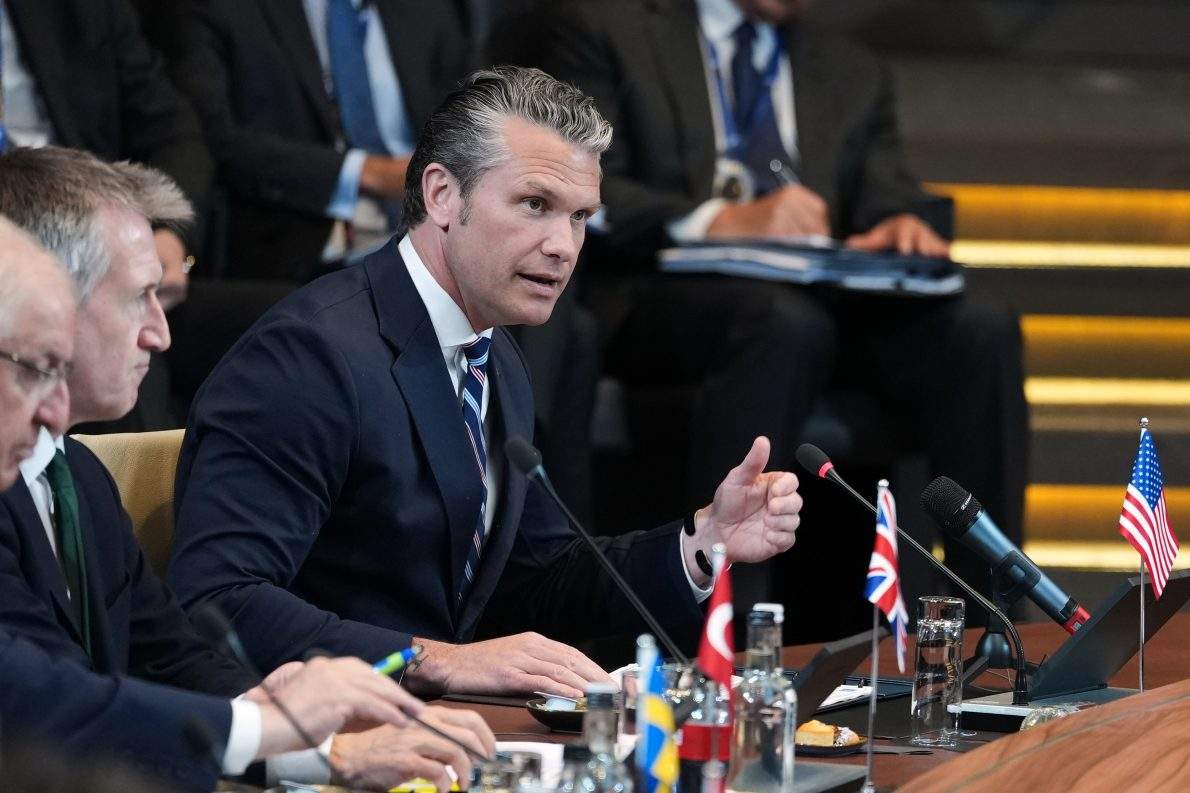
US Defense Secretary Pete Hegseth didn't just walk into NATO headquarters and ask for the check. He essentially threw the table over. By announcing a sweeping, six-month Pentagon review of American troop presence in Europe, Washington is shifting from vague irritation to structural retraction. The message to capitals relying on the American military umbrella is brutally simple: step up, or the troops are leaving.
This isn't another empty warning about the two percent spending target. We're well past that. The goalposts moved to a massive five percent of GDP target, and the White House is explicitly tying American boots on the ground to how fast European nations can carry their own weight.
The Paper Tiger Identity Crisis
For decades, the alliance functioned as a comfortable, one-way arrangement. Washington footed the bills, kept over 100,000 troops stationed across the continent, and provided the heavy logistical backbone. Meanwhile, many European capitals treated defense budgets as an afterthought, funneling cash into sprawling domestic programs while letting their own hardware rust.
Hegseth didn't mince words in Brussels, labeling the post-Cold War alliance a "paper tiger" and a dependency model. The critique cuts deep because it targets a specific political mindset that treats American protection as a birthright.
The immediate trigger for the latest blowout involves a distinct lack of cooperation during recent Middle East operations. When the US and Israel launched strikes against Iranian targets, multiple European allies denied American forces access to local bases and restricted overflight rights.
Think about that dynamic for a moment. The US keeps thousands of troops stationed in Europe to deter regional threats, yet when Washington faces an active conflict that directly impacts global energy stability and European shipping lanes, those same host nations pull out the legal calculators and lock the gates. Hegseth called the denial of base access shameful, noting that it put American service members at risk by forcing longer, more complicated operational routes.
The Myth of the Middle Power Coalition
There's a growing narrative in places like Ottawa and certain European capitals that "middle powers" can simply band together to preserve the international rules-based order without getting their hands dirty with heavy military spending. Former bank chief turned political figure Mark Carney captured this sentiment recently, arguing that middle powers must act together because "if we're not at the table, we're on the menu."
The Pentagon's response to that philosophy is essentially a loud snort of derision.
Banding together at a conference table doesn't stop a hypersonic missile or secure a shipping lane. Some of the richest economies in the world are the loudest champions of international law, yet they completely lack the hard power to back it up.
Take Canada, for instance. The Trump administration's patience has entirely evaporated over Ottawa's vague, kicking-the-can-down-the-road timeline for hitting defense targets. The US recently paused a joint defense review board with Canada because the country refuses to layout a credible, immediate path to meet the core military capabilities expected of it.
The math is changing permanently. The US military is pivoting hard to the Indo-Pacific to counter China, meaning it cannot keep its massive carrier groups, aerial refueling fleets, and advanced fighter wings permanently parked in Europe to handle conventional defense.
What Passing the Posture Review Actually Requires
This upcoming force posture review isn't a bureaucratic rubber-stamping exercise. It's a pass-fail exam with immediate geographic consequences.
Nations that have consistently taken defense seriously are already angling to benefit from the shakeup. Poland and Lithuania, which sit directly on the volatile eastern flank and regularly hit or exceed defense benchmarks, are actively lobbying to absorb the permanent American bases and troop deployments that could soon be stripped away from lagging Western European nations.
If a country wants to pass this audit, the requirements are transparent:
- Unrestricted Access: Host nations must guarantee predictable, unhindered base usage and overflight rights for American global operations, without burying commands in local legal debates.
- Hard Combat Capability: Capitals need to shift spending away from broad administrative defense goals and put real money into armor, air superiority, and missile defense.
- Filling the Logistics Vacuum: NATO Secretary General Mark Rutte acknowledged that European allies must rapidly source and manufacture the heavy battlefield assets—like refueling tankers and transport ships—that the US is drawing down.
The era of soft-power diplomacy backed by American hardware is finished. If European nations want the security of a first-rate alliance, they have to stop acting like consumers and start acting like producers. The transition to a self-sufficient European defense isn't a future project anymore. It started this week in Brussels.
For a deeper look into how these military policy shifts are playing out on the ground, you can watch this analysis of Pete Hegseth's NATO ultimatums which breaks down the specific financial friction points between Washington and European capitals.